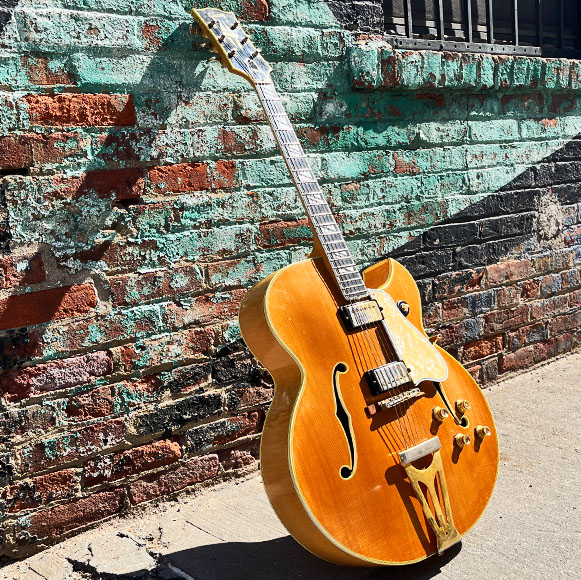
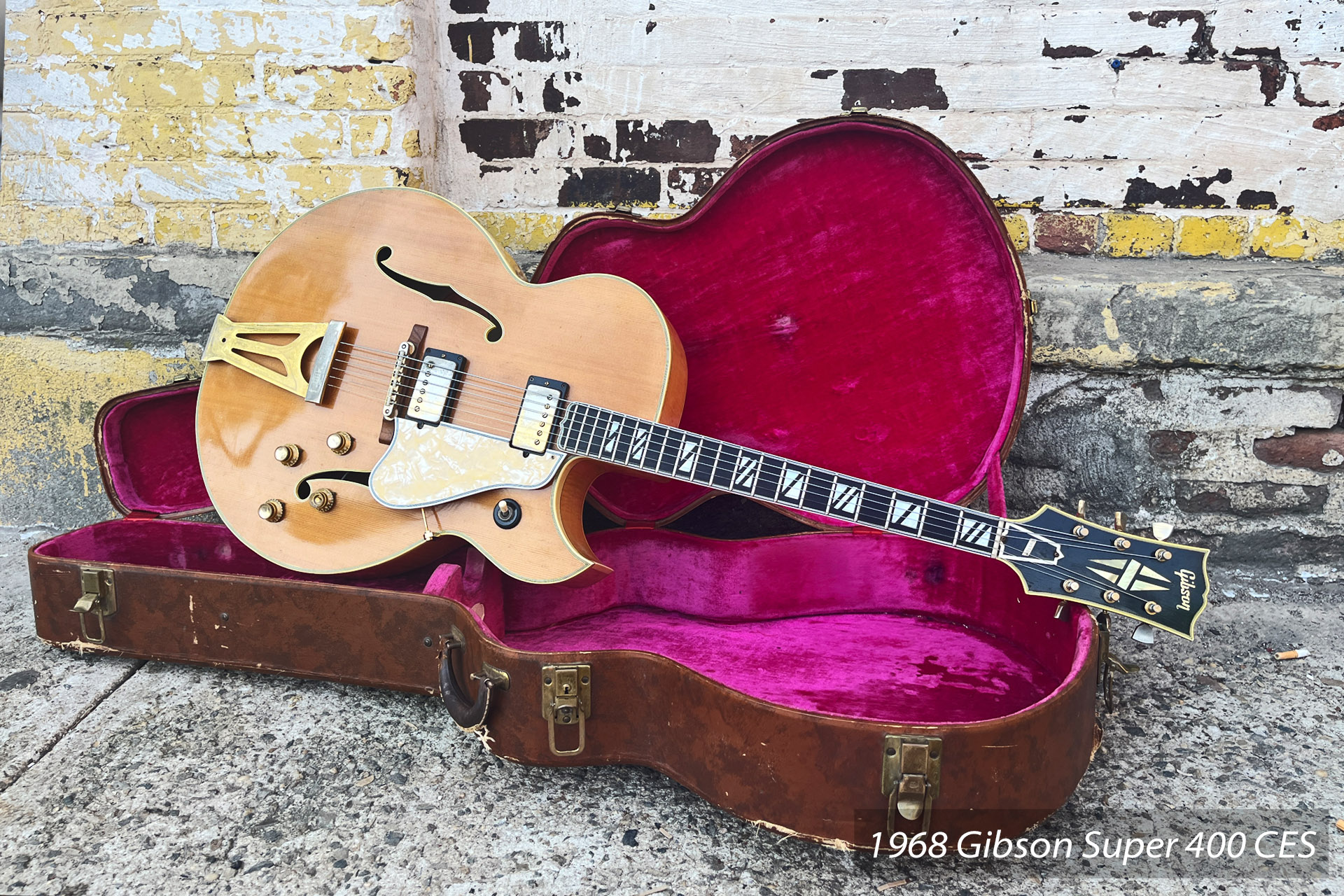
1968 Gibson Super 400 CES

1968 Gibson Super 400 CES


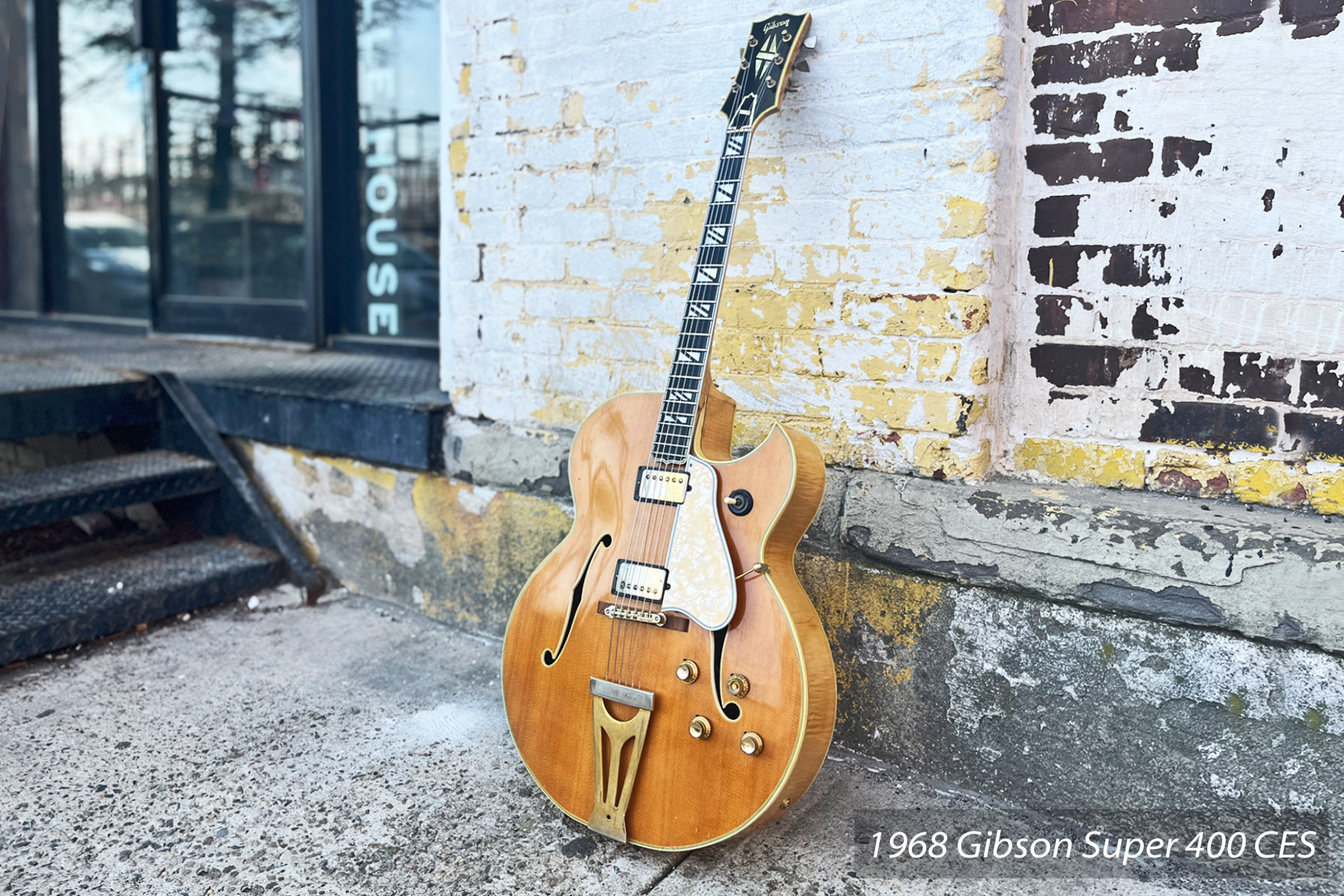
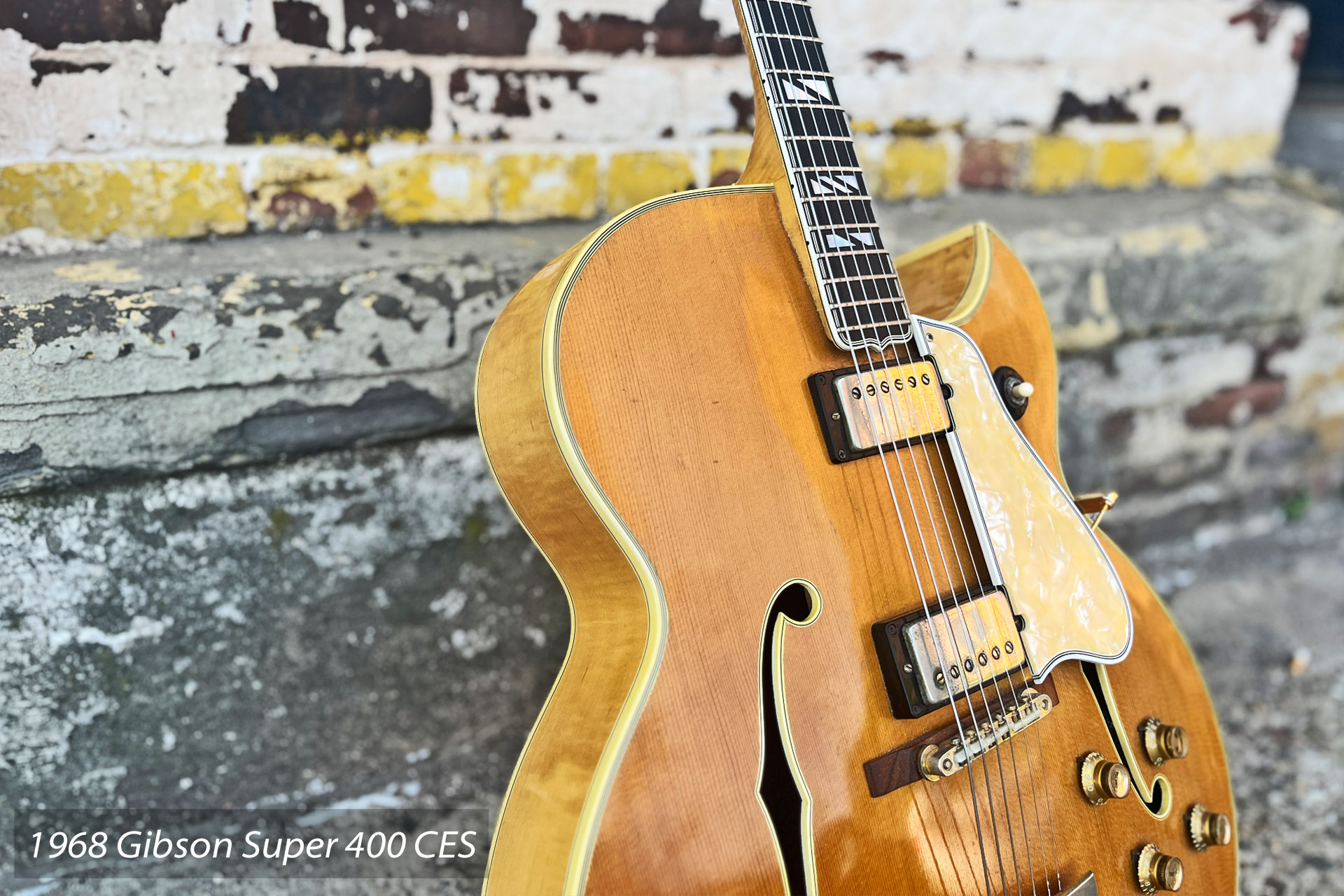
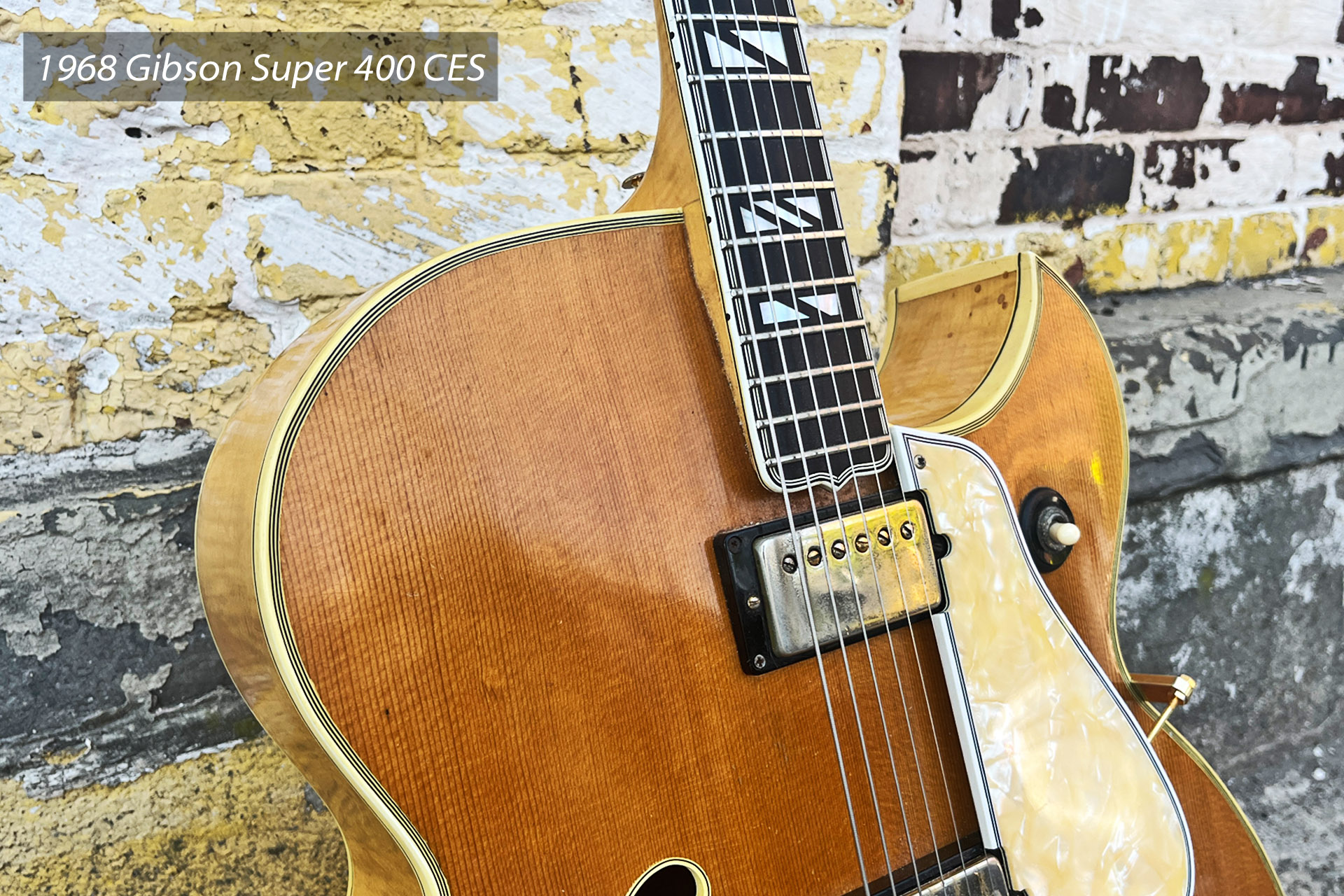
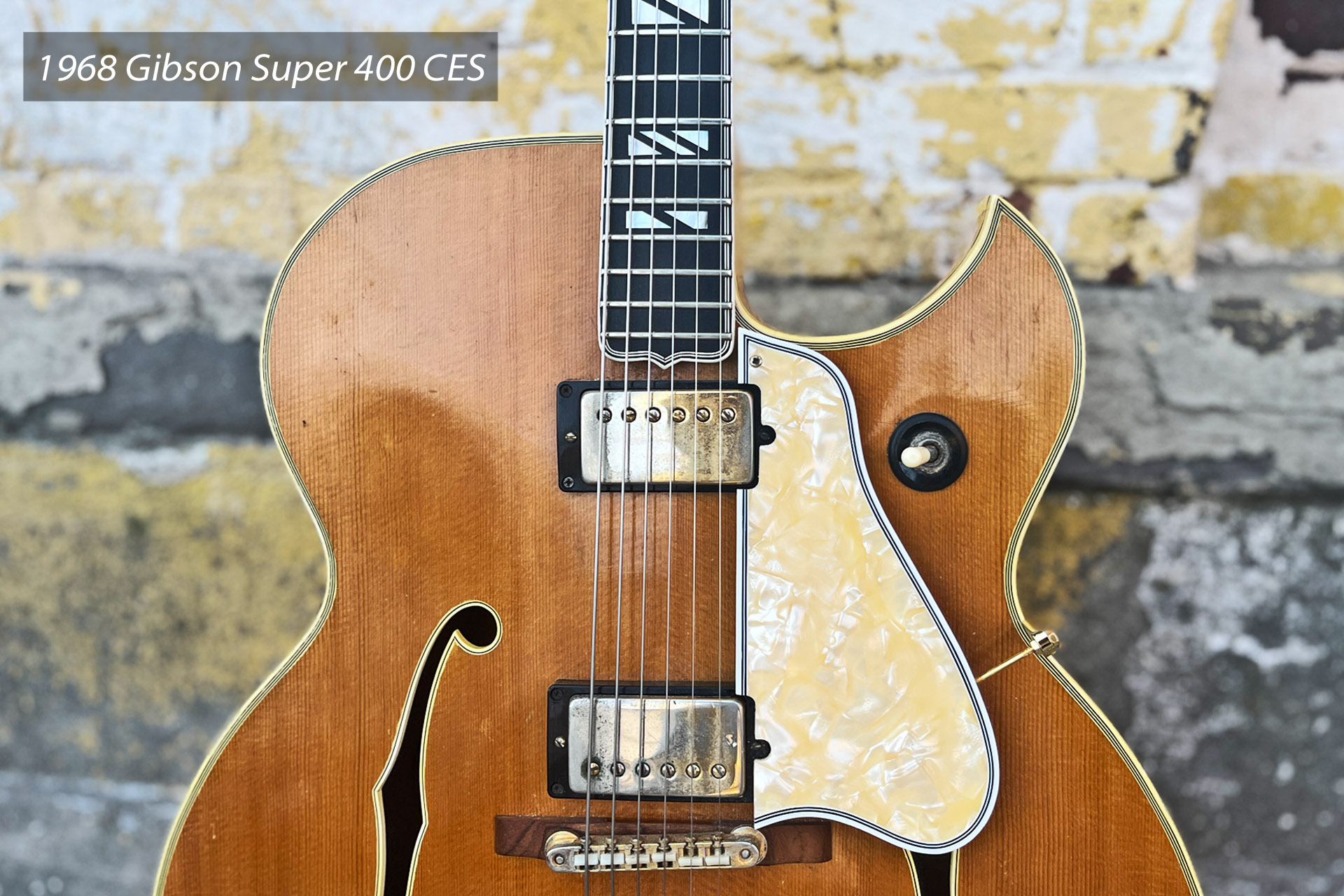
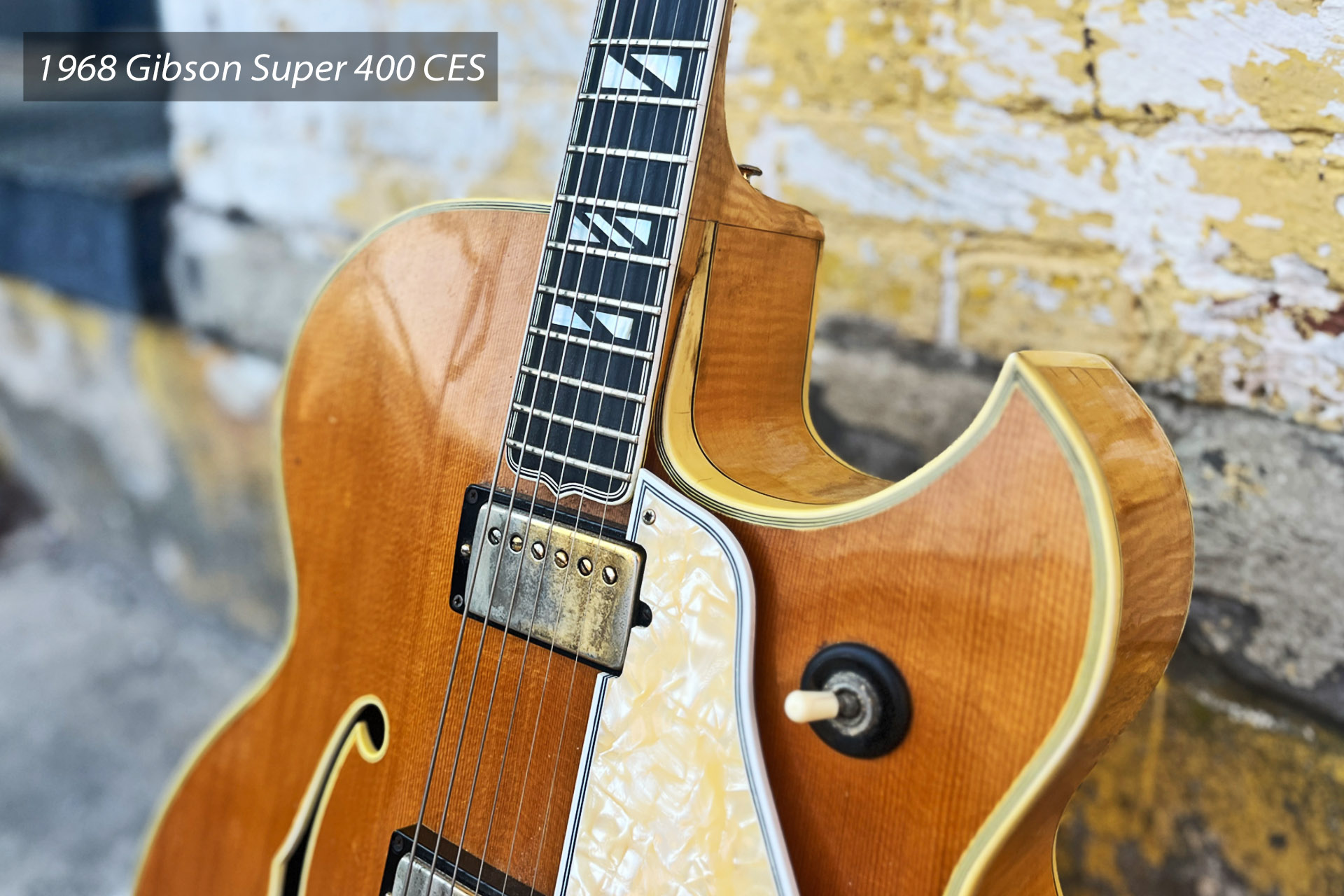
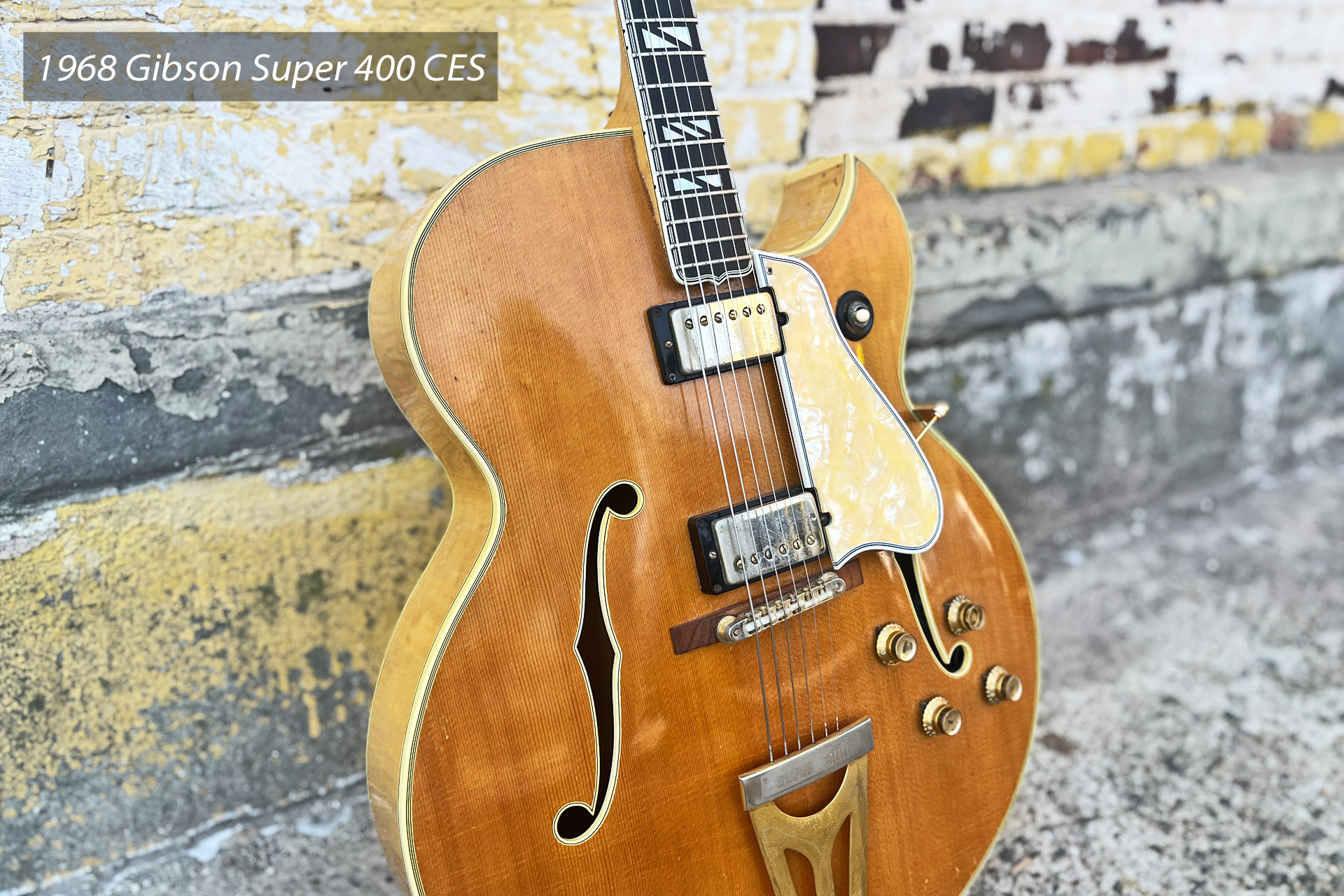
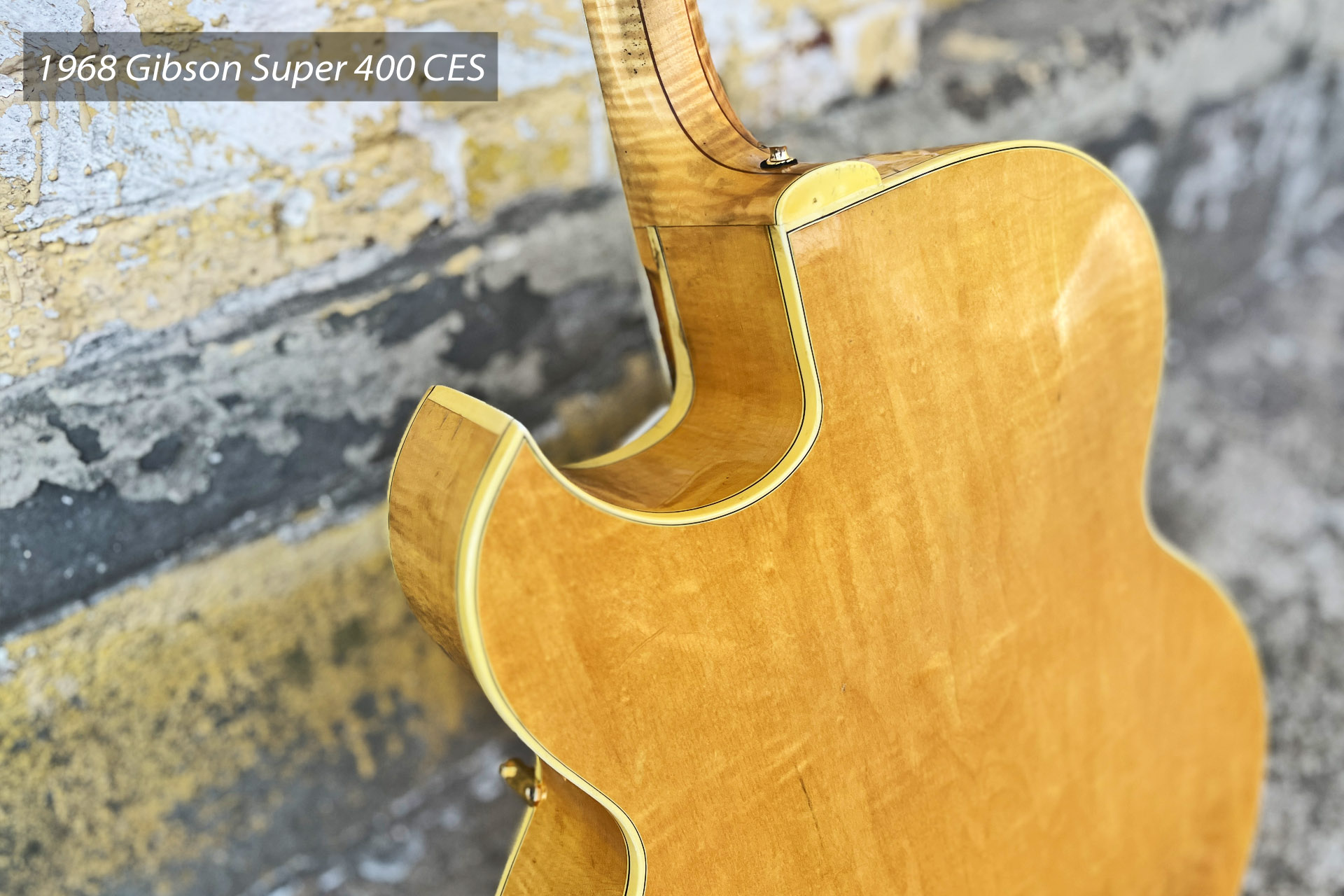
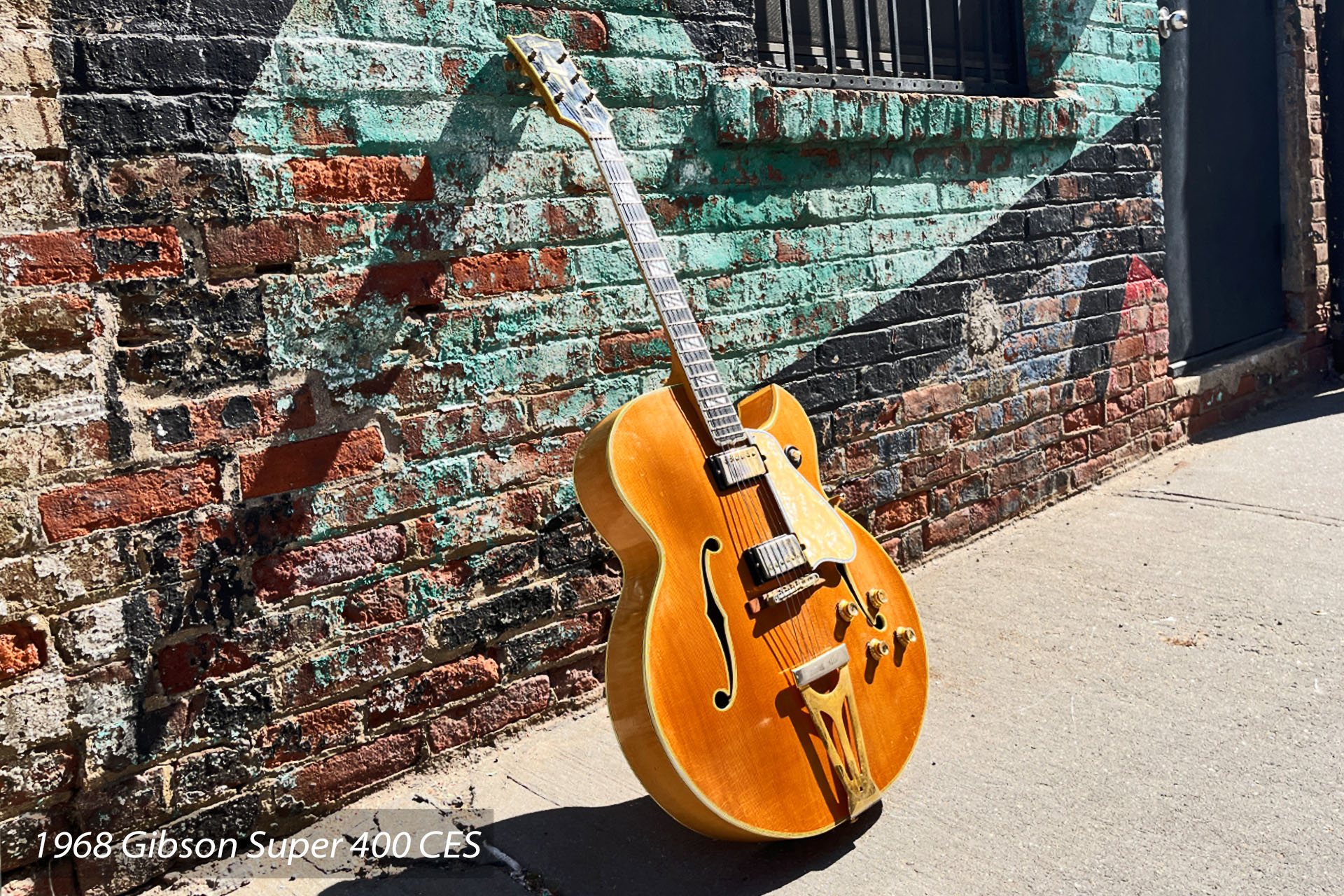
This is a very cool 1968 Super 400 with a sharp cutaway, which was only made during the 1960s. It sounds warm and full with the typical humbucker sound the Pat# sticker pickups.

With the exception of the custom-made pickguard, It is all original with no modifications. Of course it has the 1" 11/16th nut, an ebony fingerboard, nitrocellulose lacquer, split-parallelogram mother of pearl inlays and the classic S400 trapeze tailpiece. I am a big Herb Ellis fan and love the sound he had on many of his recordings with Oscar Peterson. This guitar can perfectly achieve that warm Herb Ellis sound (though he never played a S400).
Listen to this guitar
1968 Gibson Super 400 CES 1968 Gibson Super 400 CES 1968 Gibson Super 400 CES 1968 Gibson Super 400 CES 1968 Gibson Super 400 CES 1968 Gibson Super 400 CES 1968 Gibson Super 400 CES 1968 Gibson Super 400 CES 1968 Gibson Super 400 CES
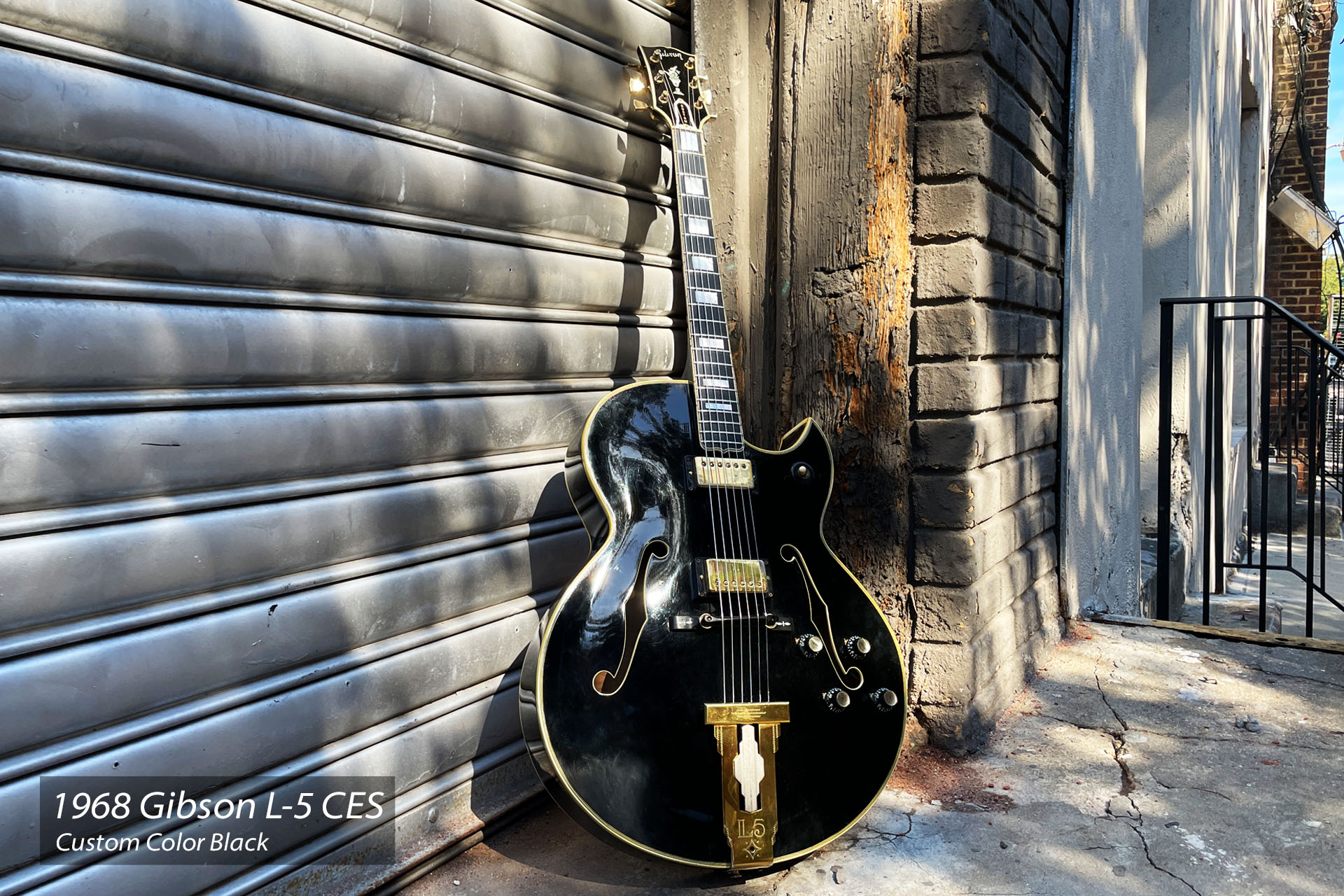
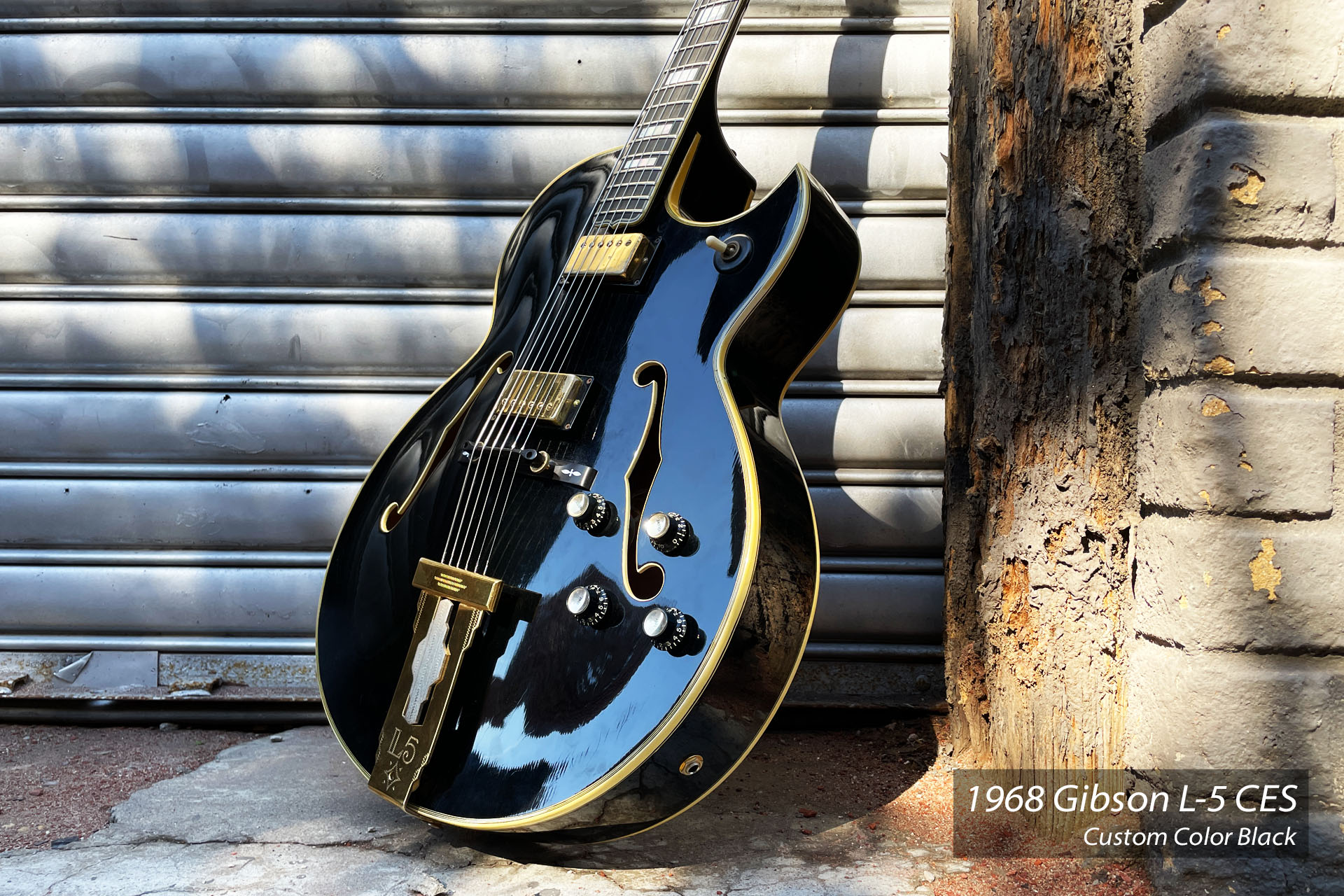
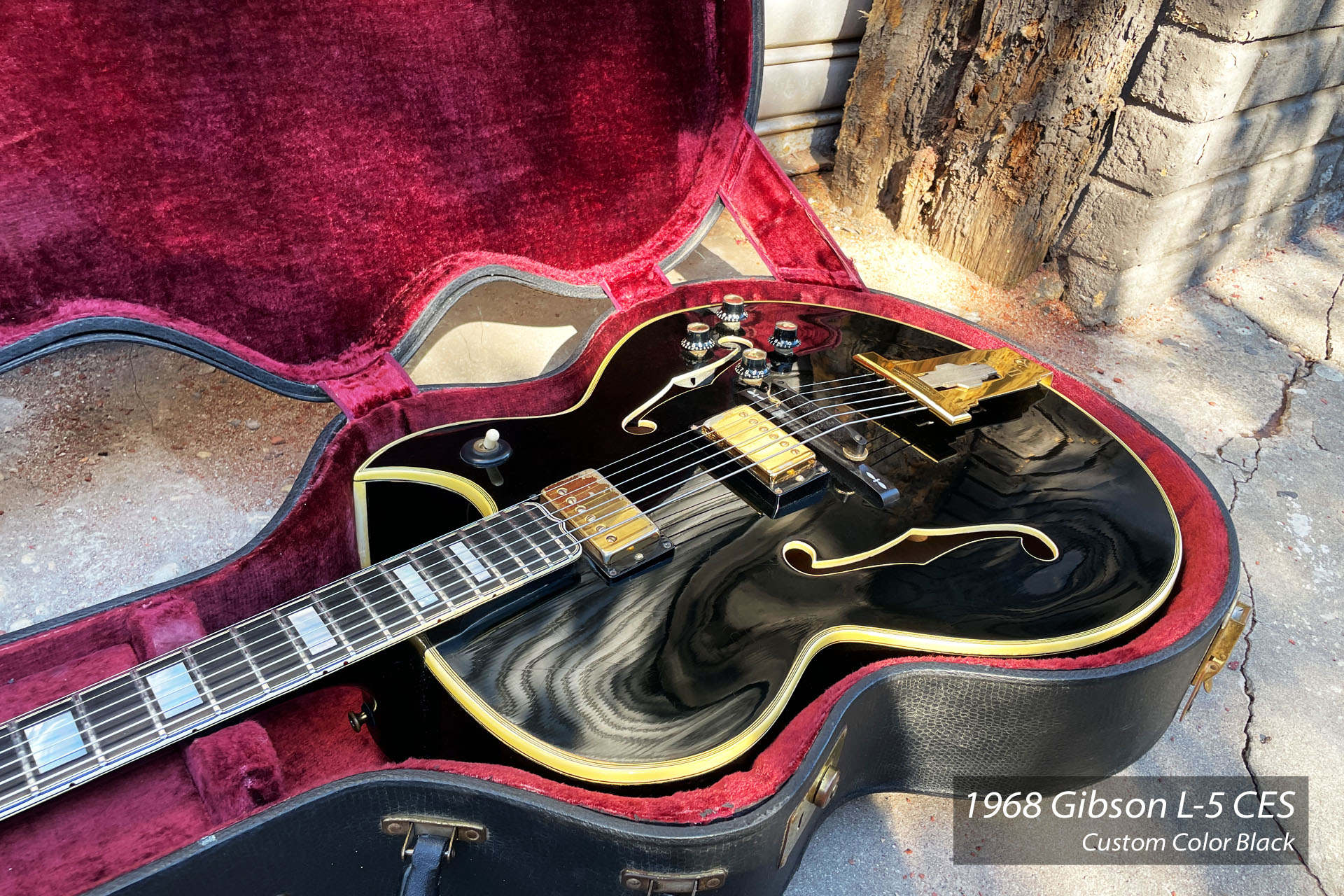
1968 Gibson L-5 CES

1968 Gibson L-5 CES


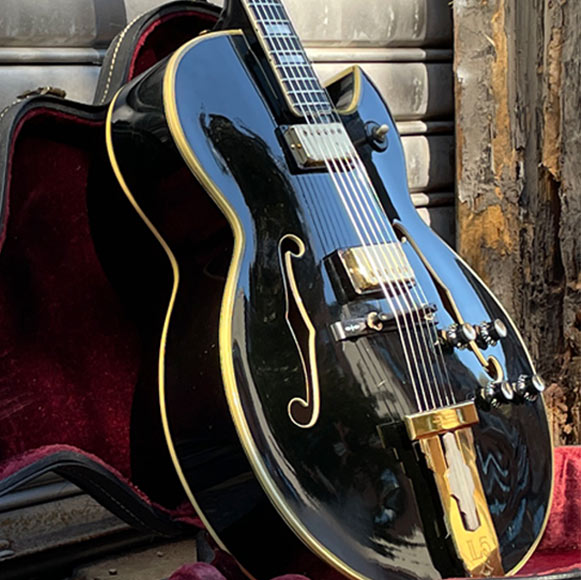
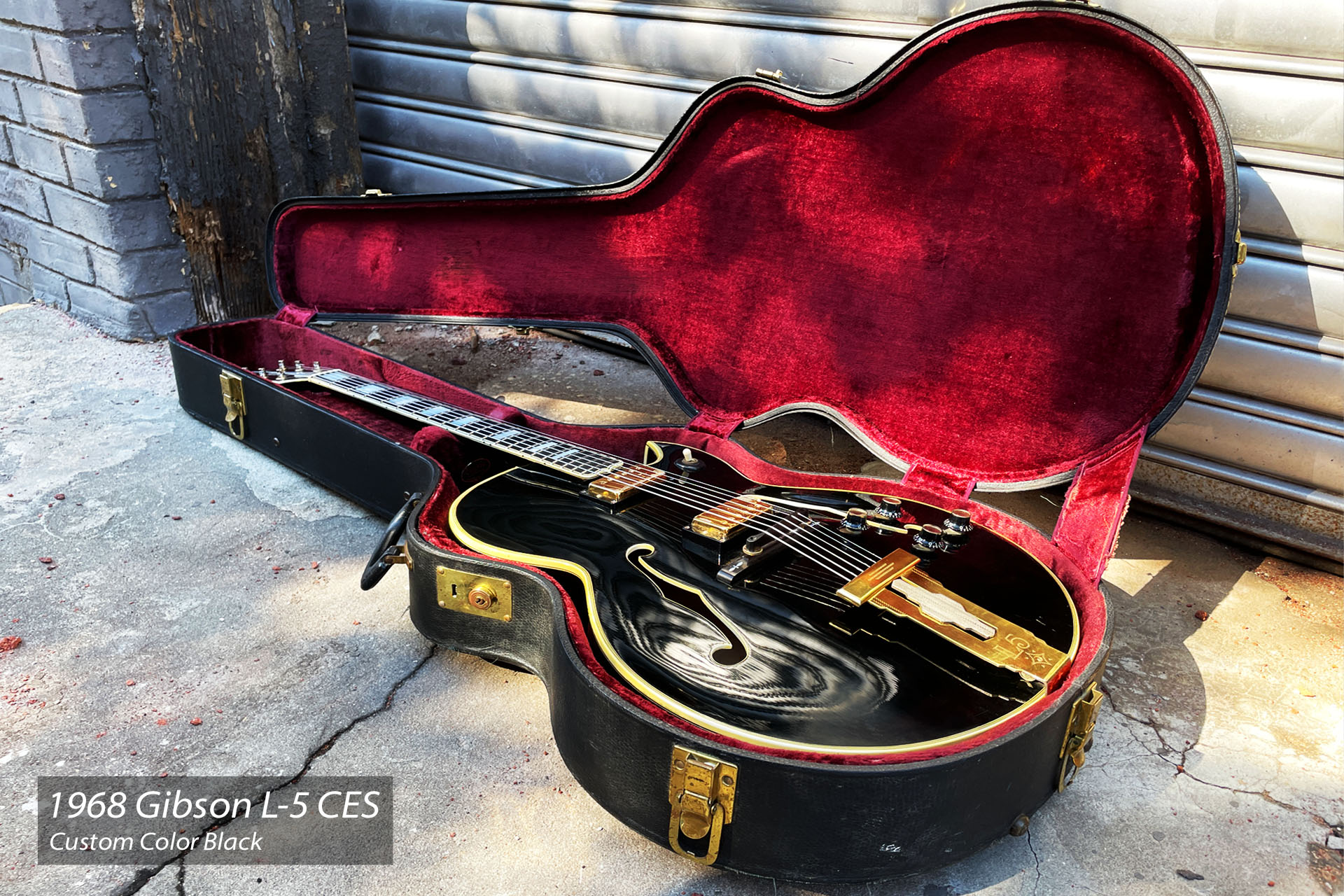
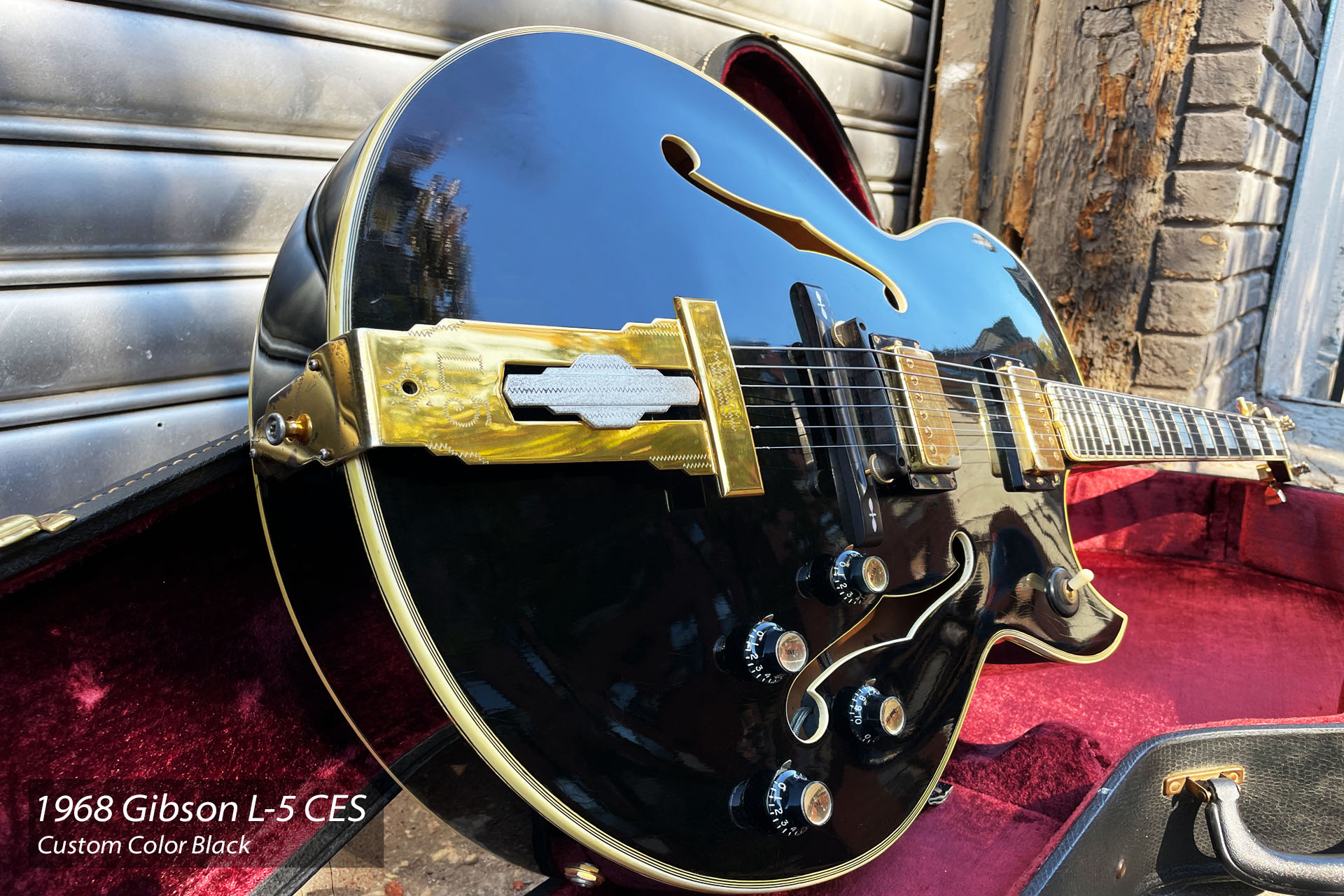
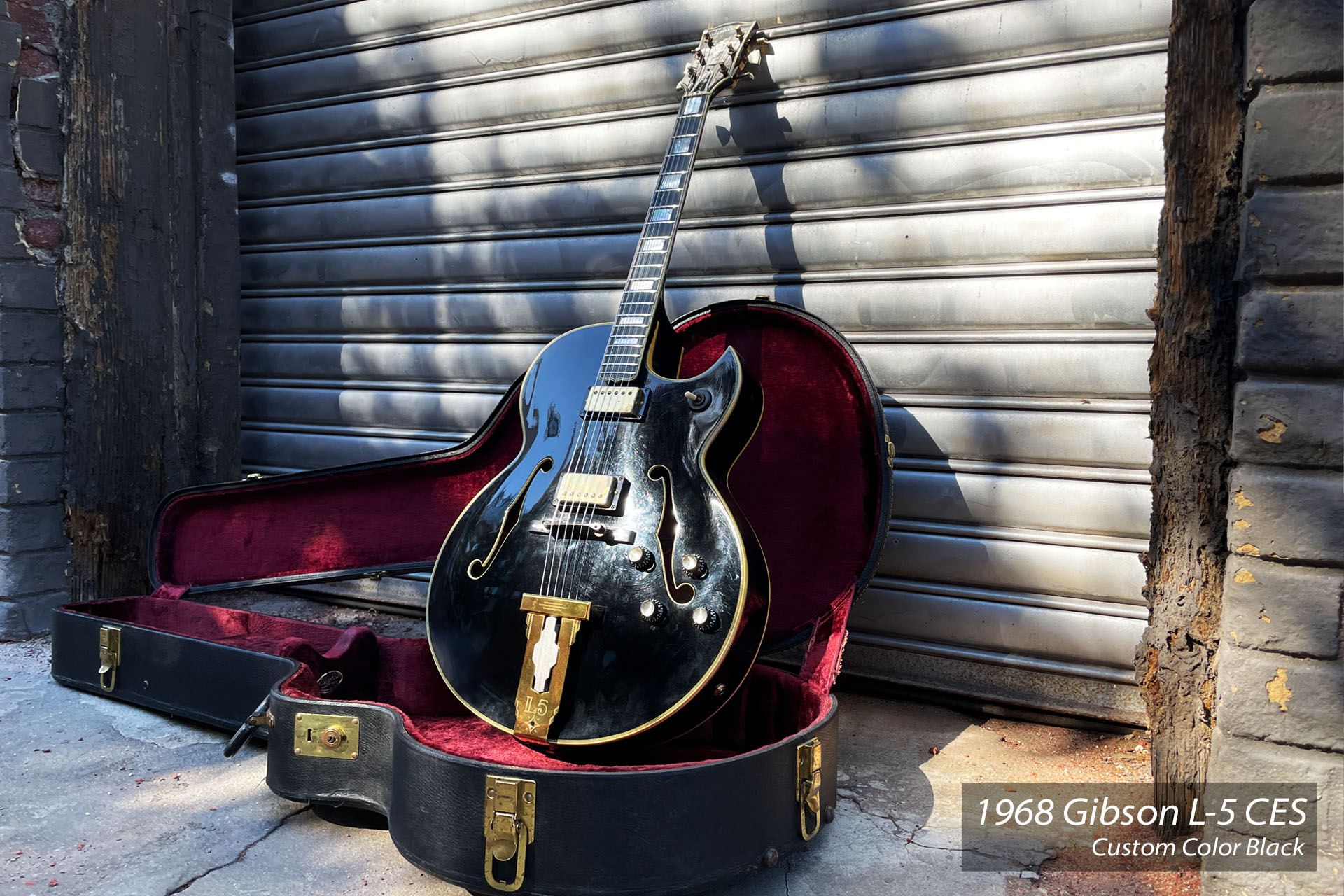
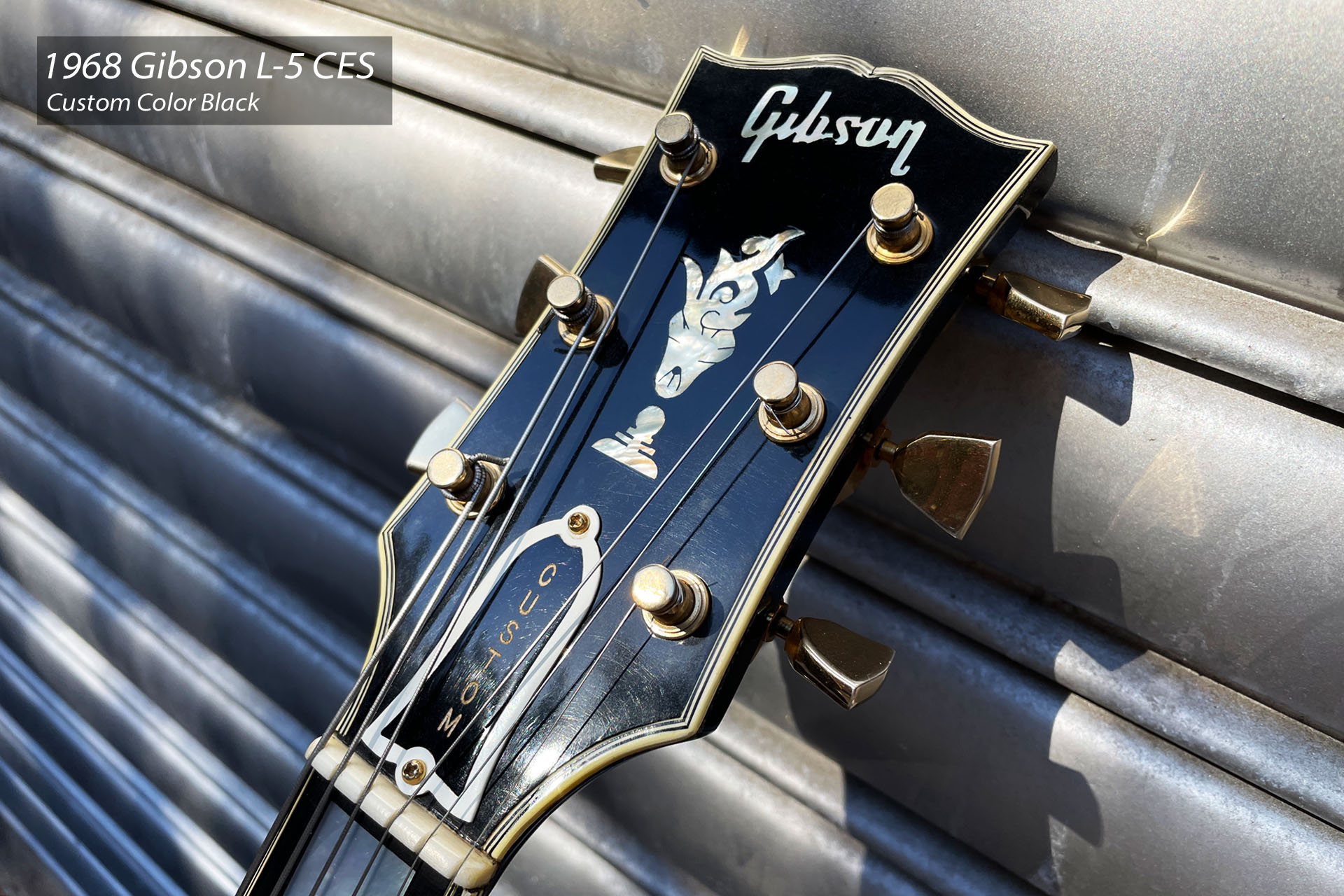
This is a beautiful 1968 L-5 with a Florentine cutaway, custom ordered in black - which makes it a unique, stylish masterpiece. With its Pat# sticker PUs, it sounds midrangy, warm and compressed, great for single line soloing and octaves.

It is all original with no mods and looks absolutely stunning in the stage lights. It has the 1" 11/16th nut, ebony fingerboard, nitrocellulose lacquer, mother of pearl block inlays, flower pot headstock inlay and the classic L-5 trapeze tailpiece.

This is a real Bebop guitar, reminding me of the sound on some Pat Martino or Bruce Forman recordings.

Listen to this guitar
1968 Gibson L-5 CES 1968 Gibson L-5 CES 1968 Gibson L-5 CES 1968 Gibson L-5 CES 1968 Gibson L-5 CES 1968 Gibson L-5 CES 1968 Gibson L-5 CES
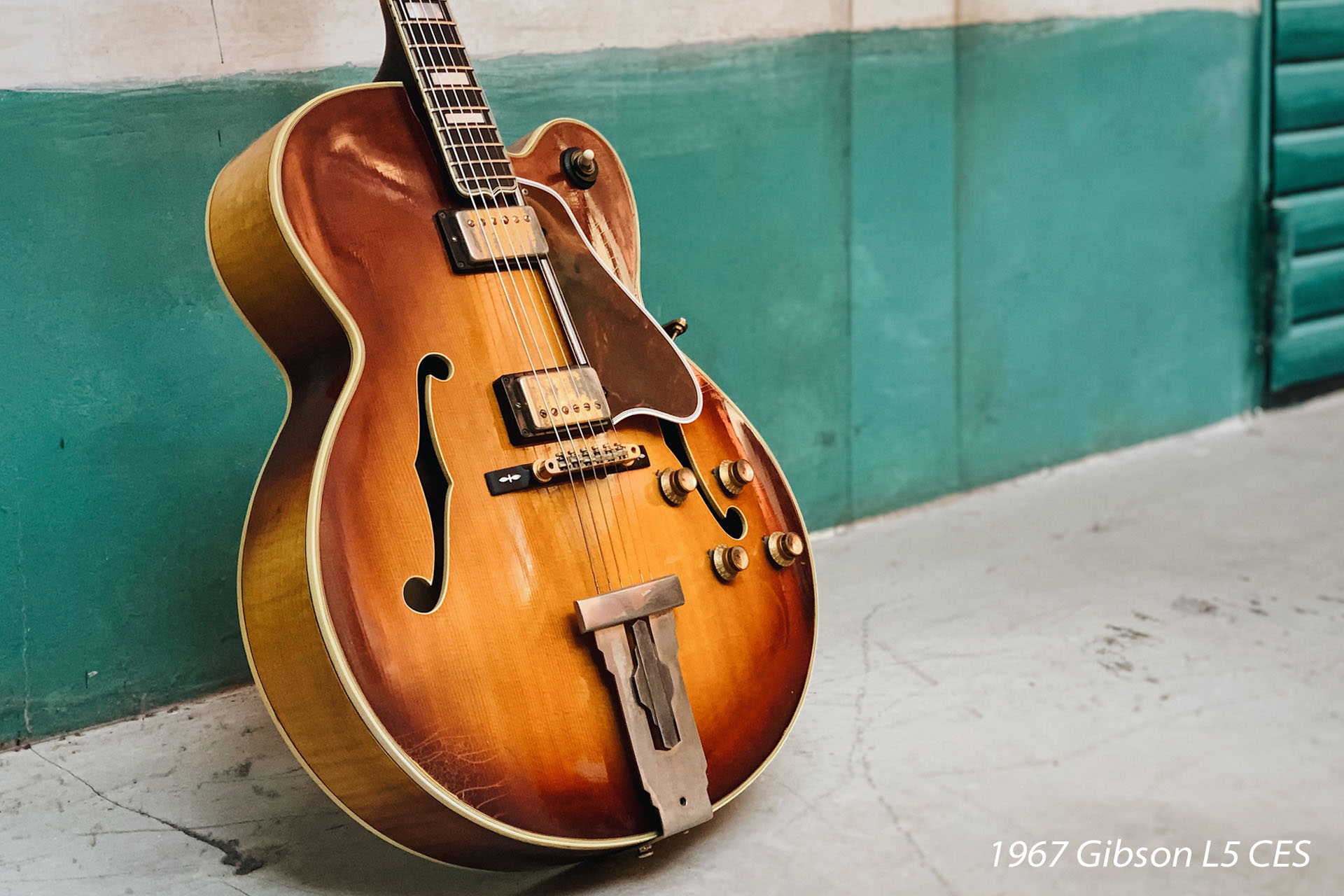
1967 Gibson L-5 CES

1967 Gibson L-5 CES


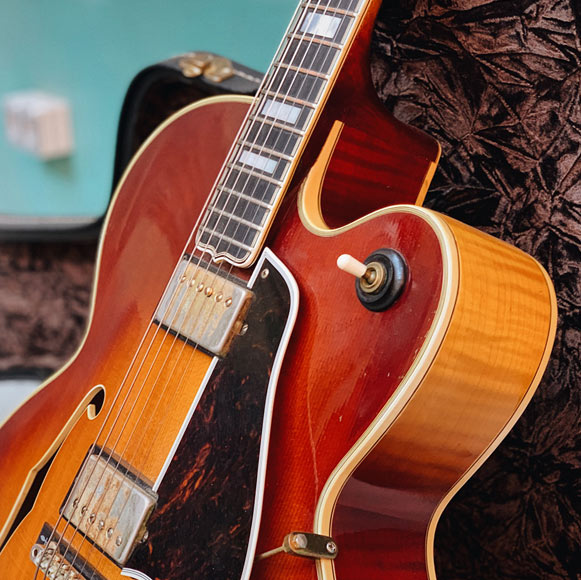
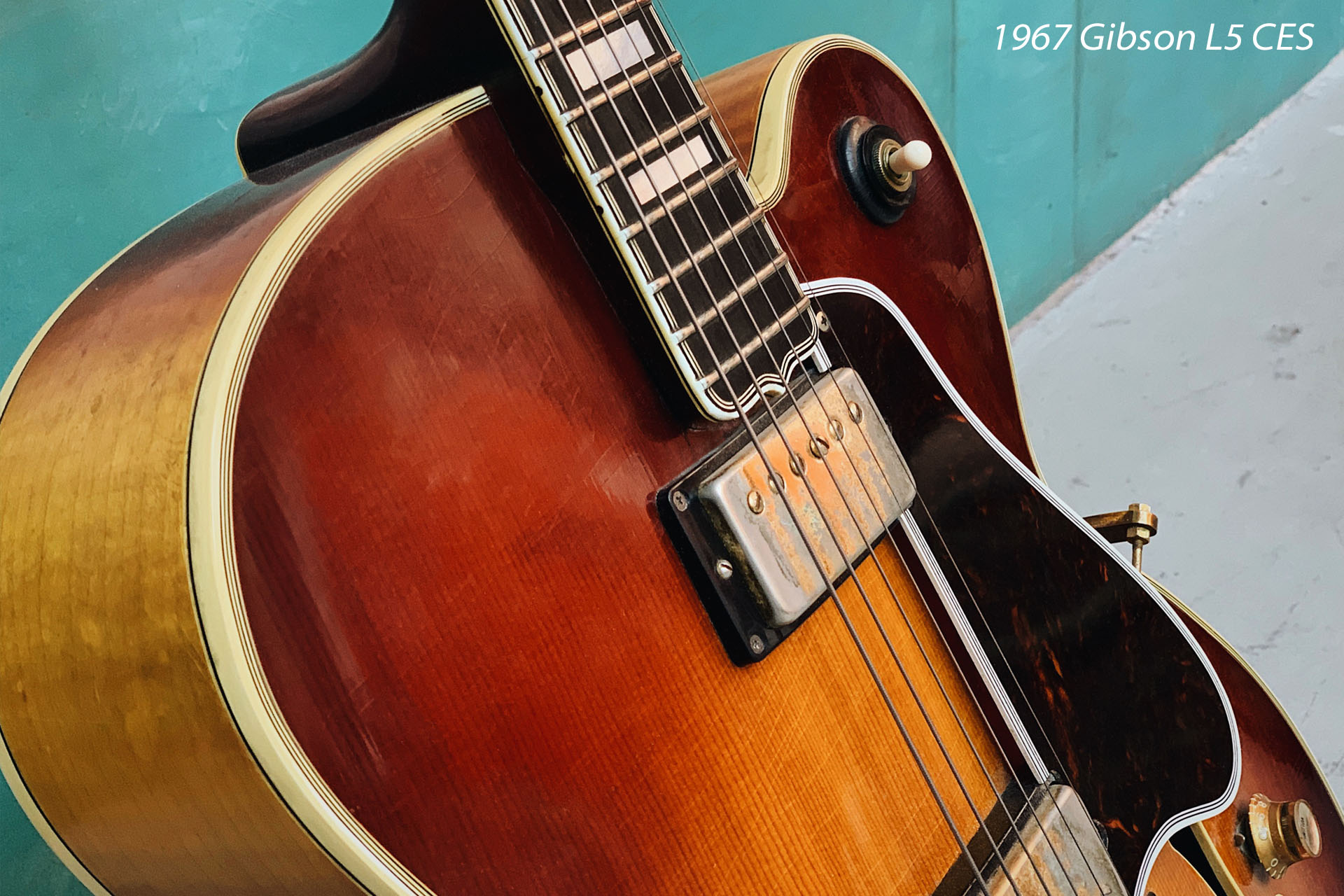
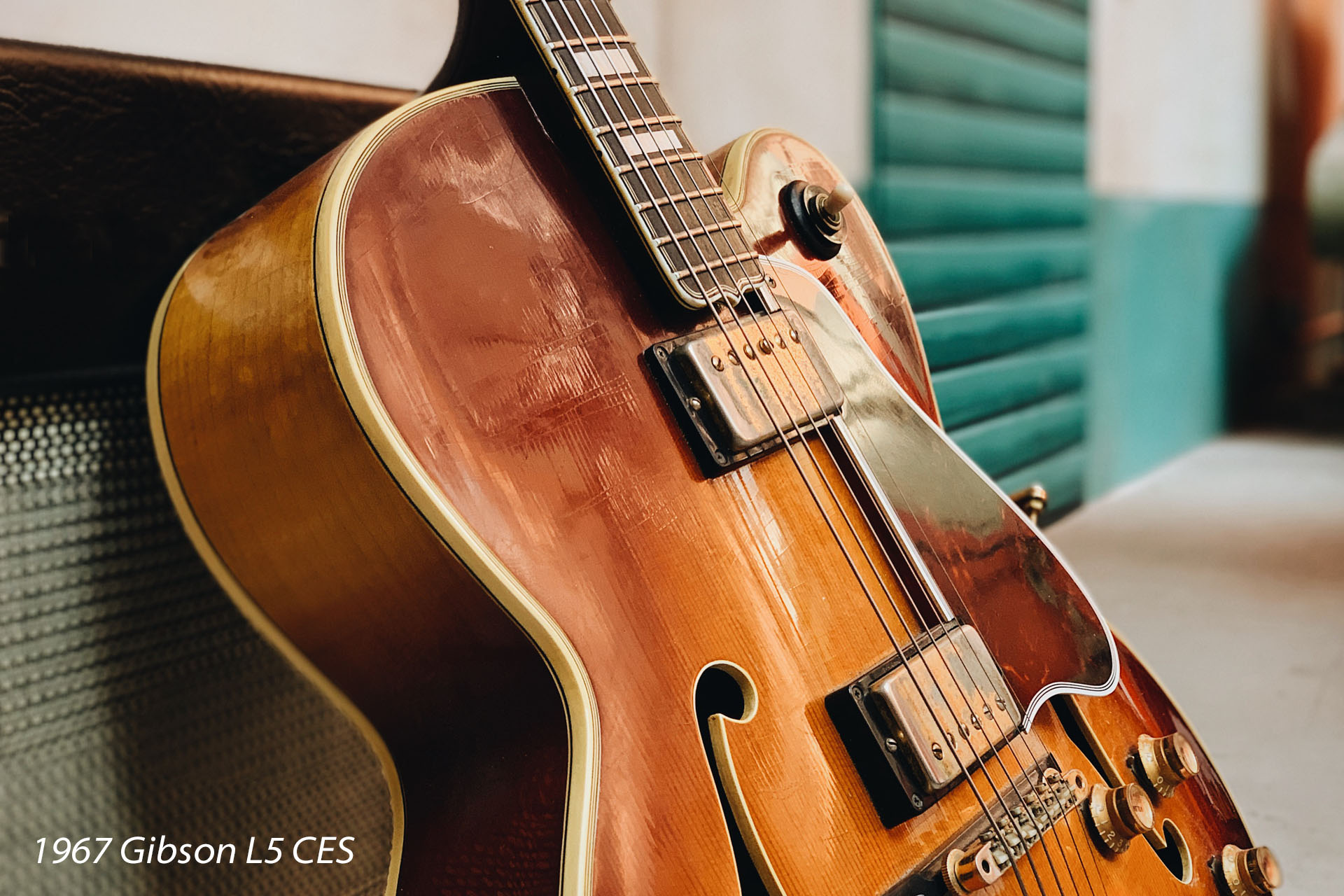
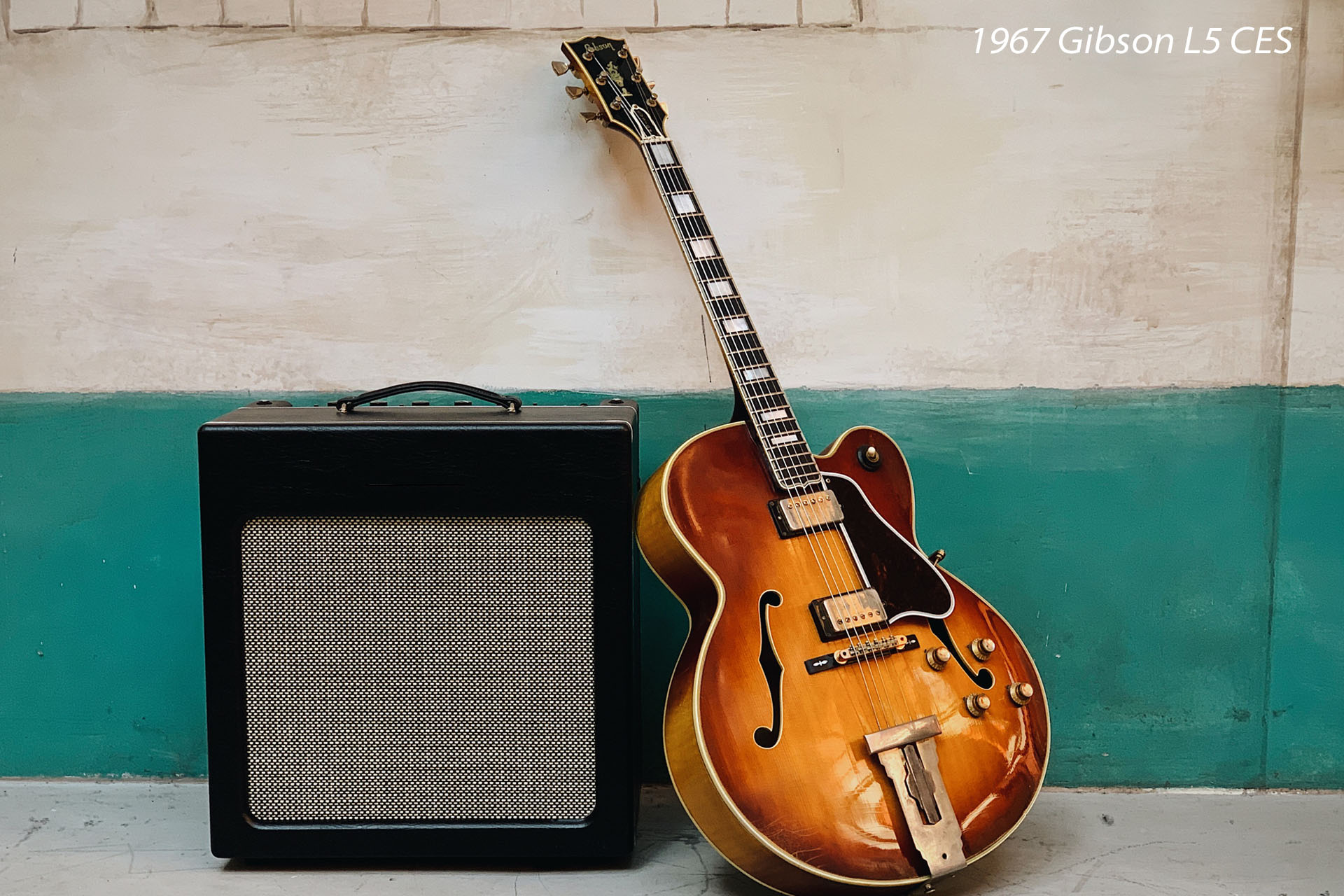
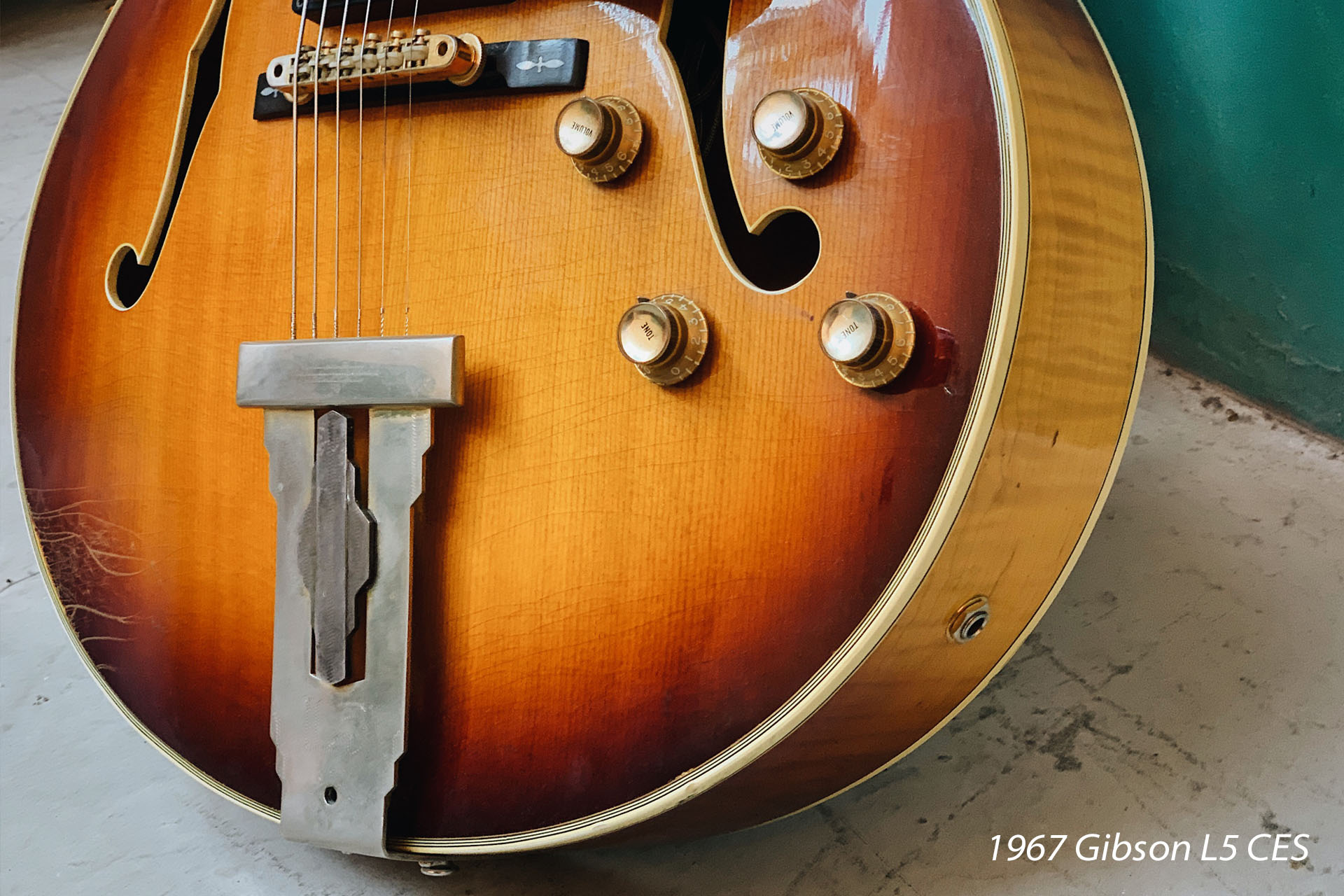
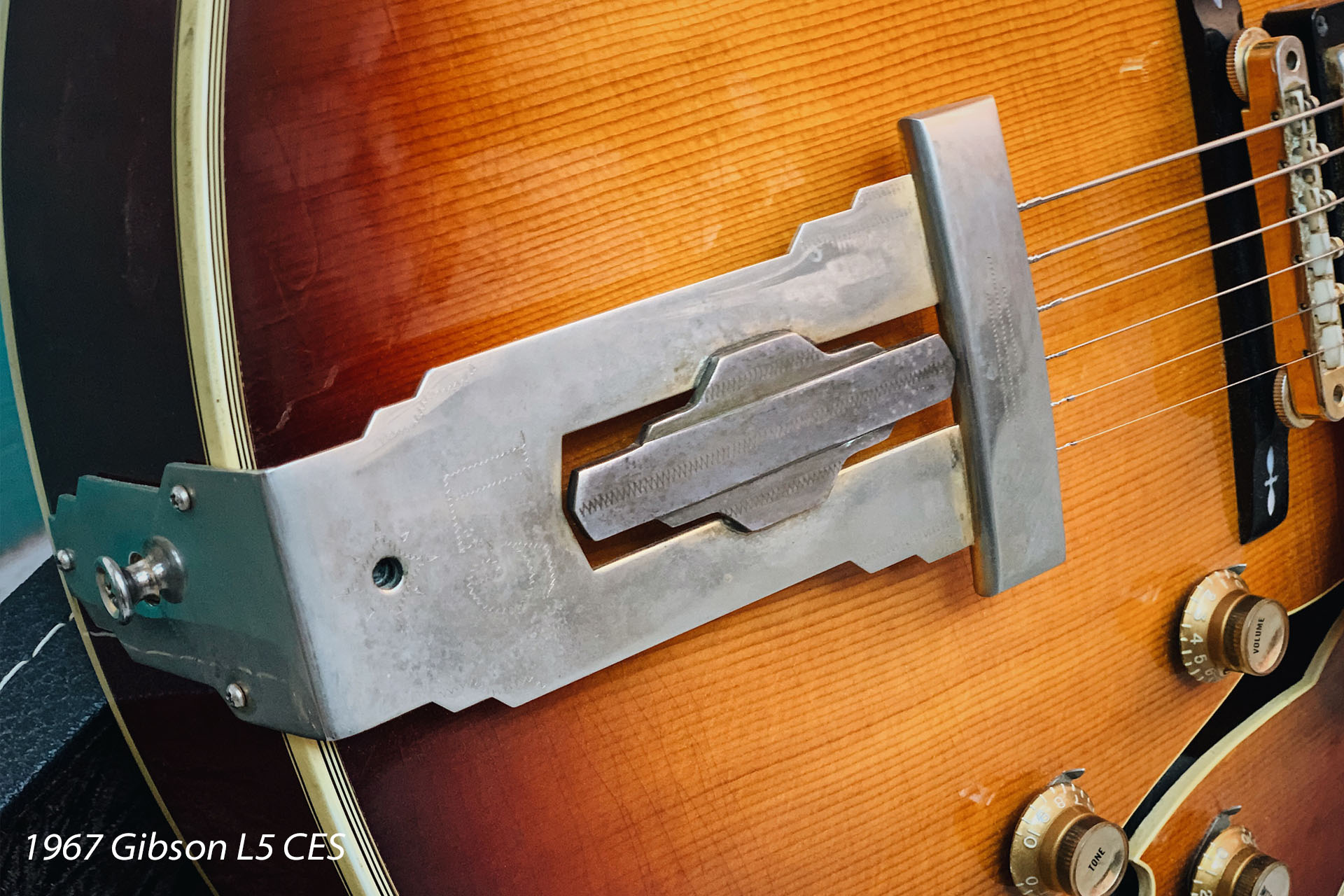
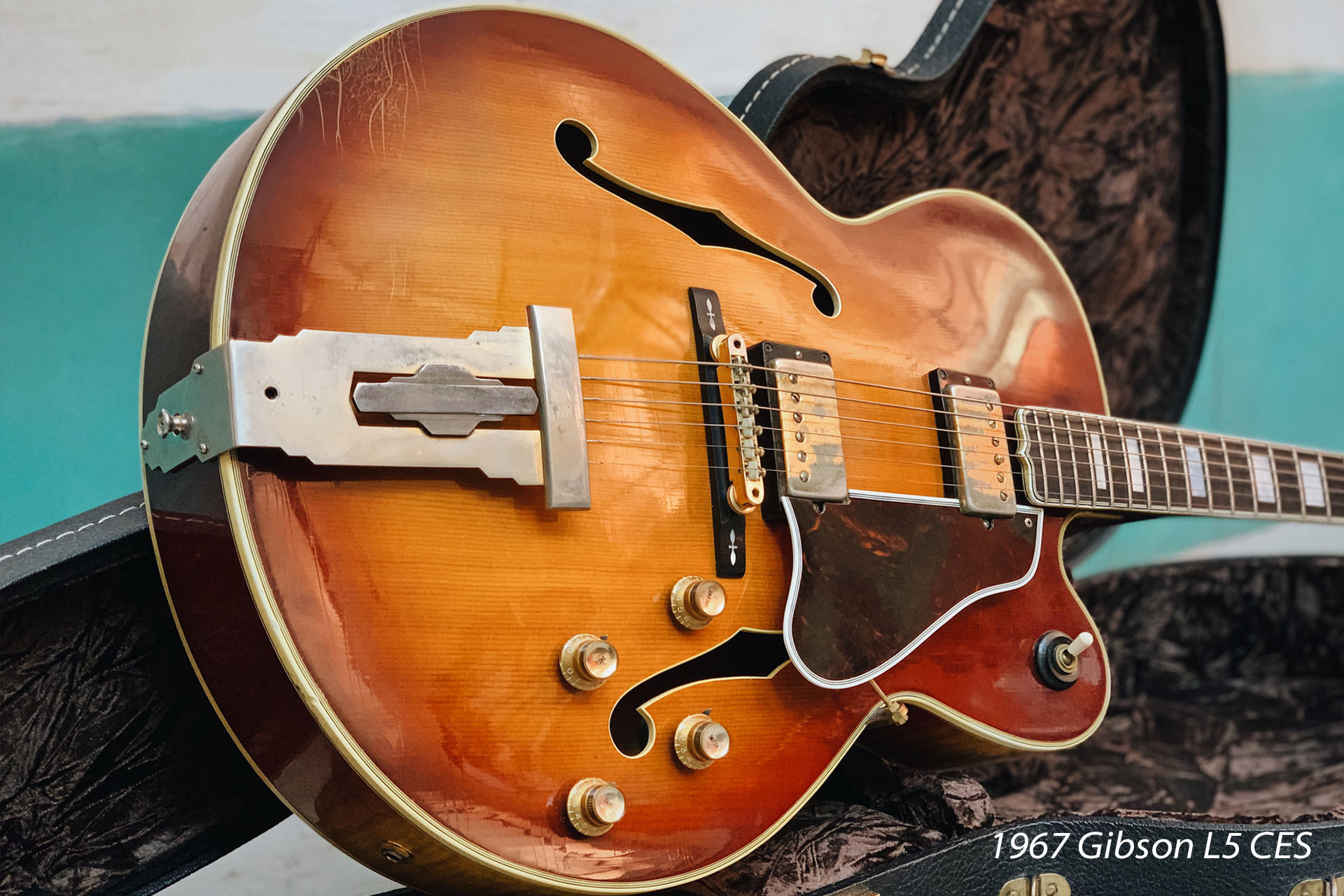
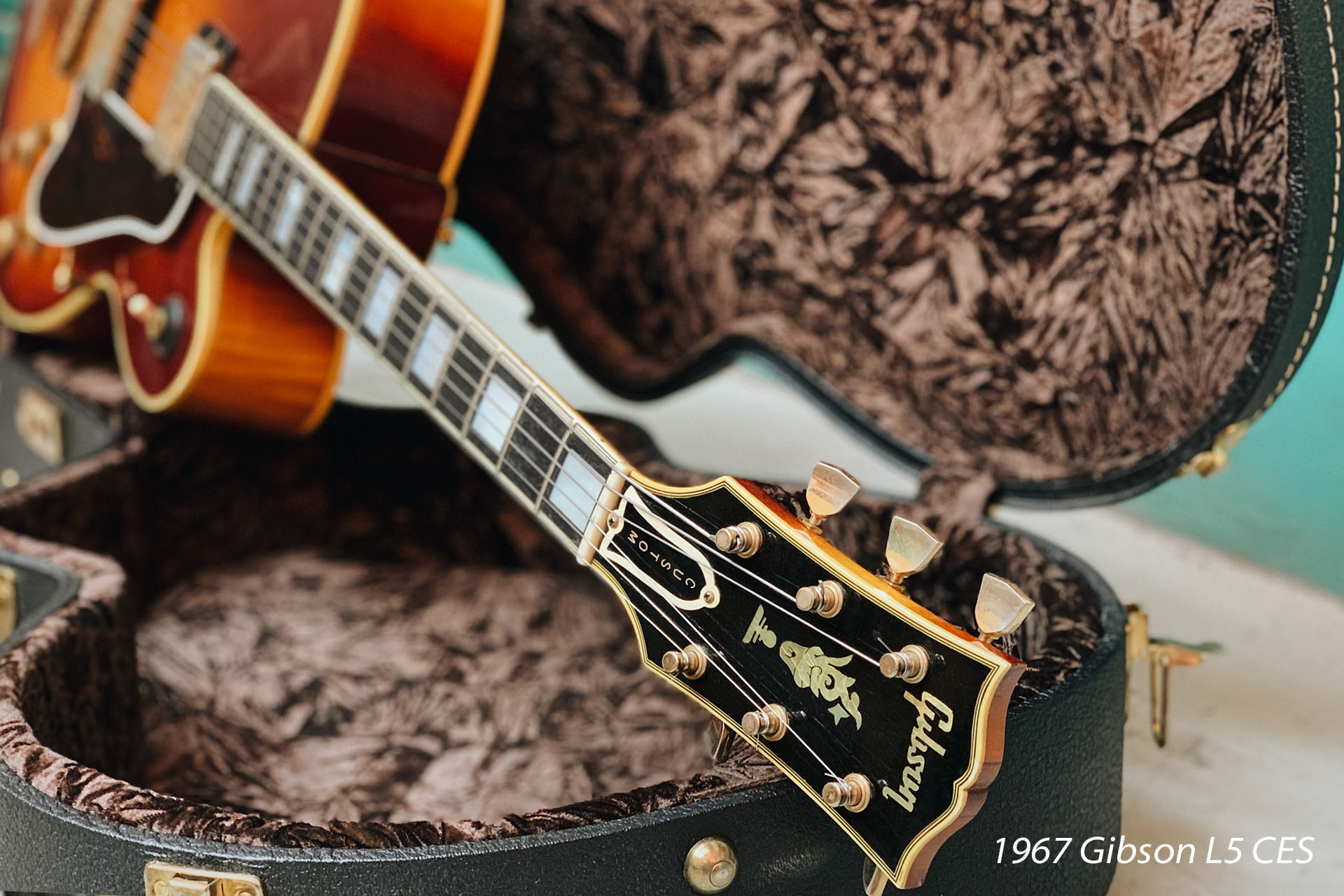
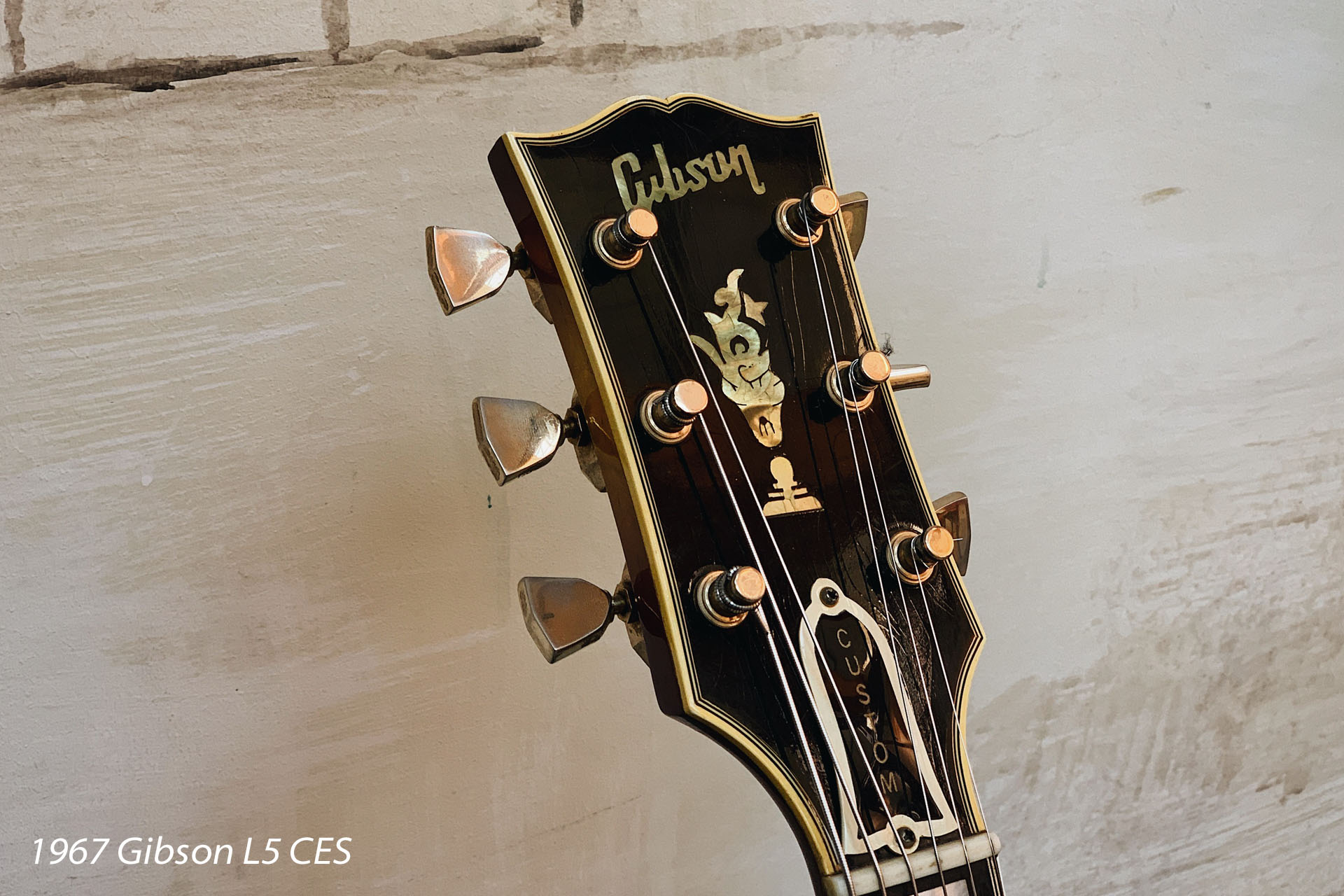
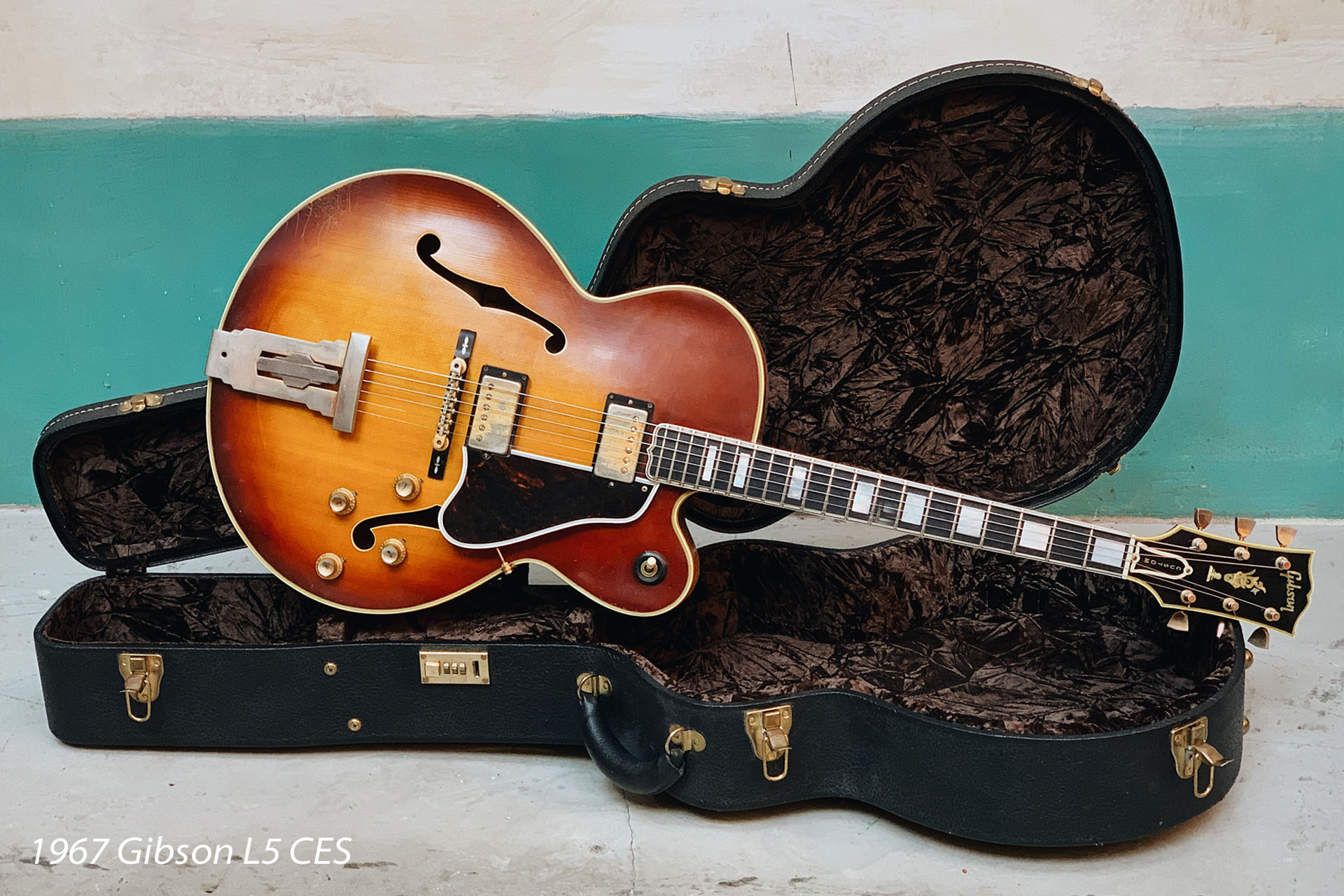
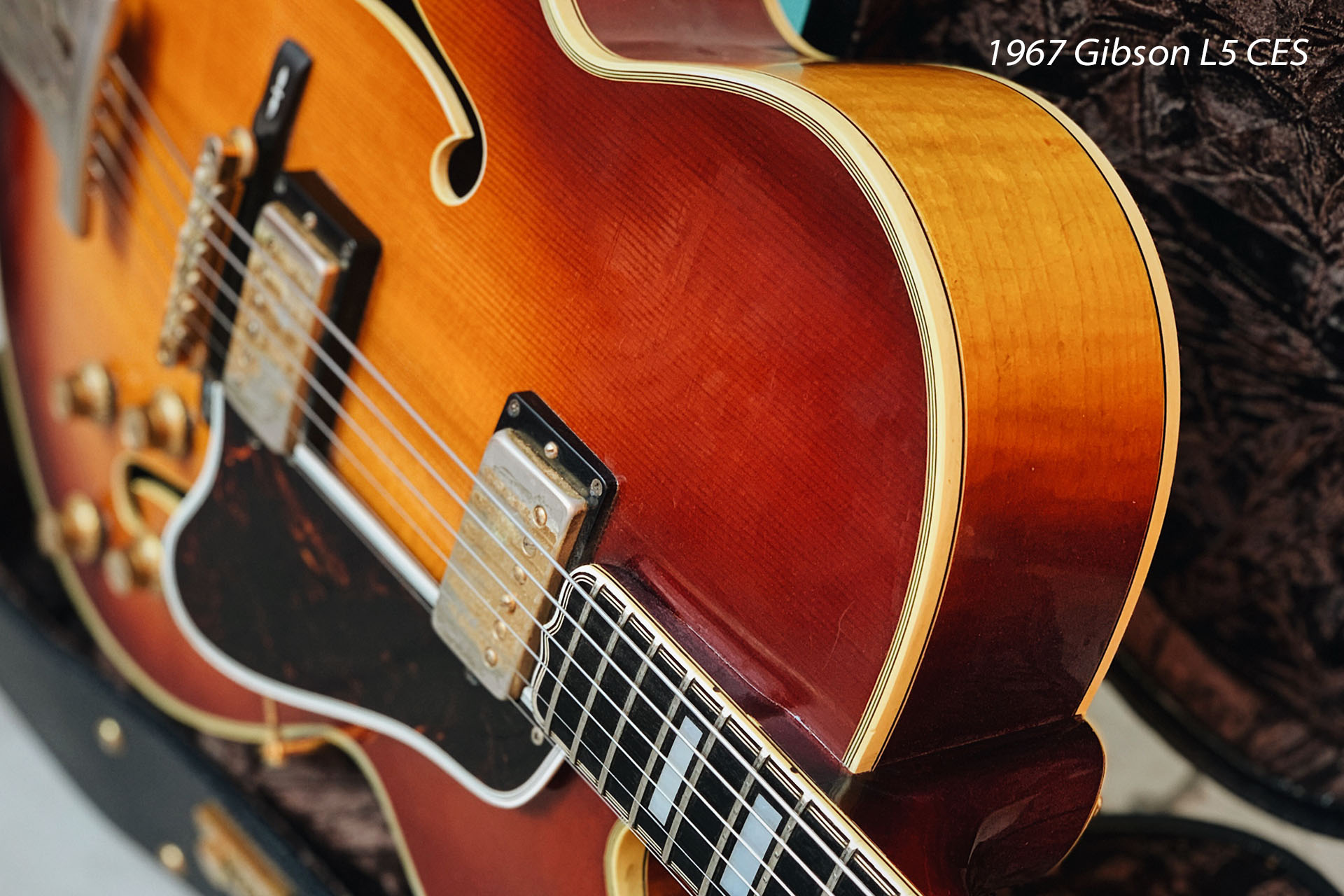
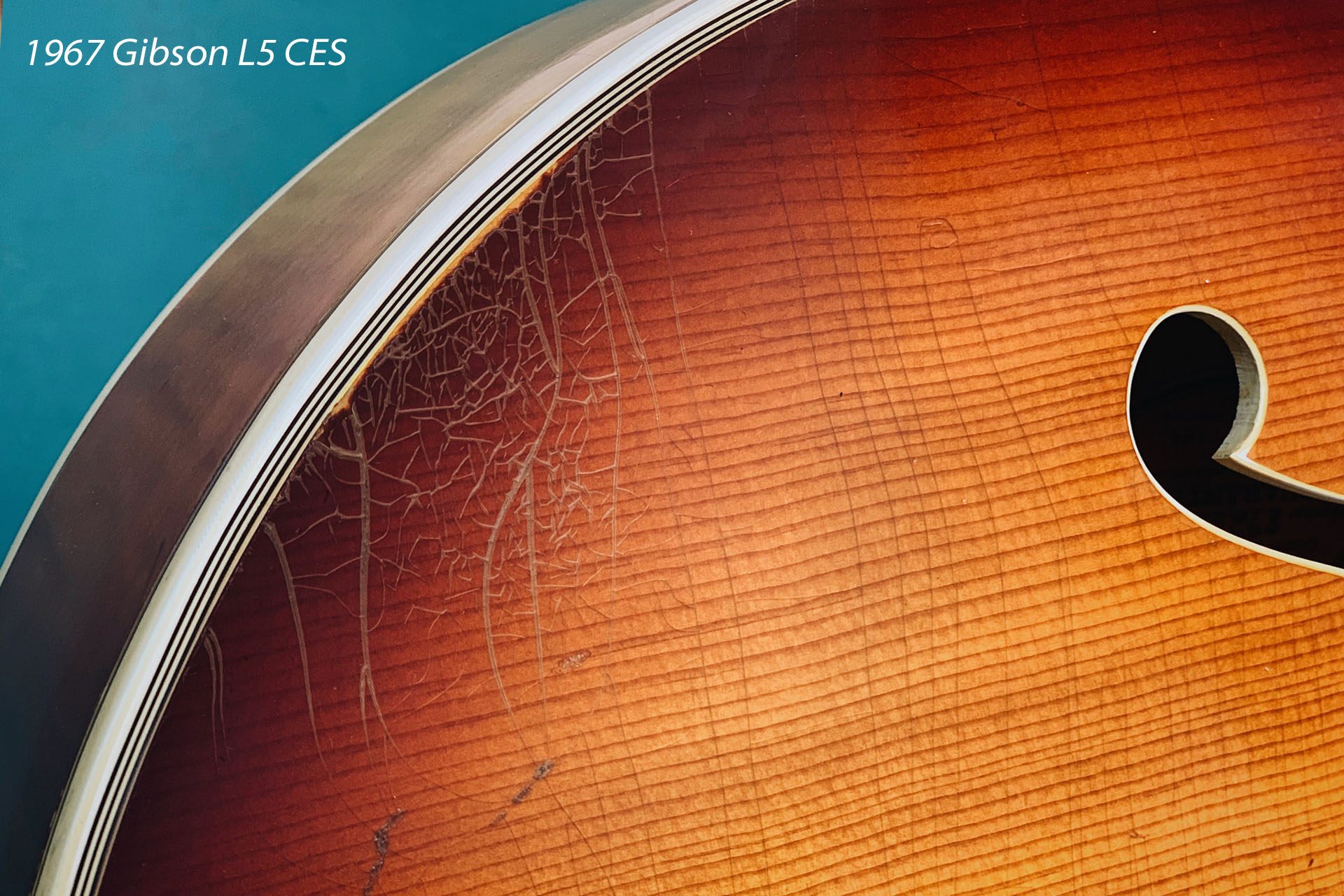
For many years I wanted a vintage L5 (Wes's guitar) which was not easy to find: The good ones that sound great, have been treated well, are unmodified and - when you're lucky - also look beautiful are hardly ever for sale.

This L-5 had everything I dreamed of: Atypical for that year, it has a round cutaway and a 1" 11/16th nut. When I first played it at a store in London it was love at first sight. After that, playing hundreds of gigs with it, I learned how versatile it is – it has every beautiful jazz sound you could possibly want.

The original Pat# sticker PUs sound warm and rich. It has an ebony fingerboard, a tune-o-matic bridge, a beveled 5-ply tortoise shell pickguard, the original amber top hat knobs, block mother of pearl inlays, and the L5 gold tailpiece.

Listen to this guitar
1967 Gibson L-5 CES 1967 Gibson L-5 CES 1967 Gibson L-5 CES 1967 Gibson L-5 CES 1967 Gibson L-5 CES 1967 Gibson L-5 CES 1967 Gibson L-5 CES 1967 Gibson L-5 CES 1967 Gibson L-5 CES 1967 Gibson L-5 CES 1967 Gibson L-5 CES 1967 Gibson L-5 CES
1967 Gibson L-5 CES

1960 Gibson Super 400 CC


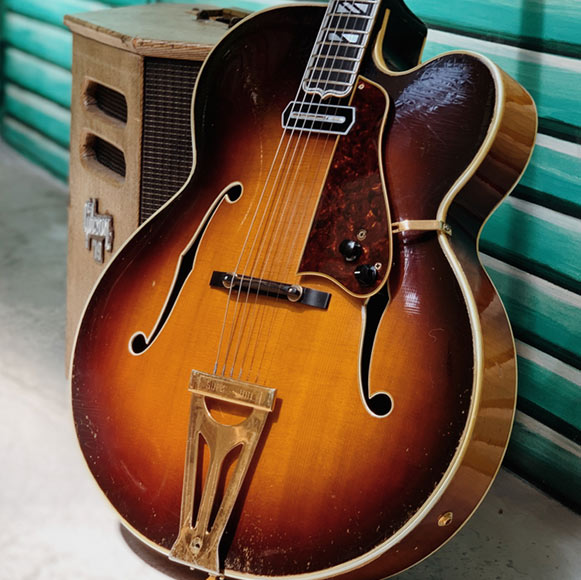
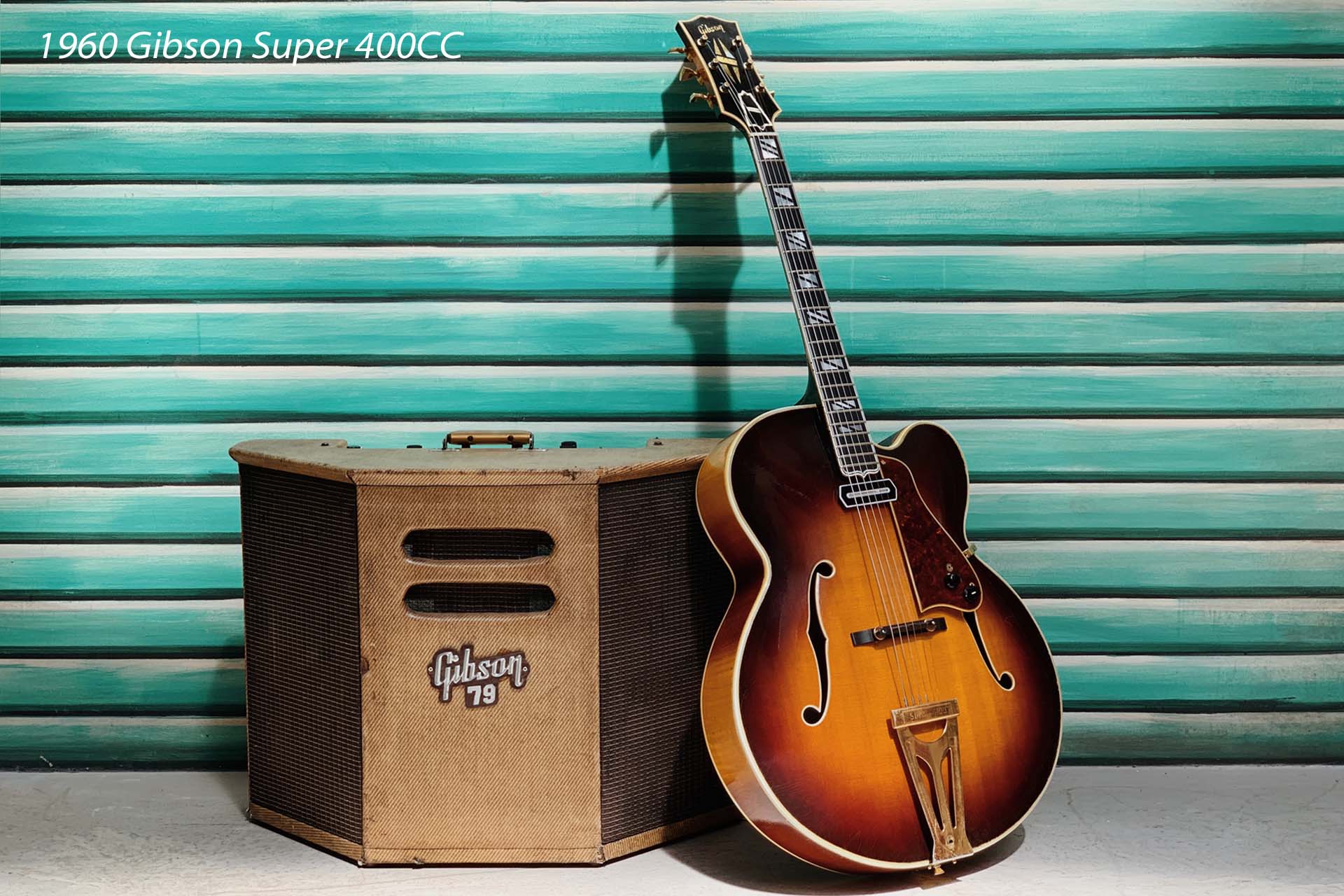
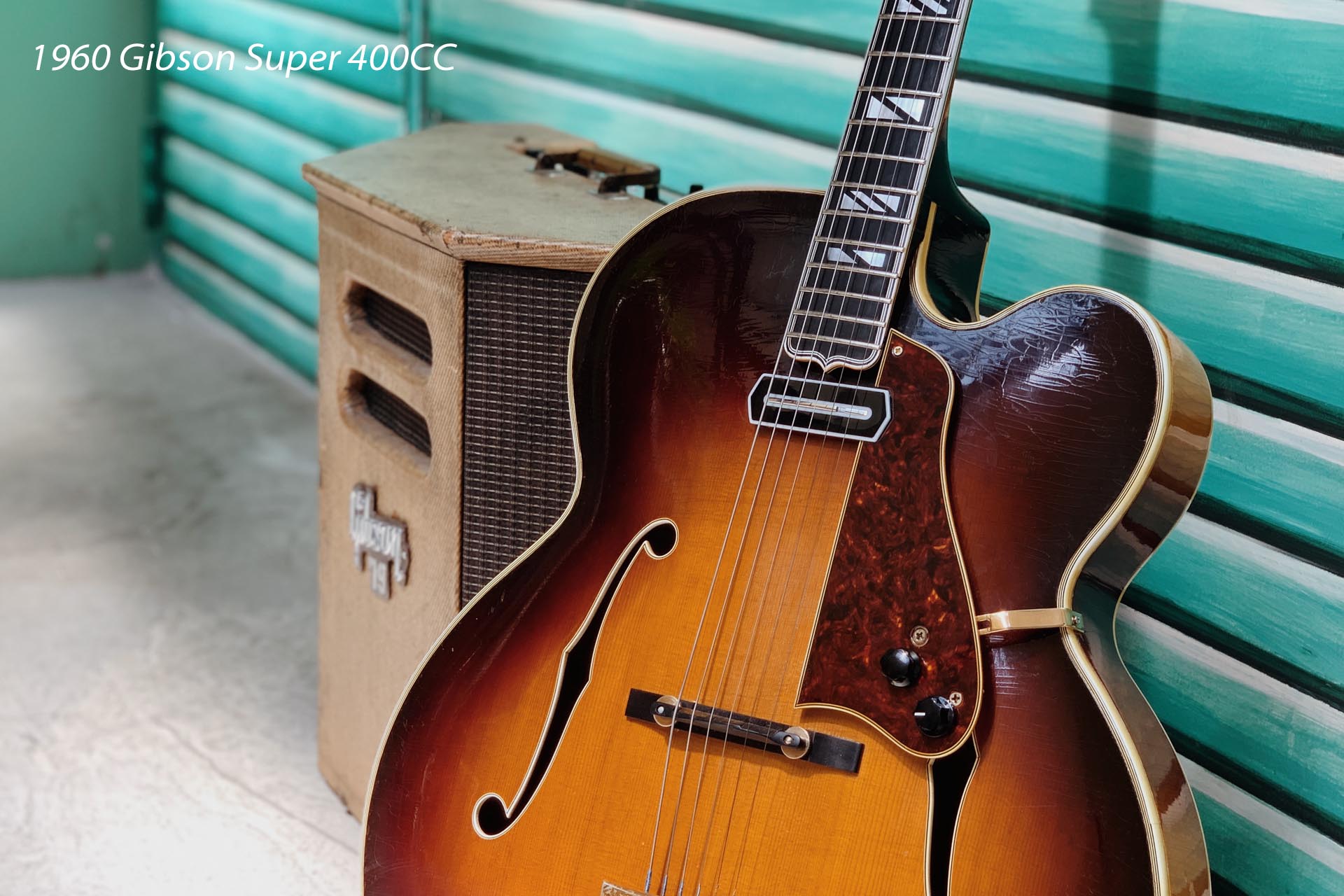
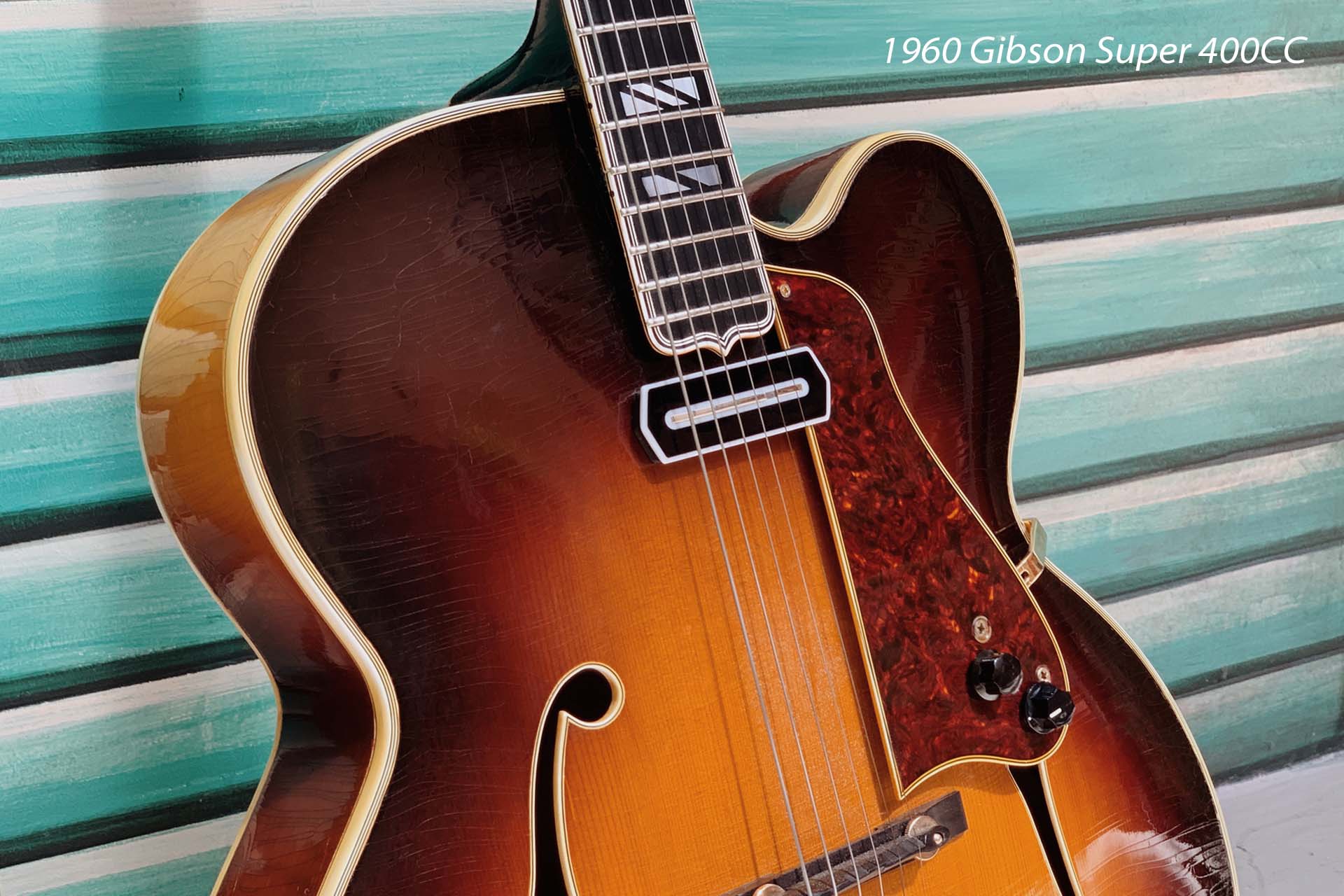
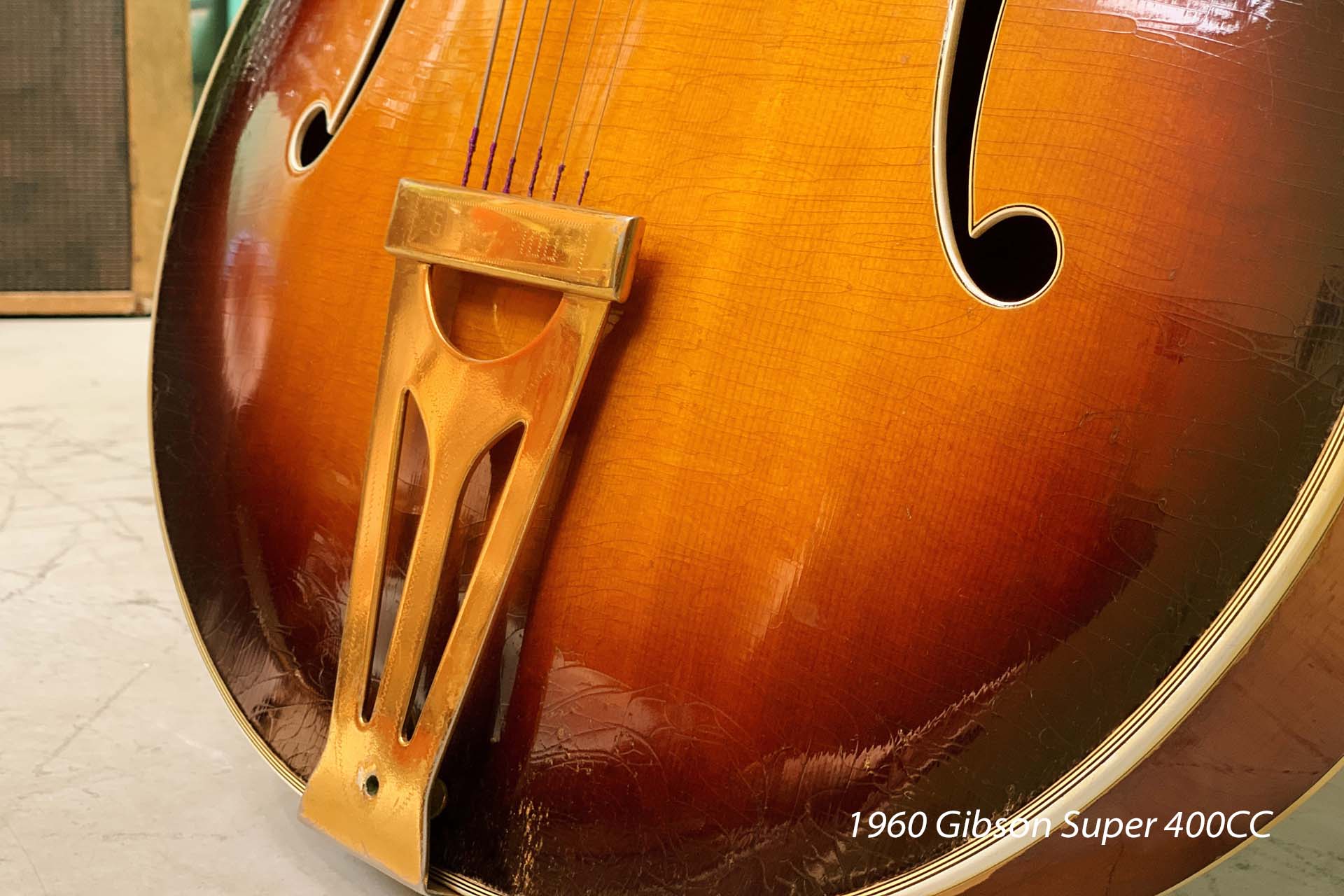
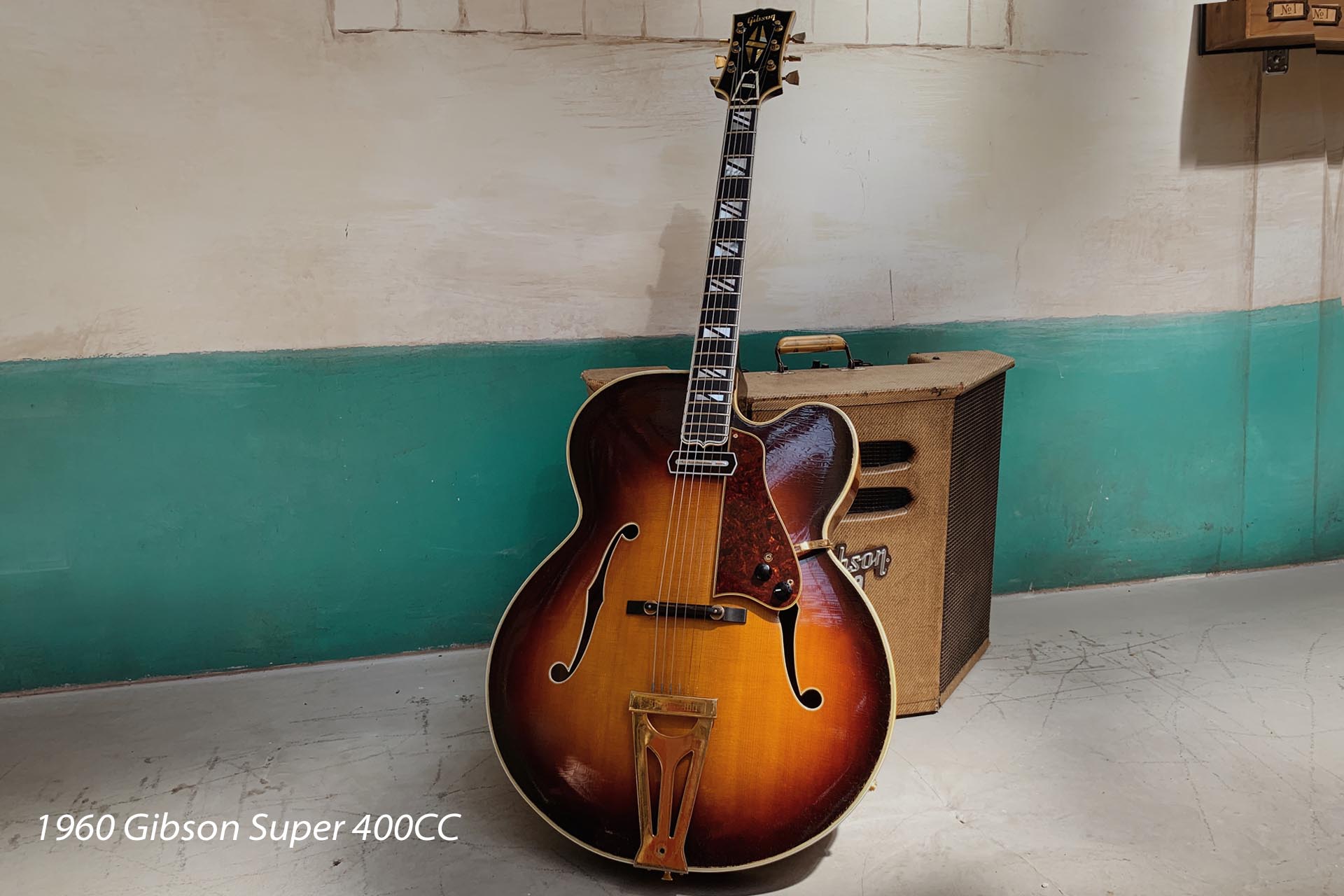
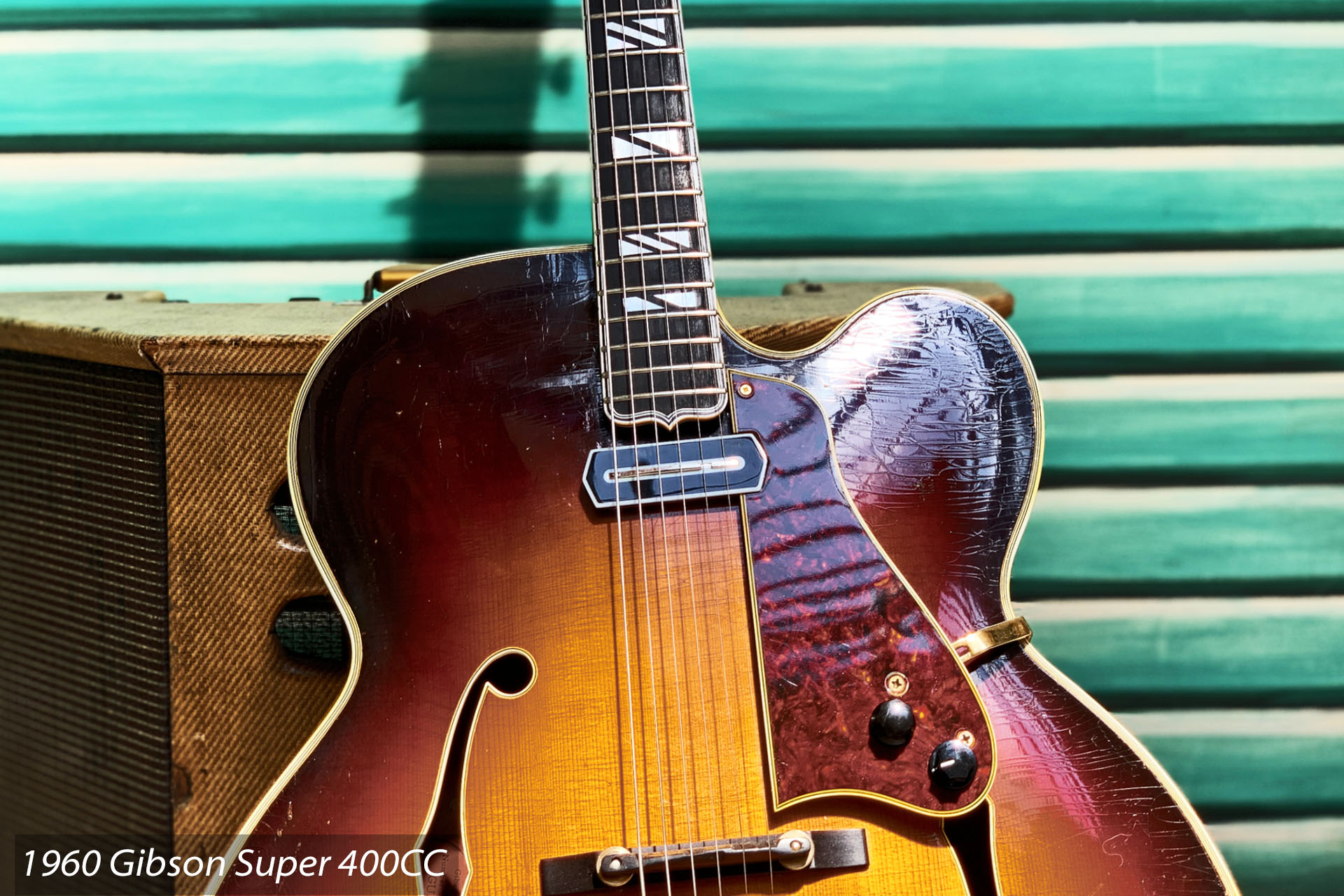
This is a beautiful sounding Super 400 from the early 60s when Gibson made them with a comfortable D neck profile. The Charlie Christian PU by Pete Biltoft produces an incredibly rich, smooth, open tone - you never want to put down this guitar.

The pickguard was custom made to fit the PU perfectly and is fitted with a Bumblebee capacitor for smooth tone transistion. All original with no mods other than the pickguard/pickup combination and no flaws, it has vibrant sunburst finish with a nitrocellulose lacquer that lets the wood breath and sound.

1" 11/16th nut, ebony fingerboard. Kluson waffleback tuners, compensated adjustable rosewood bridge, split-parallelogram mother of pearl inlays, trapeze gold tailpiece.

Listen to this guitar
1960 Gibson Super 400 CC 1960 Gibson Super 400 CC 1960 Gibson Super 400 CC 1960 Gibson Super 400 CC 1960 Gibson Super 400 CC 1960 Gibson Super 400 CC
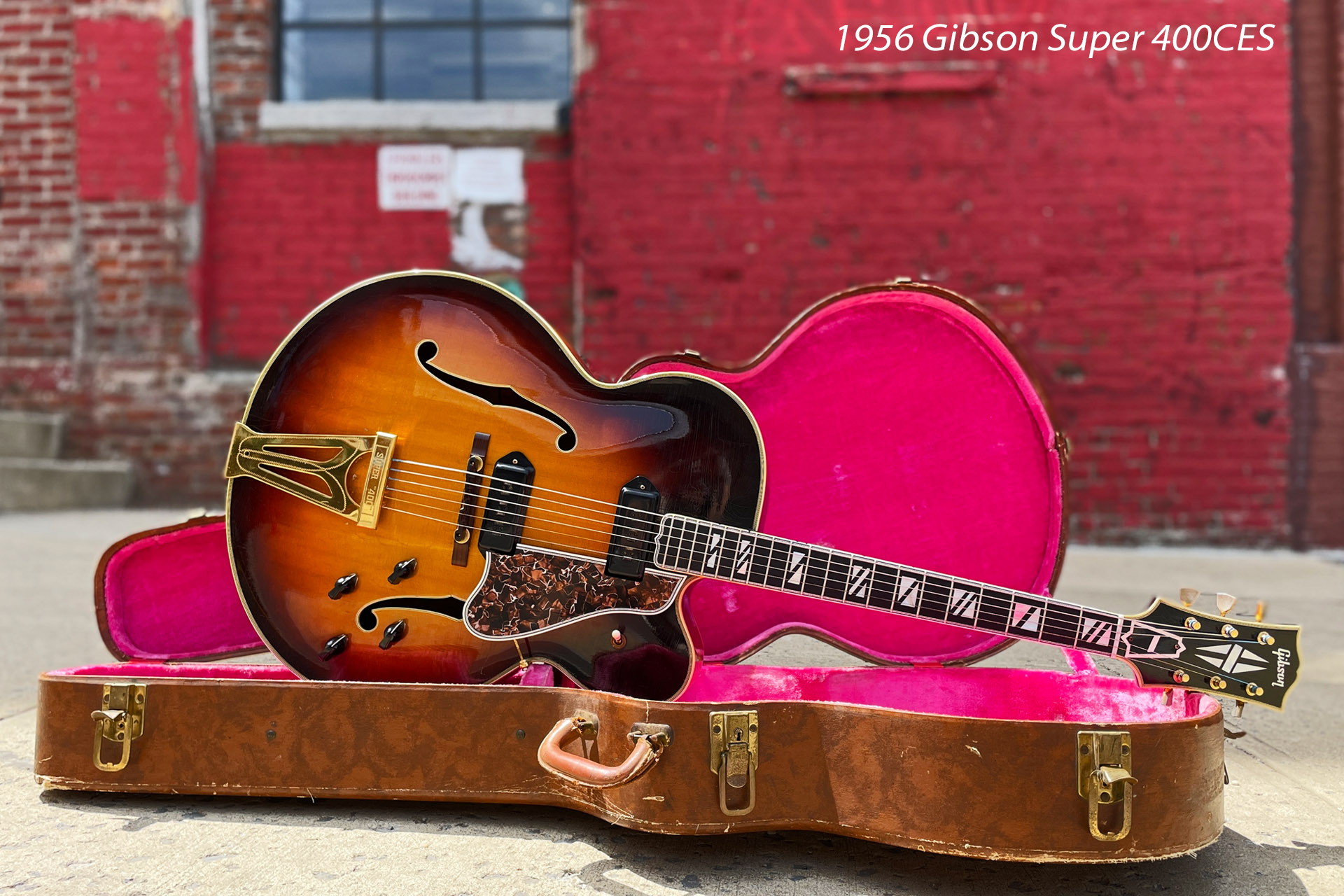
1956 Gibson Super 400 CES

1956 Gibson Super 400 CES


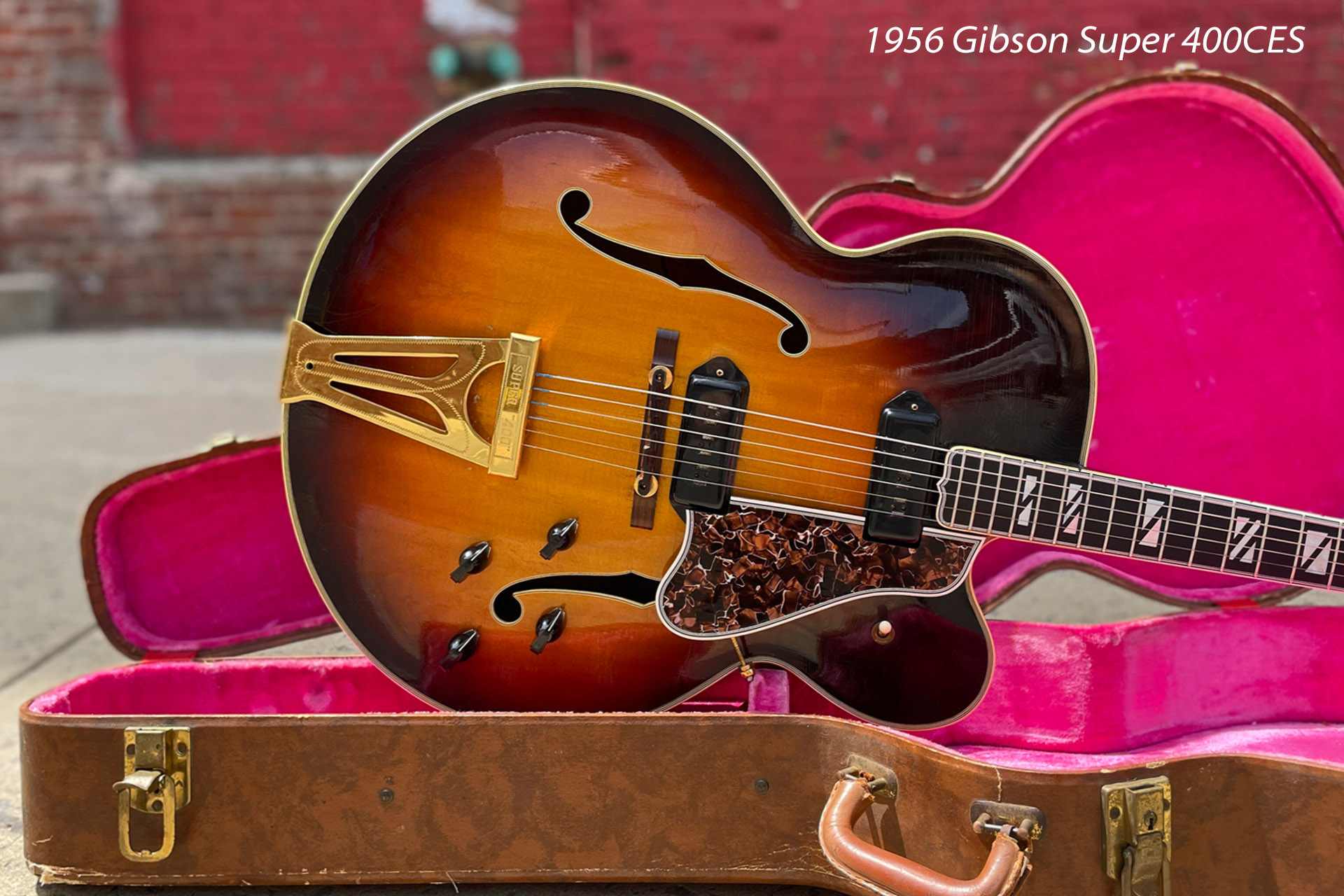
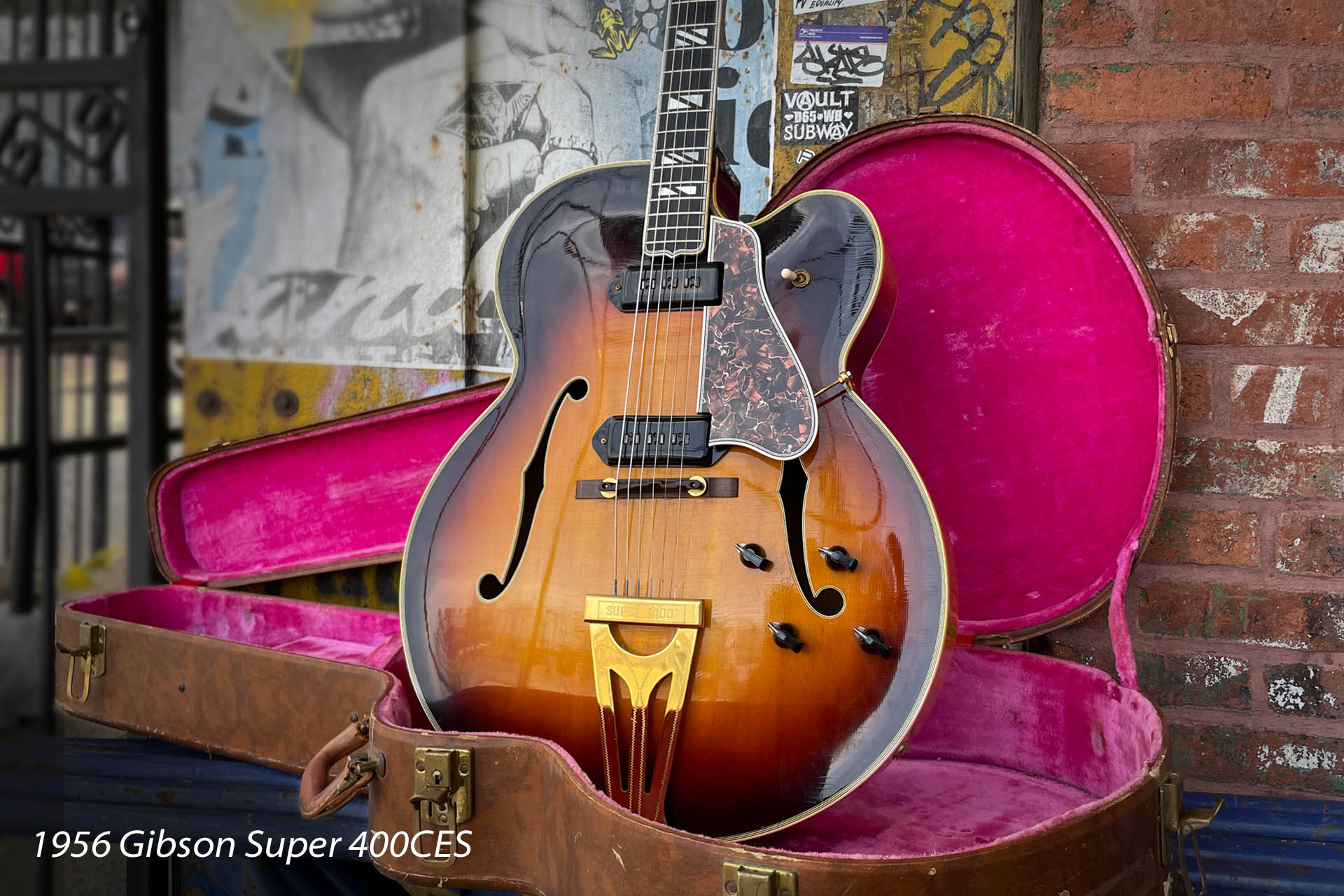
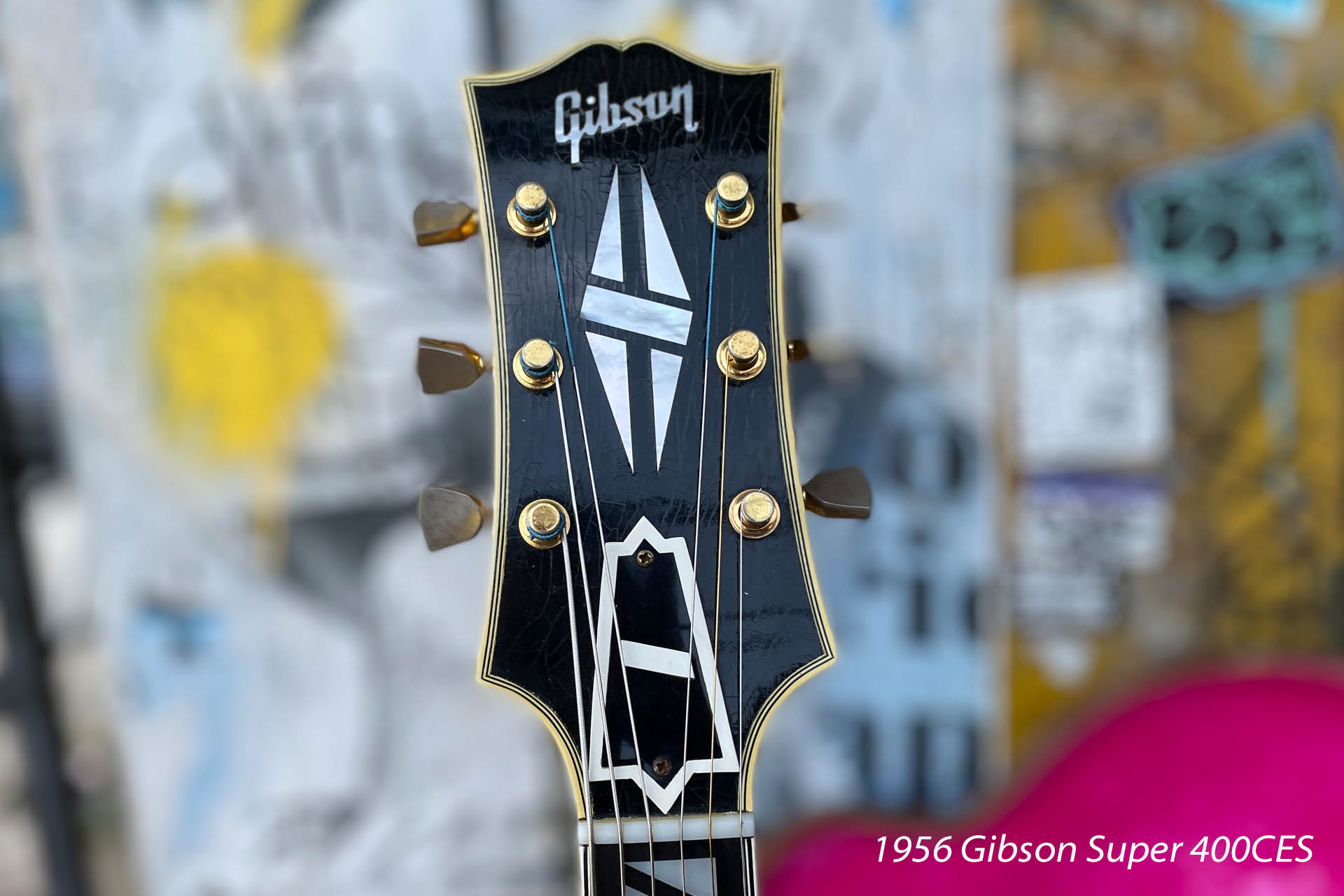
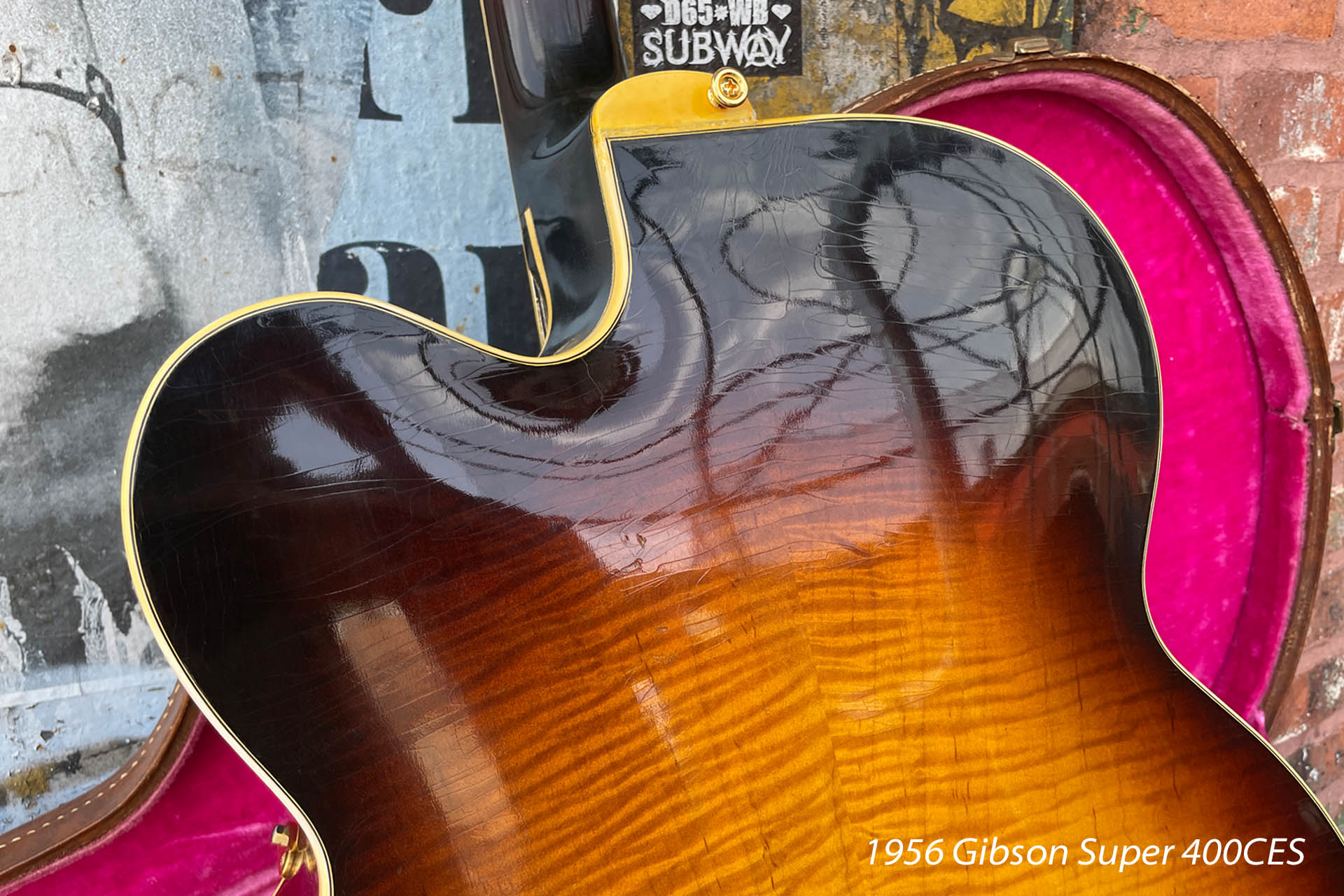
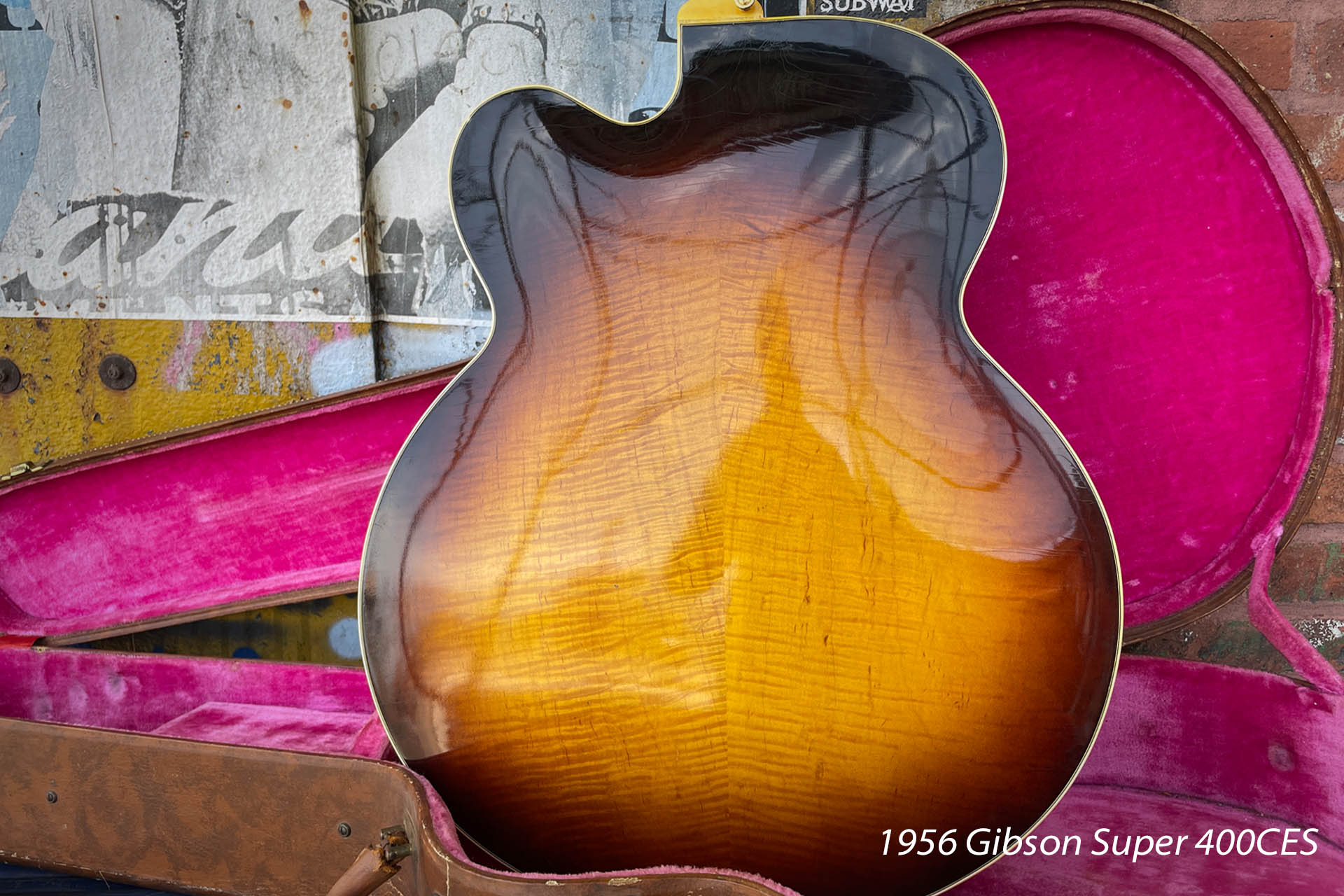
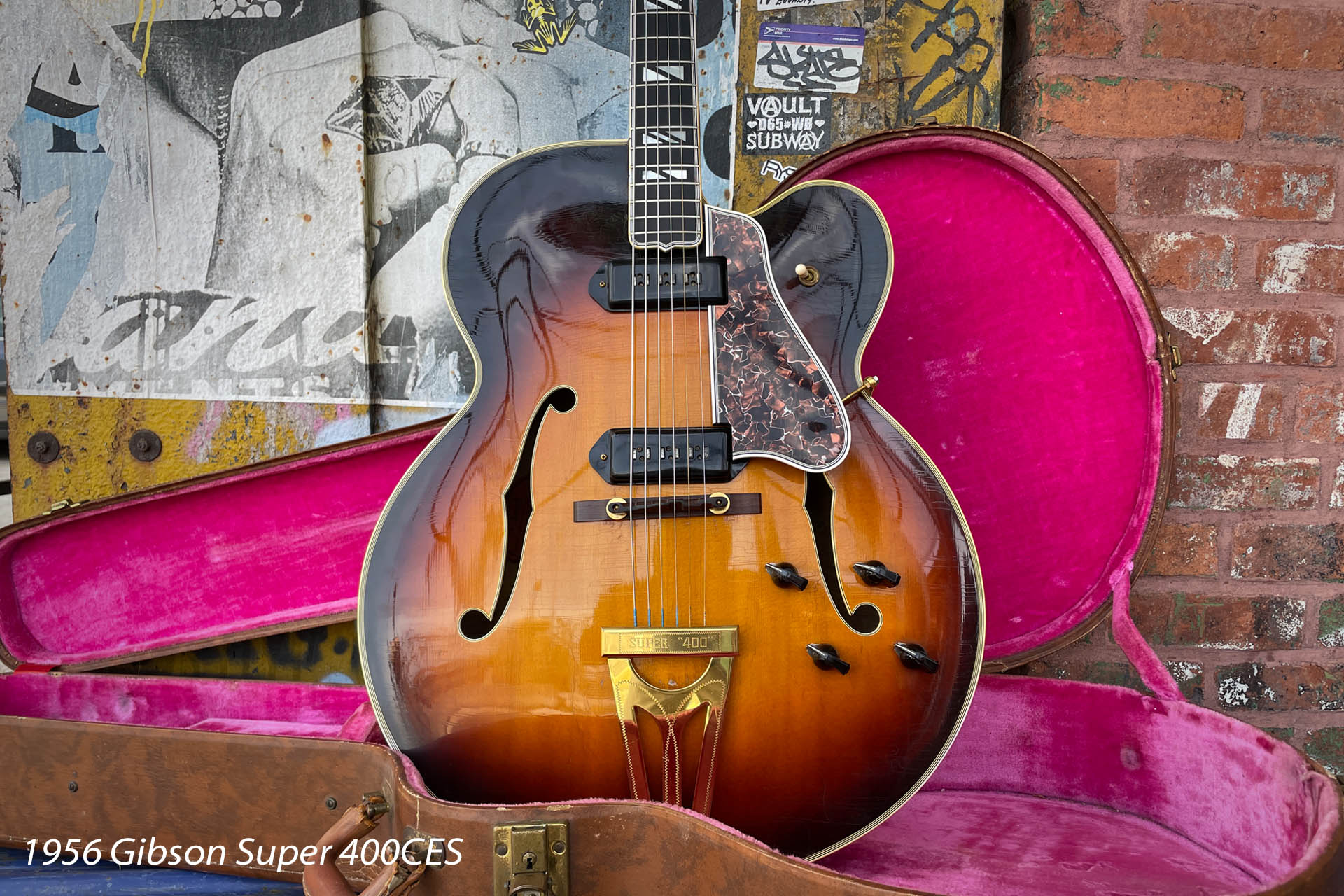
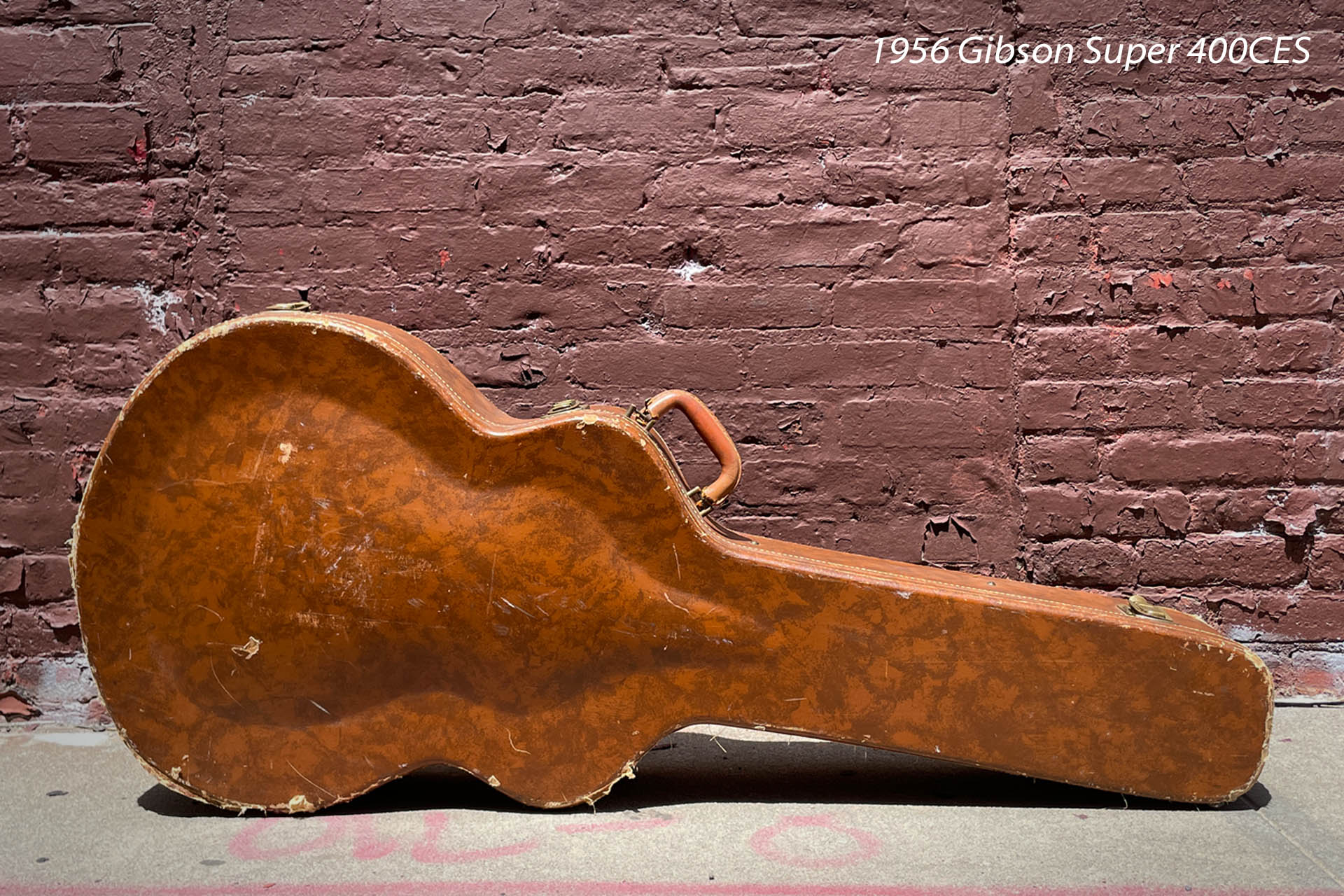
This is a gorgeous 1956 Super 400 with Alnico Staples, only made for a very short time. It sounds airy and open with the typical single coil sound. It is all original with no modifications (except my personal Barney Kessel style knobs).
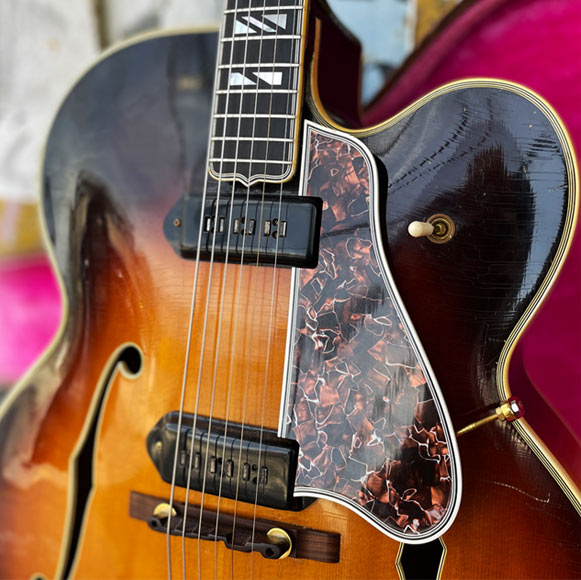
Of course it has the 1" 11/16th nut and an ebony fingerboard, nitrocellulose lacquer, split-parallelogram mother of pearl inlays and the classic S400 trapeze tailpiece. The parallel braced carved top in combination with the single coils makes the voice of this instrument so clear, open and articulated! I am a big Doug Raney fan and love the sound he had with his P-90 equipped ES-350. This Super 400 often reminds me somewhat of his recordings, e.g. his solos on Chet Baker's "Daybreak".
Listen to this guitar
1956 Gibson Super 400 CES 1956 Gibson Super 400 CES 1956 Gibson Super 400 CES 1956 Gibson Super 400 CES 1956 Gibson Super 400 CES 1956 Gibson Super 400 CES 1956 Gibson Super 400 CES 1956 Gibson Super 400 CES
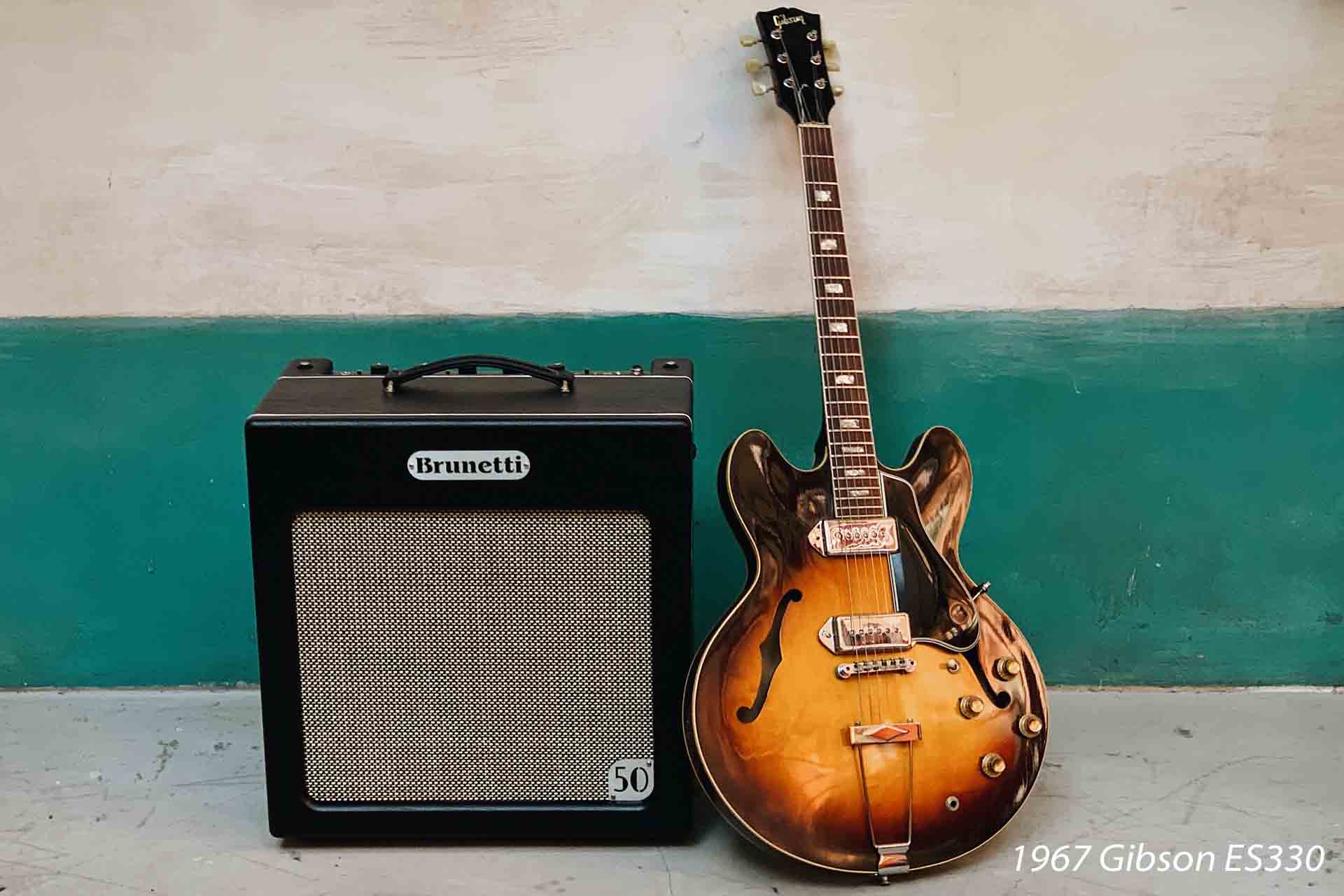
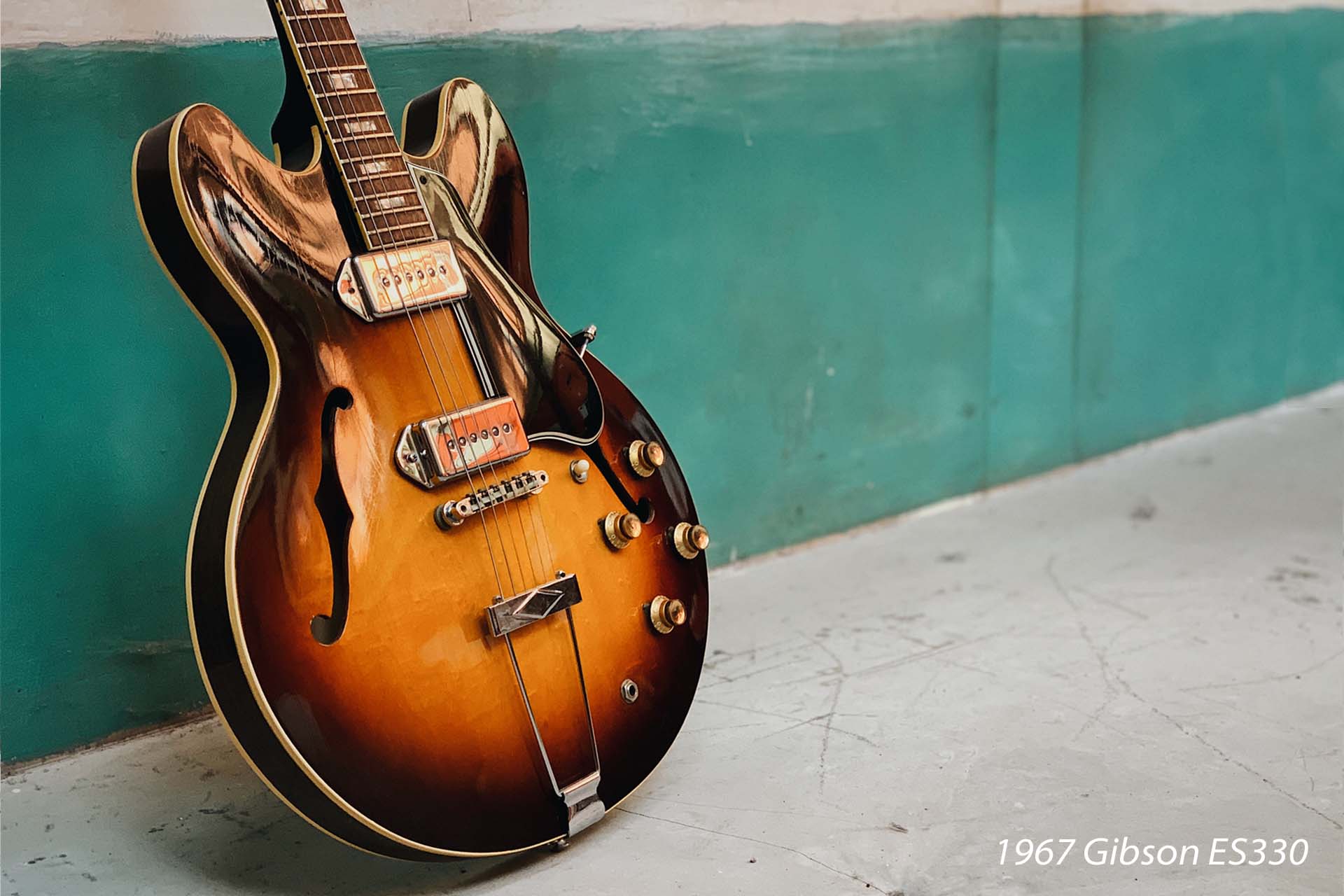
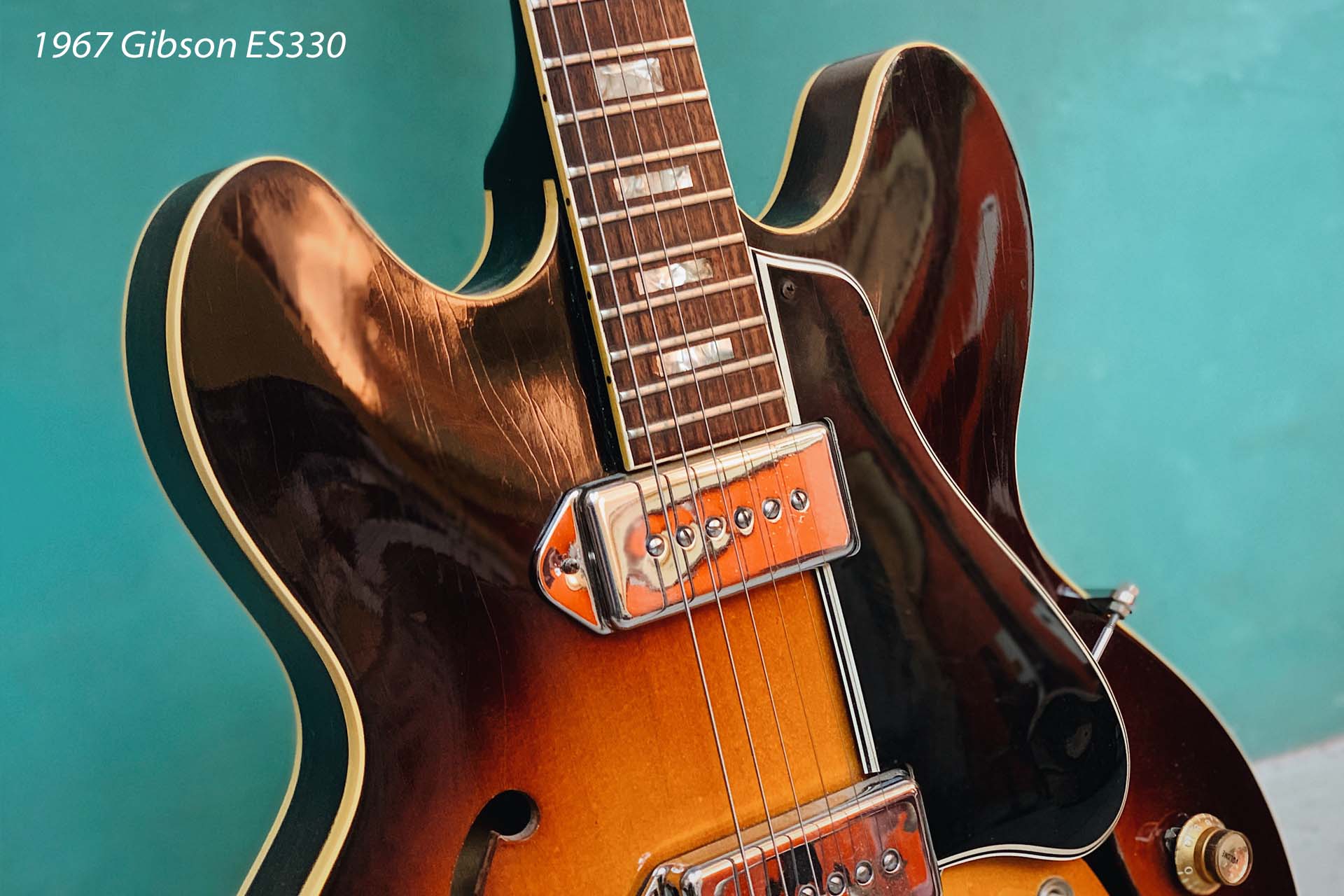
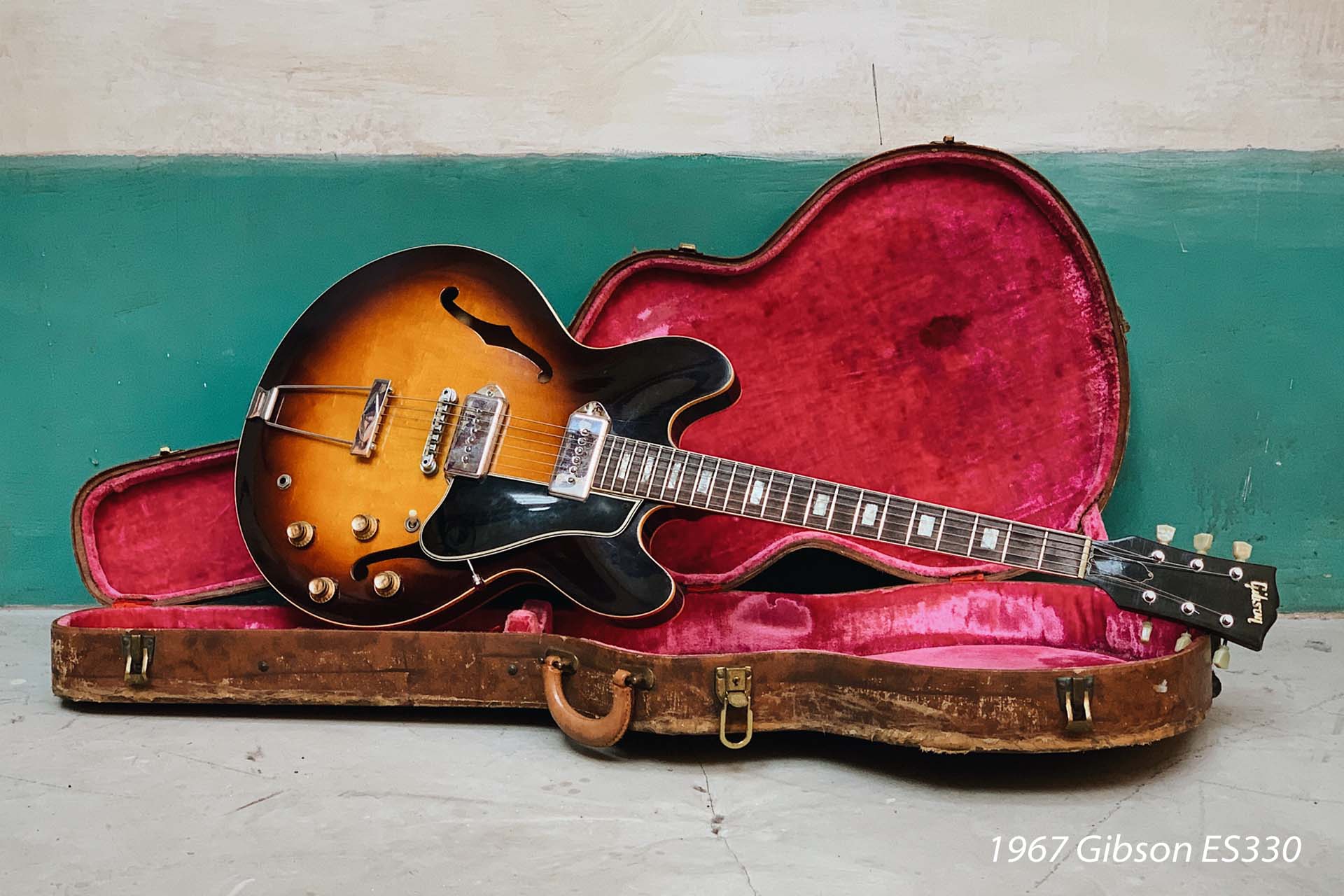
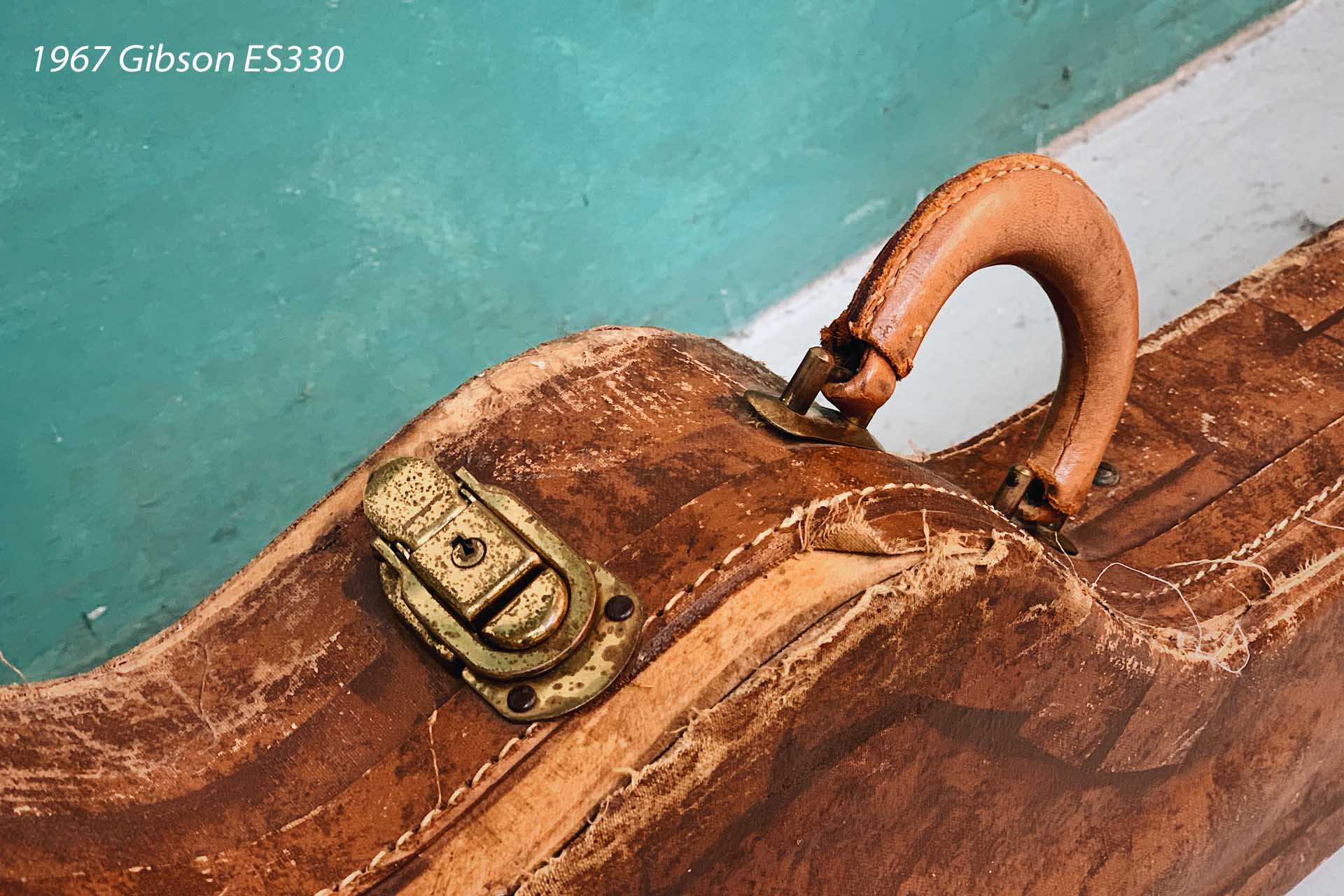
1967 Gibson ES-330

1967 Gibson ES-330


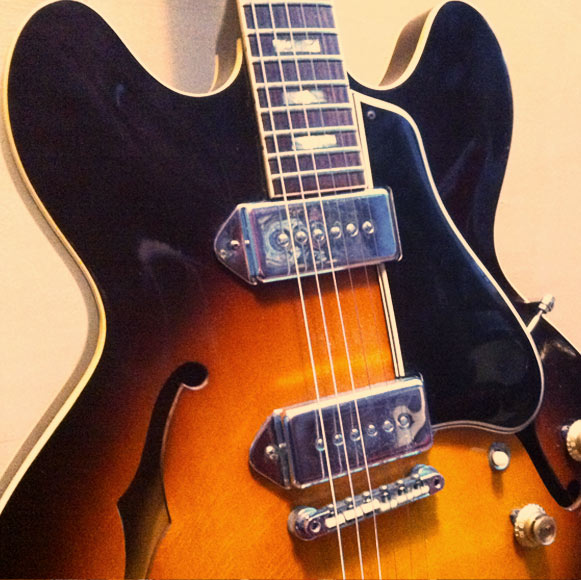
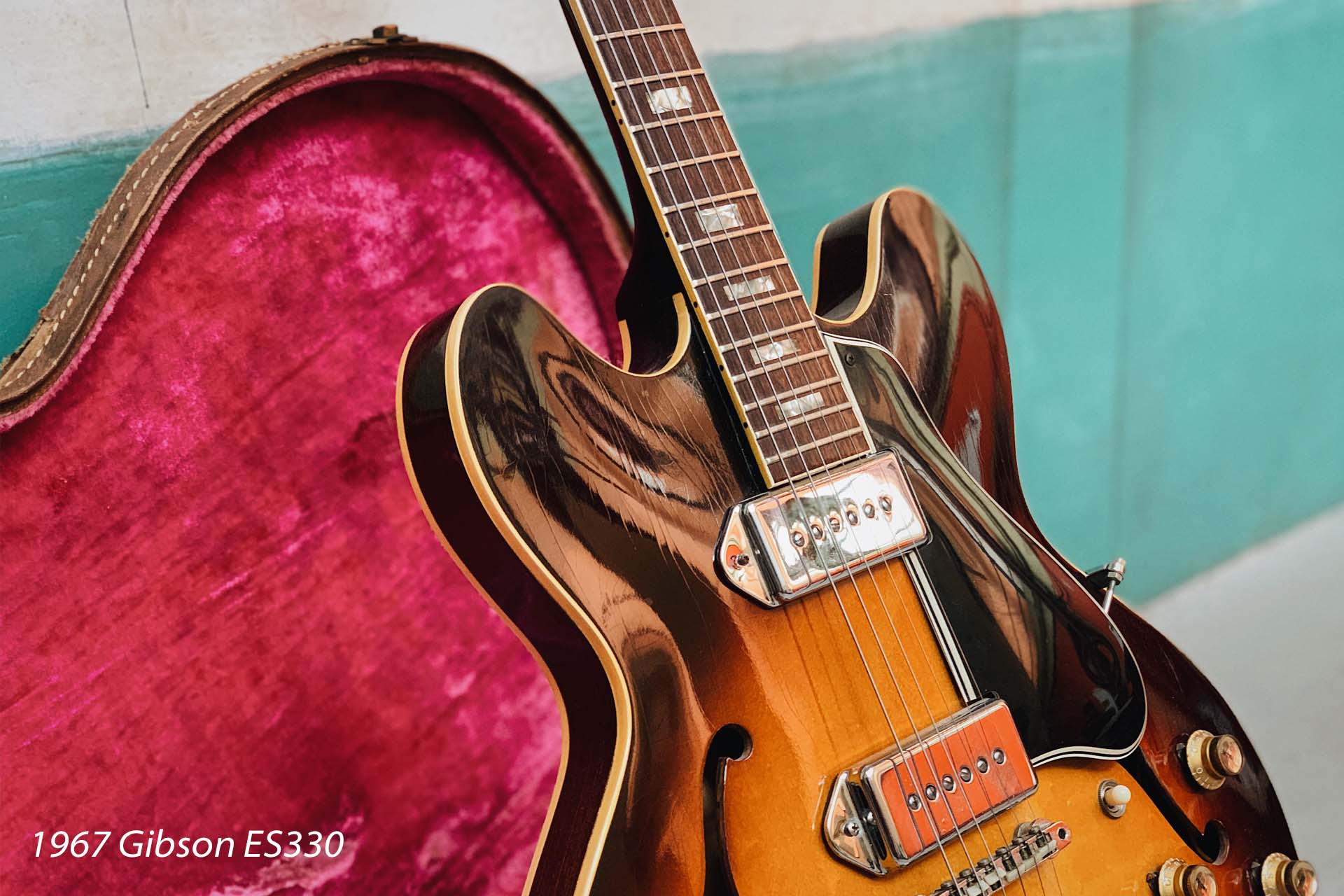
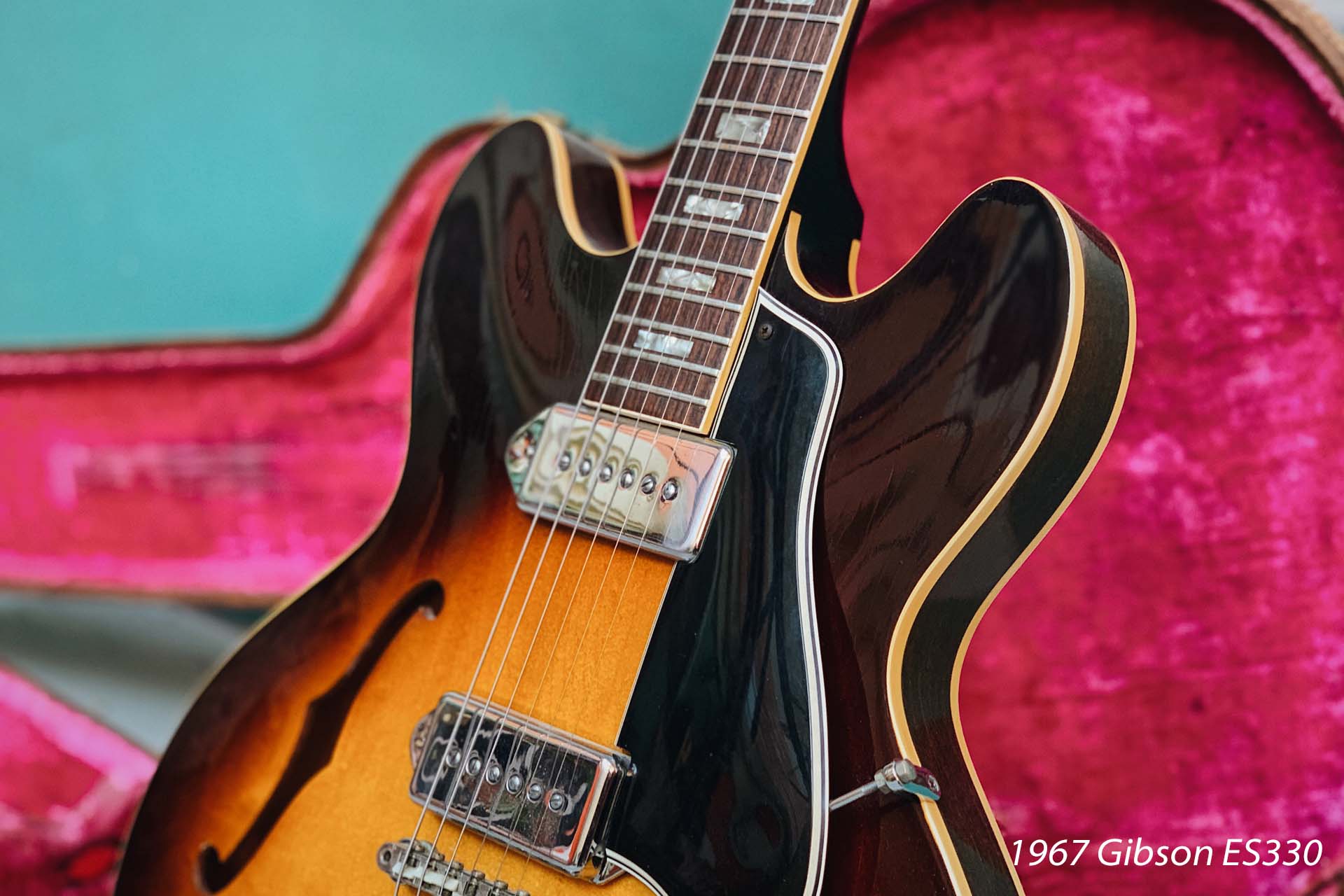
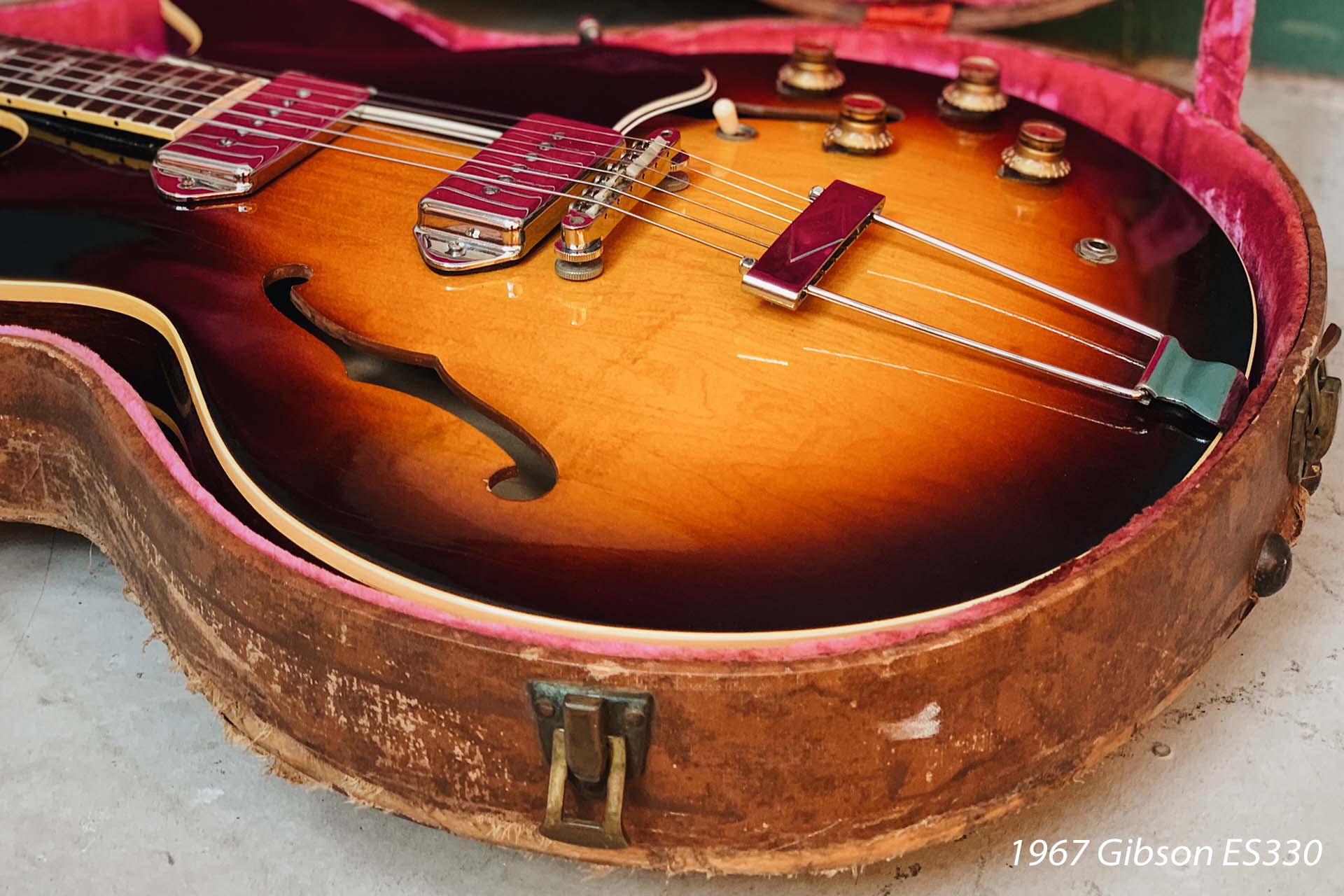
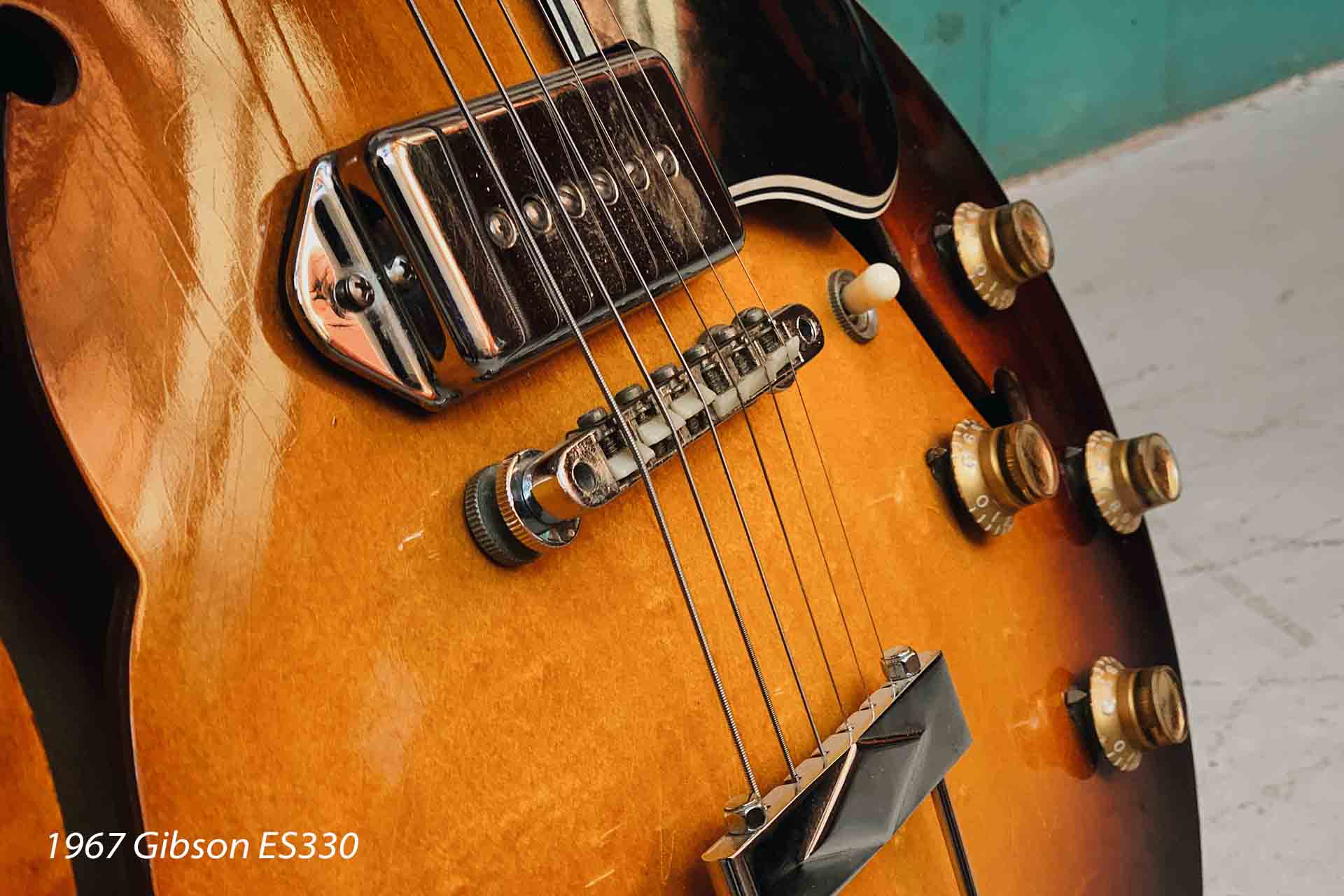
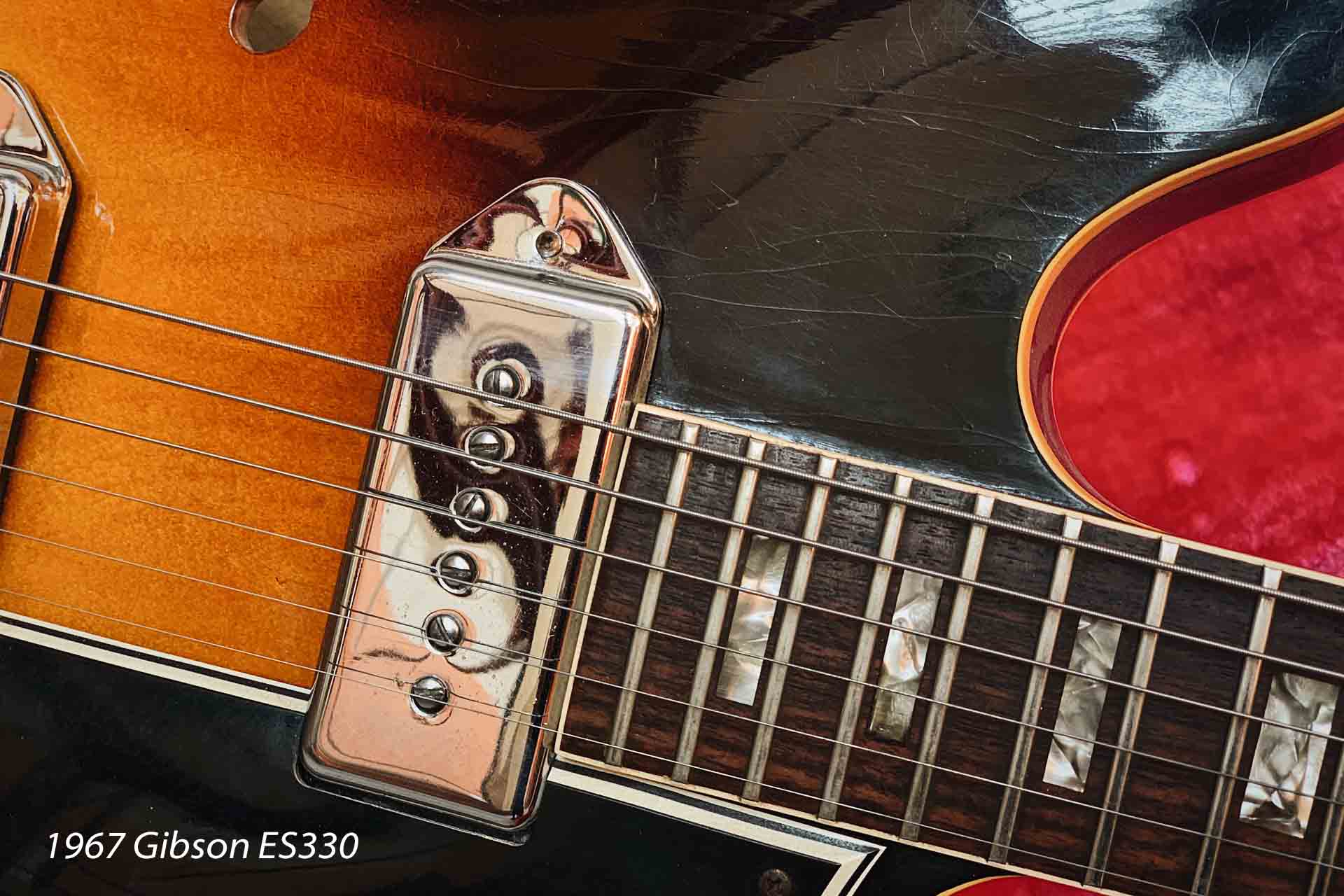
This is a gorgeous 1967 Gibson ES-330, all original with loads of output. The P-90s have that unique single coil sound that works for Grant Green-like jazz lines, but also for bluesy or fully distorted solos.

I tried many ES-335s over the years but coming from the big jazz boxes, I was never really happy with them. I just miss the wood and resonance. Everything most players would do with a 335, I do with this guitar.

This 330 has a 1" 9/16th nut and the "short" neck, making it sound warmer and feel more elastic for the player.

Listen to this guitar
1967 Gibson ES-330 1967 Gibson ES-330 1967 Gibson ES-330 1967 Gibson ES-330 1967 Gibson ES-330 1967 Gibson ES-330 1967 Gibson ES-330 1967 Gibson ES-330 1967 Gibson ES-330 1967 Gibson ES-330
1969 Gibson ES-150

1969 Gibson ES-150

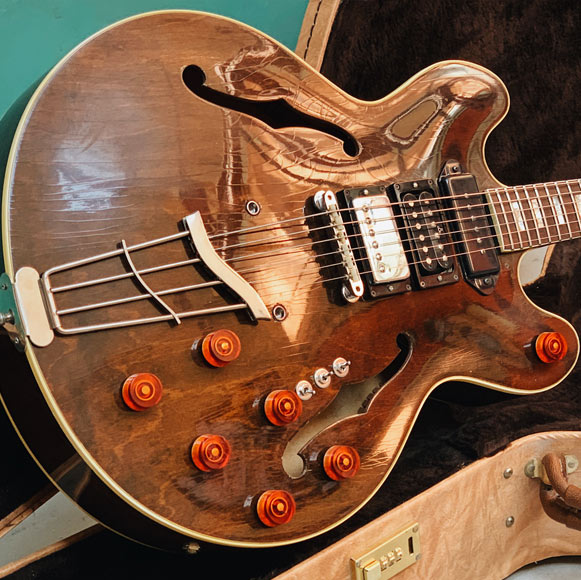
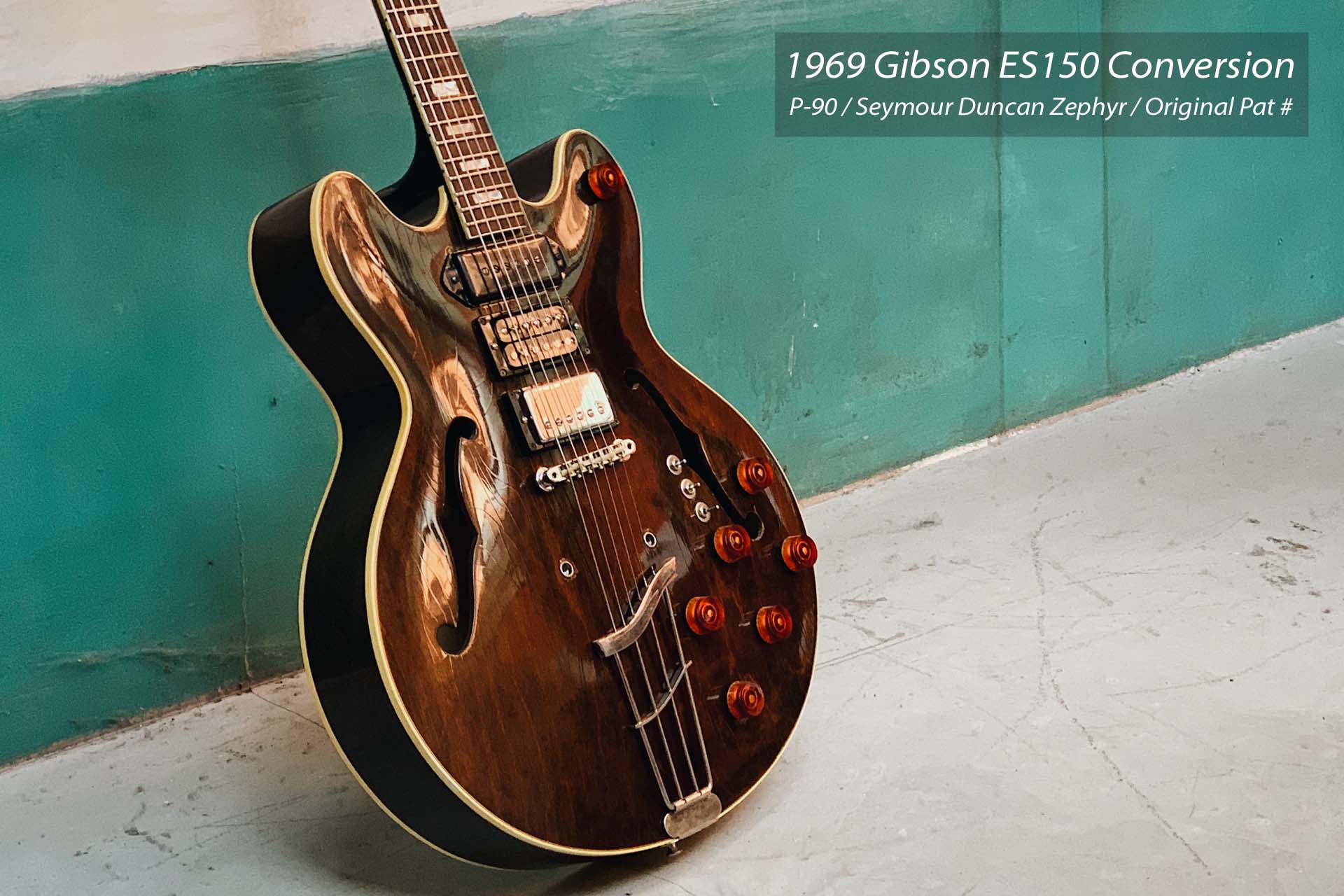
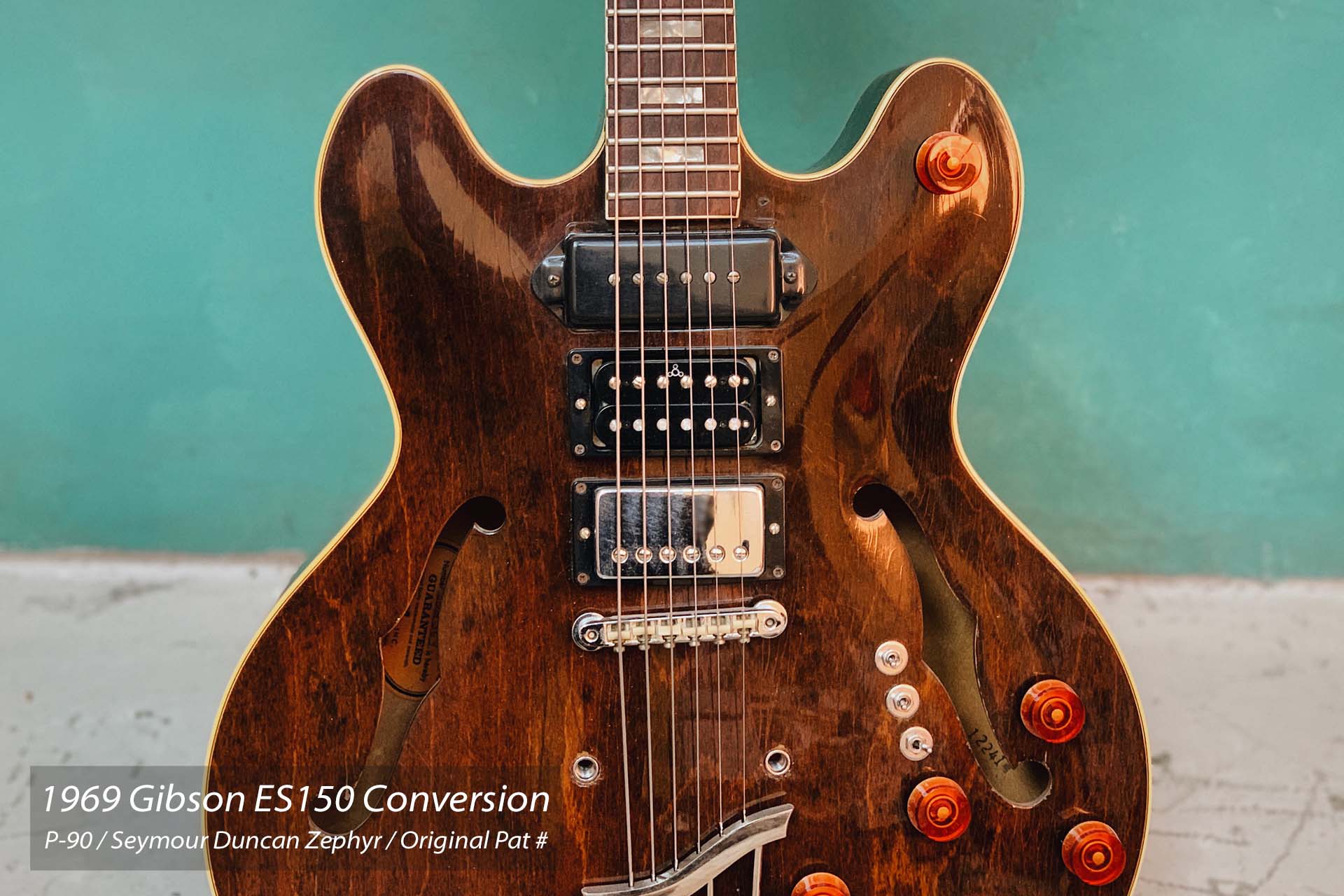
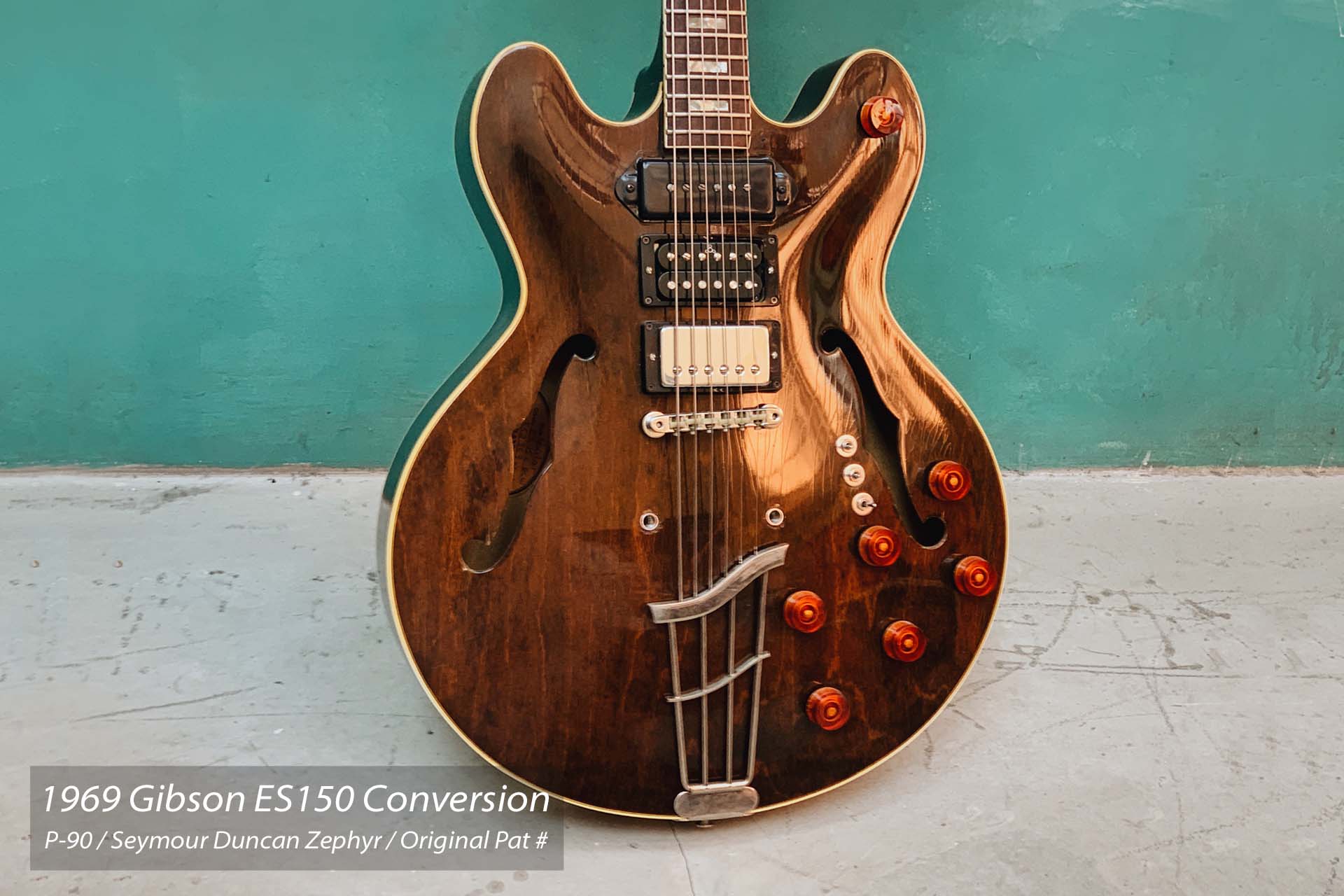
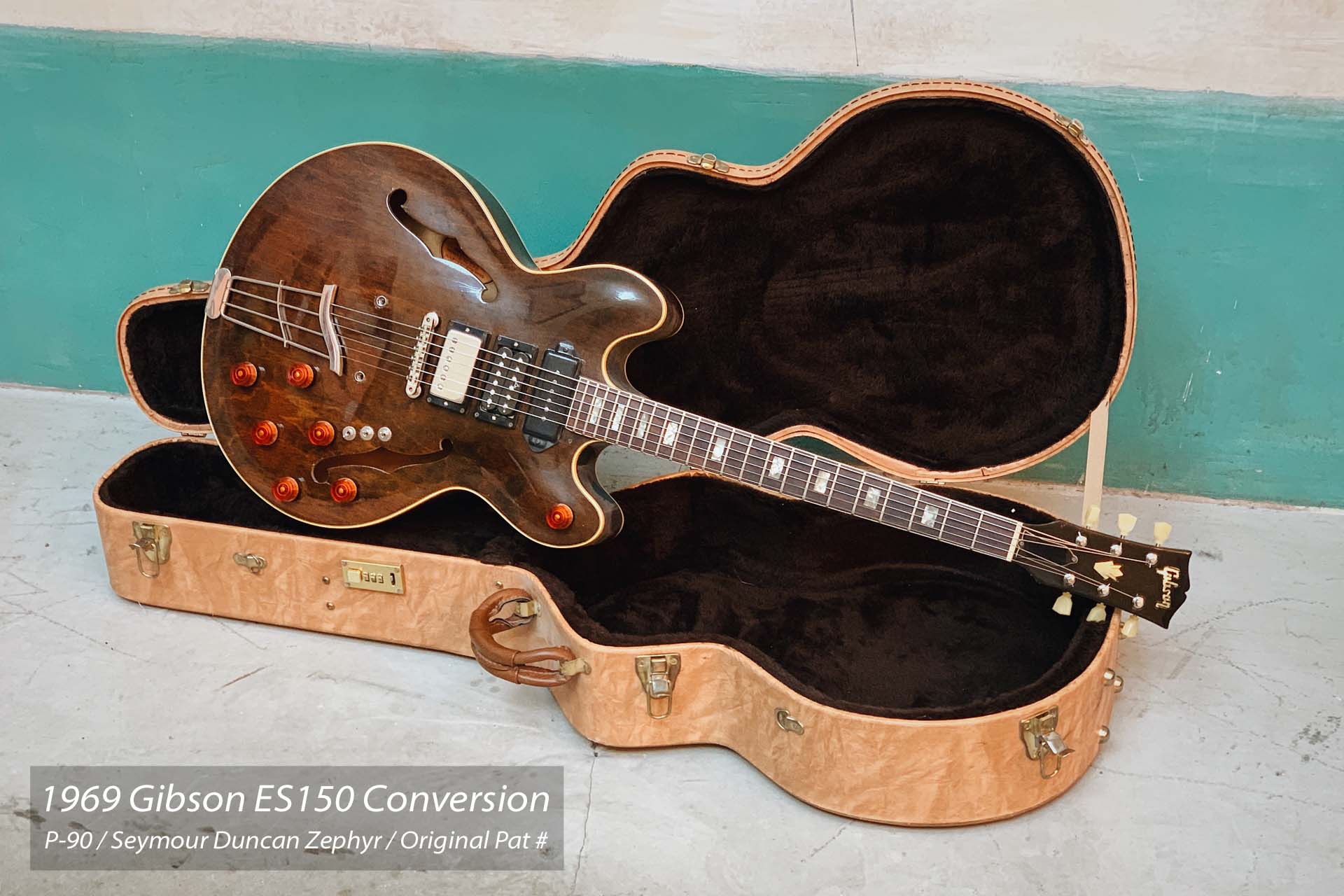
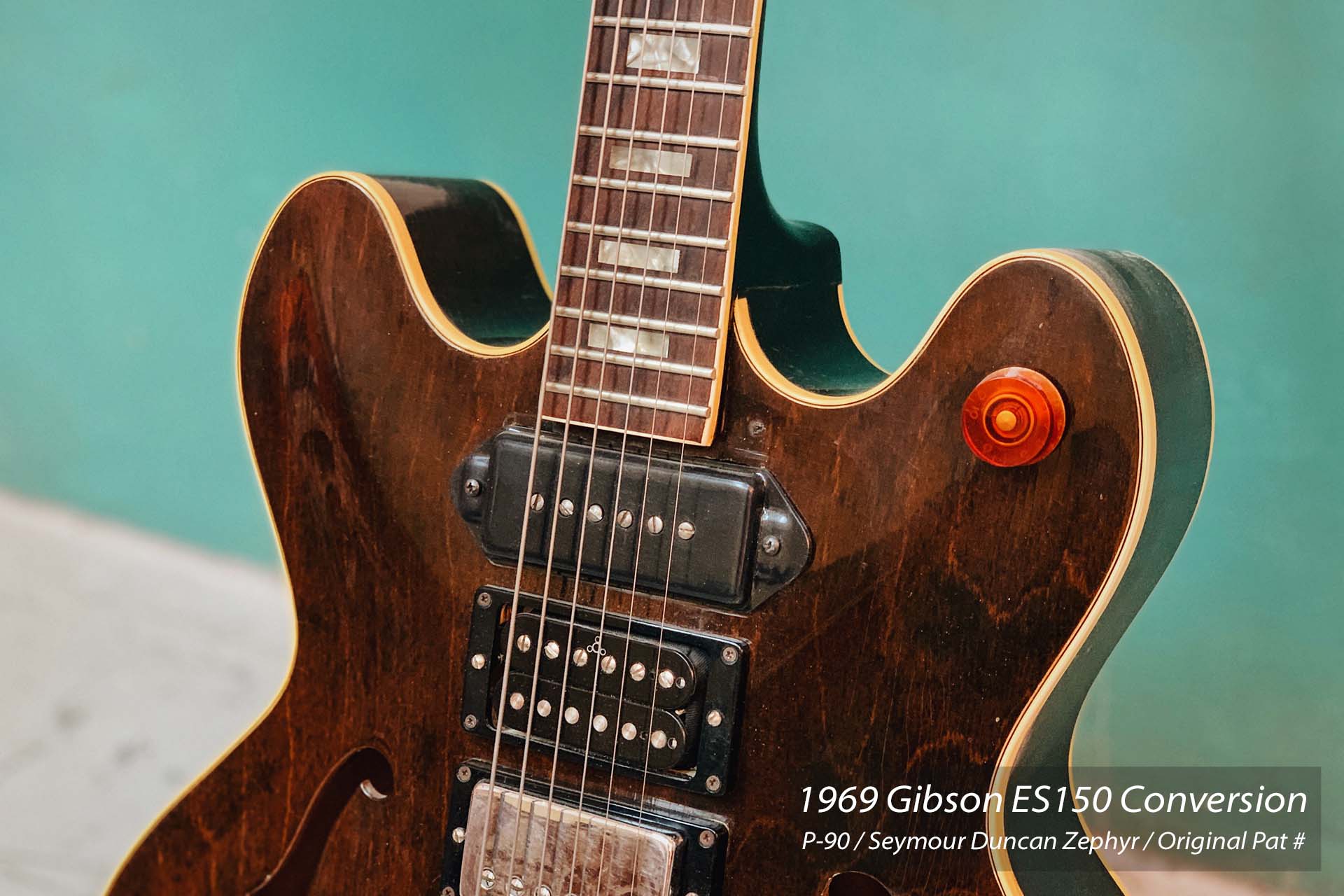
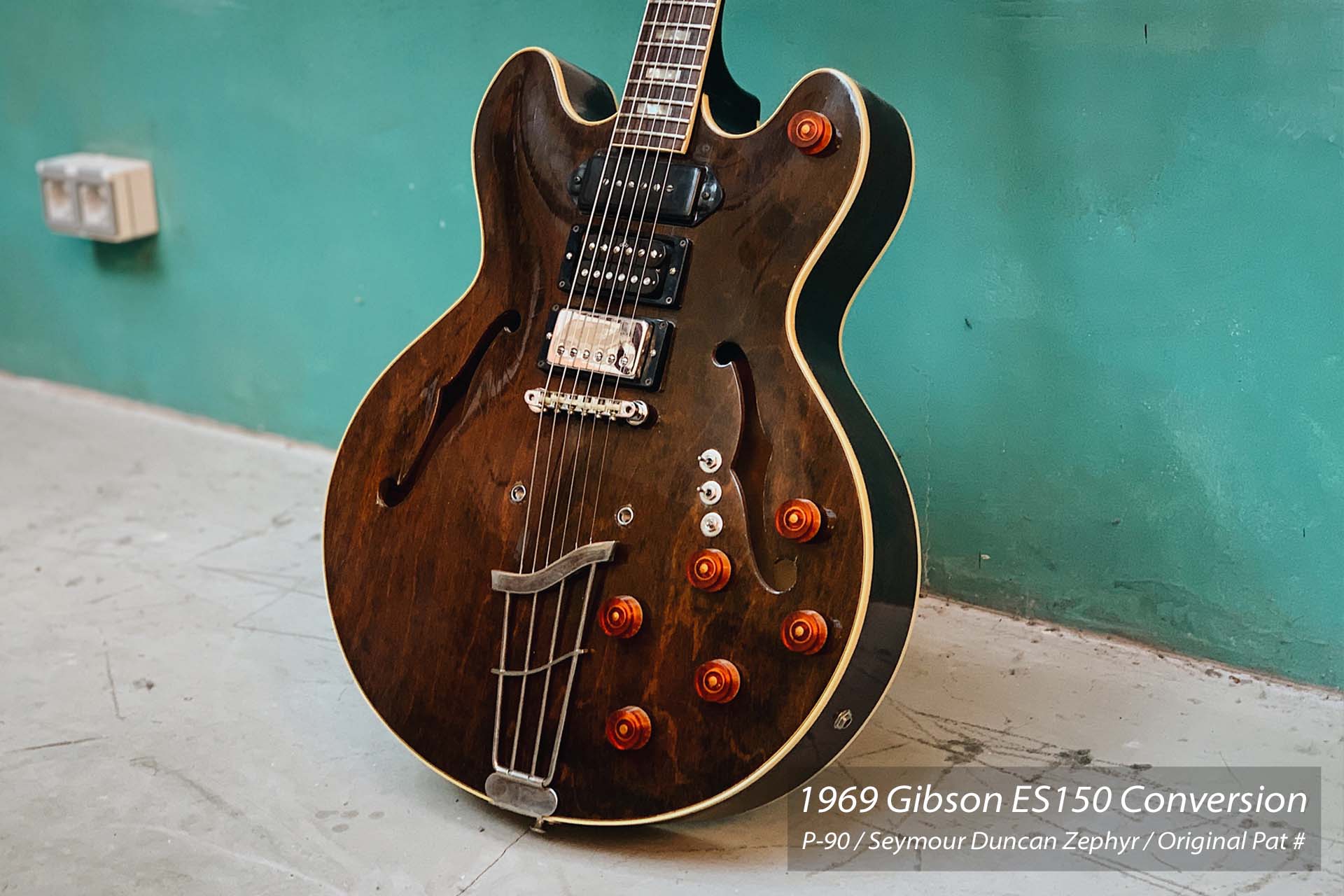
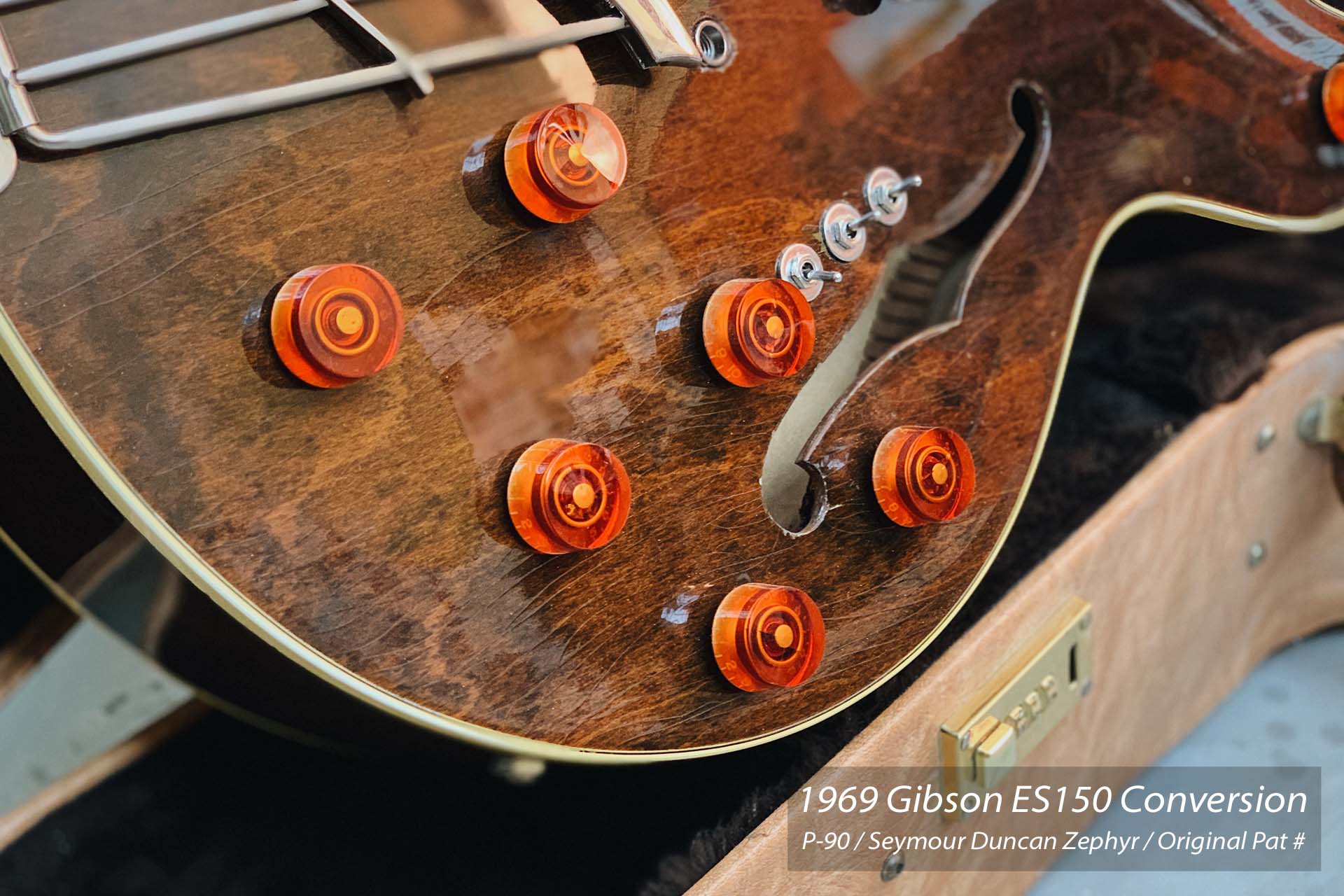
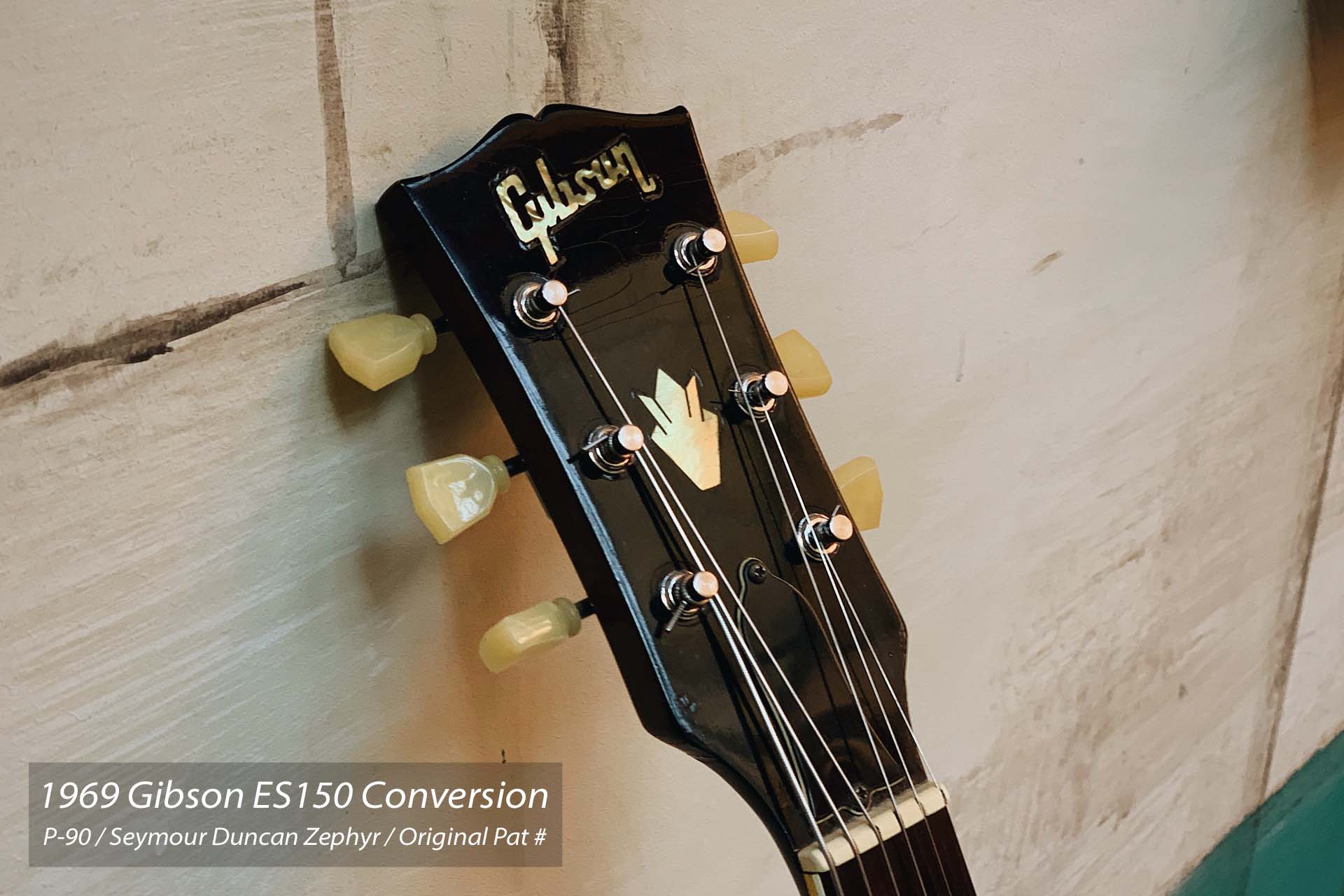
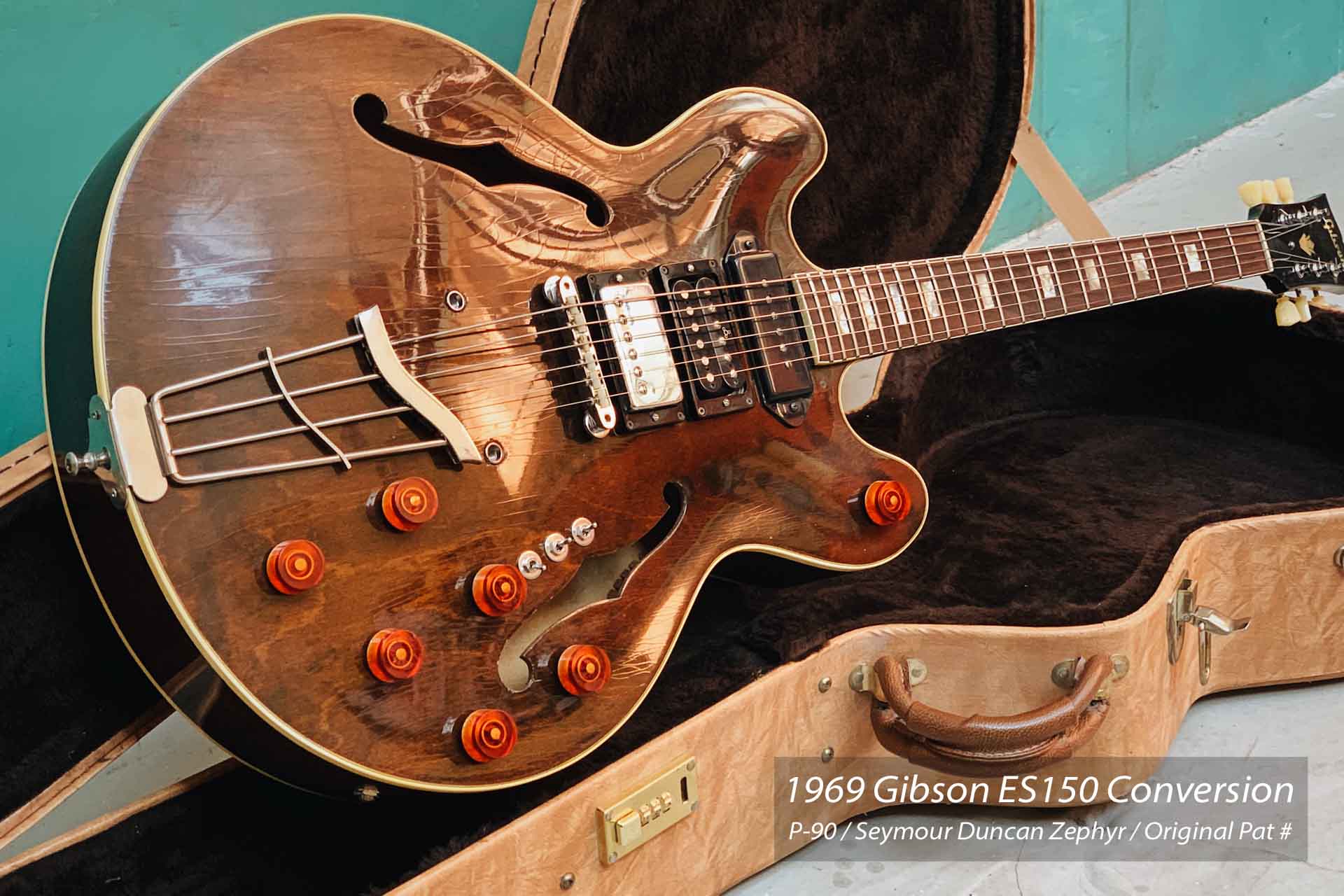
This is my personal crazy mod:

A 1969 ES-150 with 3 different pickups for a huge variety of sounds. Each can seperately be switched on or off, so every combination of 1, 2 or all 3 of them is possible. My idea was to have a ES-335-shaped guitar with a bigger body, but the same neck. The PUs are a P90 at the neck, Seymour Duncan Zephyr in the middle and the original Pat# sticker at the bridge.

At the time, I lived in San Fransisco and found a luthier to help me convert the guitar. Here are two interesting videos:
The "Making Of Documentary" and "Stop Tail vs Trapeze Tailpiece Comparison".

Listen to this guitar
1969 Gibson ES-150 1969 Gibson ES-150 1969 Gibson ES-150 1969 Gibson ES-150 1969 Gibson ES-150 1969 Gibson ES-150 1969 Gibson ES-150 1969 Gibson ES-150 1969 Gibson ES-150